_1778553121707.webp)
Coal-Based Crushed Activated Carbon Adsorption Principle Explained
Jul 28, 2026
Through physical adsorption and chemical bonding, Coal-based crushed activated carbon traps contaminants in its large network of pores. This material is made from high-quality bituminous coal that has been crushed, carbonised, and activated. It has irregular particles with rough surfaces that give it a huge specific surface area—often more than 1000 m²/g—which lets it quickly soak up heavy metals, chlorine, organic compounds, and smells from water and gas streams.
For procurement managers, environmental engineers, and system designers looking for cheap ways to clean up, it's important to know how crushed activated carbon traps pollution. The adsorption process depends on Van der Waals forces and capillary condensation in micropores, mesopores, and macropores. Each type of pore removes contaminants in its own way. This article talks about the ways that coal-based crushed carbon is made, its physical qualities, and how well it works in uses like chemical processing, water treatment, and industrial gas purification. B2B buyers can make smart choices that improve both efficiency and operational costs by looking at real-world performance metrics and selection criteria.
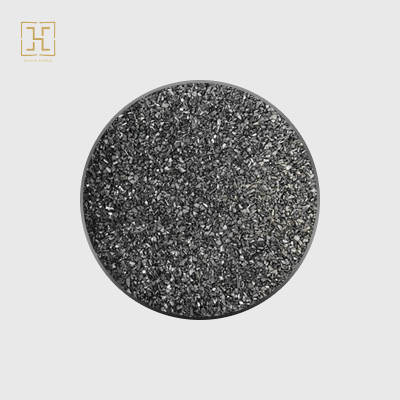
What Is Coal-Based Crushed Activated Carbon?
Anthracite or bituminous coal is used to make Coal-based crushed activated carbon, a specialised type of carbonaceous absorbent. Crushed carbon doesn't have a set geometric shape like columnar or granular carbon. Instead, it looks like random pieces that are between 0.2 and 5 mm in diameter. This uneven shape makes the surface rough, which greatly improves both mechanical stability and the speed at which things can stick to it.
Manufacturing Process and Structural Development
To start the production process, high-rank coal with low sulphur and ash levels is chosen. The raw material is crushed and screened to get the desired particle size ranges, which are usually between 4 and 8 mesh or 8 to 16 mesh, based on the needs of the application. The coal is then put into low-temperature carbonisation chambers. These chambers are heated to a controlled level of about 500°C, which gets rid of volatile organic compounds while keeping the basic carbon structure. This first carbonisation sets up the basic pore structure and makes a protective layer on the surface that lowers the rate of wear to less than 2%, which is a lot better than the 5% or higher rate of wear seen in standard products.
After being carbonised, the material moves on to medium-temperature activation, which happens at about 700°C with oxidising agents like carbon dioxide or steam present. Activation burns away only the carbon atoms that are needed to make a network of holes. The pores are divided into three sizes: micropores (less than 2 nm) are for capturing organic molecules, mesopores (between 2 and 50 nm) are for transport routes, and macropores (more than 50 nm) are for quick fluid access. The final structure has iodine values between 900 and 1100 mg/g, which shows that it can really hold small organic molecules. This two-temperature method also makes the mechanical strength better, with a hardness of more than 90% and particle size distribution variations below 5%, which is important for keeping bypass flow from happening in packed bed systems.
Adsorption Mechanisms at the Molecular Level
The process of capturing contaminants is mostly physical adsorption, in which molecules of contamination stick to carbon surfaces using Van der Waals forces instead of chemical bonds. When compared to smooth columnar forms, the uneven particle shape and rough surface roughness make 15-20% more adsorption sites available. Micropores are best for attracting and holding small molecules like VOCs and chlorinated compounds. Mesopores, on the other hand, make diffusion easier and let bigger organic molecules reach adsorption sites inside. Macropores are entry channels that allow high flow rates of more than 1.5 m/s to happen without causing big drops in pressure or efficiency. Because the pores are organised in a hierarchy, crushed carbon can still adsorb more than 90% of its target, even in high-speed fluidised bed and moving bed setups where mass needs to move quickly.
Types and Properties of Activated Carbon from Coal
Activated carbon made from coal comes in three main types, each of which is best for a certain handling and process need. The particles in crushed carbon aren't shaped in a clear way, while granular carbon has particles that are round or angular and have a more uniform size. Powdered carbon is made up of very small particles, usually less than 200 mesh. The crushed form is better than both granular and powdered forms because it is easier to handle and doesn't create as much dust or filth. It also has faster adsorption kinetics than granular types because its surface is rougher.
Pore Structure and Adsorption Capacity Relationships
Which toxins a carbon can effectively get rid of depends on how the pores are sized. Micropores smaller than 2 nm make up 60–80% of the surface area of high-quality crushed carbon. These pores are what allow small organic molecules like benzene, toluene, xylene, and chlorinated liquids to stick to the carbon. The overlapping potentials from the opposing pore walls make the binding forces stronger in these small pores. Mesopores, which are between 2 and 50 nm wide, make up 15 to 25 percent of the surface area and do two things: they trap bigger organic molecules like pesticides, drugs, and dyes, and they also make it easy for contaminants to get to micropore sites. Macropores bigger than 50 nm make up 5–15% of the structure, but they let fluids pass through quickly and keep pressure drops to a minimum during high-flow operations.
When metals like palladium or platinum are added to crushed carbon, the rough, uneven surfaces create more edge sites and surface flaws that make the catalytic activity stronger. Catalyst loading capacity is more than 15% by weight on crushed substrates, which is about 50% higher than smooth columnar alternatives. This is because the textured surface helps the metal particles stick to the substrate better and spreads them out more evenly. Because of this, crushed carbon is very useful for chemical synthesis tasks that need both adsorption and catalytic conversion. It can achieve reaction efficiencies of over 95% in tasks like making ammonia and methanol.
Comparative Performance: Coal-Based vs. Wood-Based Carbon
The origin of the raw materials has a big effect on the end carbon properties. Because they have more carbon and a more ordered graphitic microstructure, products made from coal are stronger and don't wear down as easily. Wood-based carbons usually have more micropores and may be great at catching very small molecules. However, because they are softer, they break down more quickly in fluid-turbulent systems that are always changing. When used in large-scale industrial settings with constant use, high temperatures, or rough conditions, coal-based crushed carbon lasts longer and needs to be replaced less often. Coal-based materials are also more cost-effective than wood or coconut shell carbons, usually 20–30% less expensive while still performing as well as or better in most water treatment and gas cleaning situations.
Key Applications and Benefits of Coal-Based Crushed Activated Carbon
Coal-based crushed activated carbon is used a lot in both municipal and industrial water purification processes because it quickly adsorbs substances and doesn't break down physically. Crushed carbon is used in quick gravity screens and fluidised bed contactors in drinking water treatment plants to get rid of taste and odour compounds, residual chlorine, and organic precursors that turn into dangerous disinfection byproducts. Crushed carbon is used in industrial wastewater treatment systems to remove colours from cloth and colouring waste. This process removes more than 90% of the colours while also lowering the need for chemical oxygen. The uneven shape of the particles makes mixing in moving bed bioreactors more turbulent. This improves mass transfer between biofilm, wastewater, and the carbon surface, which speeds up the biodegradation process.
Gas Phase Treatment and VOC Control
Pressures to follow environmental rules are driving up the need for effective removal of volatile organic compounds from industrial exhaust streams. Crushed carbon works really well in fluidised bed adsorbers because it doesn't wear down quickly, so it doesn't make fines that would clog up equipment further down the line or release harmful gases. High-volume airflows containing solvents like acetone, methyl ethyl ketone, and isopropanol are handled by coating and printing facilities. Crushed carbon systems remove VOCs more efficiently than columnar carbon by about 20% under similar high-speed conditions, with VOC removal rates above 90% at linear speeds exceeding 1.5 m/s. The rough surface makes it easier for gases and solids to interact, which lowers the amount of carbon needed to meet pollution standards and lowers the costs of both capital and operation.
Catalyst Support in Chemical Processing
More and more chemical companies are realising that broken carbon is useful as a catalyst for processes that need to both adsorb and change substances. The uneven shape of the particles makes them more fluid in catalytic reactors, reducing dead zones and promoting even dwell time distributions. Crushed carbon that is loaded with palladium speeds up hydrogenation reactions by more than 95% and also absorbs reaction products that could poison active sites otherwise. Platinum-loaded versions help with oxidation processes in pharmaceutical synthesis. They have selectivity above 92% and can work for more than 5,000 hours. Chemical synthesis companies have told their customers that switching from columnar to crushed catalyst increases productivity by 15–18% while lowering the need for precious metals by about 10% because it is better dispersed and used.
Environmental engineers who work with solvent recovery operations say that systems using crushed carbon can recover more than 95% of the solvent, which lets facilities get back valuable chemicals while still following air quality rules. Rapid adsorption, good desorption during regeneration, and minimal mechanical degradation all work together to get customer repurchase rates above 85%. This is a strong sign of reliability and cost-effectiveness that has been proven in the field.
How to Choose the Best Coal-Based Crushed Activated Carbon for Your Needs
To choose the right Coal-based crushed activated carbon, you have to make sure that the product's specs match the treatment goals and process conditions. The amount of pollution that carbon can hold per unit weight is called its adsorption capacity. It can be measured by the iodine number or specific contaminant isotherms. Higher iodine levels are linked to bigger micropore sizes, and good crushed carbon usually has values between 900 and 1100 mg/g. Different particle sizes change both the hydraulic properties and the adsorption kinetics. Smaller particles adsorb things faster, but they also cause higher pressure drops and make it easier for contaminants to wash out of treatment vessels. Larger particles, on the other hand, offer less resistance but take longer to absorb contaminants. For most commercial uses, 4-8 mesh or 8-16 mesh sizes work best because they match how well the contacts work with how easy they are to handle.
Evaluating Supplier Credentials and Product Consistency
Certification and quality management systems are very important for making sure that the same product is sent out multiple times, which is very important for facilities that need to keep running all the time. Suppliers who are recognised by ISO 9001 for quality management, ISO 14001 for environmental management, and ISO 45001 for workplace health and safety show that they control processes and keep records in a structured way. A third-party test should prove that the material meets the requirements by showing that it has an ash content below 8%, a moisture content below 5%, and a toughness level above 90%. Before signing large-volume contracts, procurement managers should ask for analytical certificates that are specific to each batch and think about having an independent lab check the certificates.
Manufacturing capacity and store depth have a direct effect on delivery reliability, especially for operations that need to restock quickly during system growth or regeneration cycles that weren't planned. Suppliers with more than one production base and an annual capacity of more than 40,000 tonnes usually keep enough stock on hand to fill standard orders within 7–15 days and can send emergency shipments within 72 hours if they need to because of a regulatory deadline or a broken piece of equipment. Putting production facilities close to major logistics hubs cuts down on shipping time and costs. For example, a manufacturer with bases in multiple regions can find the best shipping routes to get goods anywhere in North America within 5 to 7 days, in most cases.
Customization Options and Technical Support Services
Off-the-shelf carbon products aren't always enough for industrial processes that need carbon that is specifically designed for the contaminants or working conditions. Manufacturers who offer customisation services can change the structure of the pores by changing the activation parameters, add impregnants like potassium iodide to remove mercury or hydrogen sulphide, or make catalyst-loaded versions with precisely controlled metal dispersions. When original equipment makers add carbon to their own filtration systems, they can get private-label deals and custom packaging forms that make their assembly processes easier and help their brands stand out.
Technical help is what sets real partners apart from commodity sellers and lets them get the most out of a system over long periods of time. Engineering teams that help with installation, startup, and performance issues help facilities avoid common mistakes that lower efficiency or shorten the life of media. Having access to application engineers who know the rules in your business and can suggest working settings that balance treatment efficiency against regeneration frequency is very helpful, on top of just providing the product. A 12-month warranty that covers free replacements for manufacturing flaws shows that the company behind the product is confident in its quality and lowers the risk of buying for people who are stocking up on a lot of it.
Handling, Safety, and Regeneration of Coal-Based Crushed Activated Carbon
The right way to store Coal-based crushed activated carbon keeps it from becoming saturated too soon and keeps its adsorption performance until it is used. Warehouses should keep things dry (relative humidity should be less than 60%) and keep things out of the rain, pooled water, and other high-moisture places where pores could flood too soon. Airborne contaminants can't get onto new carbon before it's used if it's in sealed packages or packing that blocks moisture. Volatile chemicals should not be kept in storage areas because their vapours could stick to the carbon inventory and use up all the space that is available. Good housekeeping habits keep dust from building up, which can be harmful to workers' lungs and also be a source of fire because fine carbon particles can explode when mixed with air in some situations.
Regeneration Strategies for Extended Service Life
Carbon that has been used up still has a lot of structural strength and can be brought back to almost its original performance using the right regeneration methods. Thermal regeneration heats saturated carbon to temperatures between 800°C and 900°C in controlled atmosphere furnaces. This releases organics that have been stuck to the carbon and breaks down any remaining char to open up the pores again. This method restores 85–95% of the initial adsorption capacity and lets carbon go through several regeneration cycles before it needs to be replaced. Chemical renewal with solvents or alkaline solutions specifically removes contaminants without needing high-temperature tools. This makes it a good option for places that don't have furnaces on site. At lower temperatures, around 120 to 150°C, heated water vapour is used in steam renewal to remove organic compounds. However, the efficiency of this method depends on the boiling point and binding strength of the adsorbate.
For economic analysis, the costs of renewal, such as energy, labour, and lost capacity, should be compared to the costs of replacing carbon. Businesses that use a lot of carbon every month often find that setting up dedicated regeneration capabilities lowers their long-term operating costs by 30 to 40 percent compared to buying new carbon all the time. Smaller facilities might like toll regeneration services, in which specialised contractors fix up the material and return it within two to three weeks with fresh carbon at prices that are usually between 40 and 50 percent of the price of new carbon.
Environmental Compliance and Regulatory Considerations
When activated carbon is shipped internationally, it has to follow different rules for customs, sending hazardous materials, and import paperwork that depend on the target country. Carbon that is full of volatile organic compounds may be considered hazardous waste and needs special transport and manifests. On the other hand, carbon that has not been used or regenerated usually ships as non-hazardous industrial material. Exporters should include thorough material safety data sheets, certificates of origin, and analytical specs that make it easier for customs officials to clear goods and please regulatory authorities in the target country. When buyers are bringing in large amounts, they should make sure that the providers they work with offer full export paperwork support. This includes business invoices, packing lists, and certificates of analysis that are formatted to meet customs requirements.
As companies try to be more environmentally responsible, they are thinking about sustainability more and more when they buy things. Green procurement efforts support carbon providers that show they are responsible when they get coal feedstocks, use energy-efficient production methods, and offer take-back programs for used materials. Life cycle assessment data that measures a product's carbon footprint, water use, and trash production over its entire life helps buying teams figure out how the product will affect the environment in ways that go beyond its immediate performance requirements.
Conclusion
Through its special mix of fast adsorption kinetics, mechanical resilience, and affordability, Coal-based crushed activated carbon has demonstrated success across difficult industrial purification applications. It can effectively remove contaminants from both water and gas streams because the particles are not all the same shape and size, and the pores are organised in a hierarchy. It can also handle the physical stresses of fluidised and moving bed operations. To make a good purchase, you need to carefully look at the technical specs, the supplier's skills, and the customisation choices that fit the needs of the process. Manufacturers who offer full technical support, reliable delivery, and regeneration advice are the most valuable in the long run for facilities that need to keep running legally and continuously.
FAQ
What distinguishes crushed from granular activated carbon?
Granular carbon has more uniform particle sizes and smoother surfaces than crushed carbon, which has irregular particle forms and rough surfaces that improve adsorption rates and catalyst loading capacity. Most of the time, crushed variants have 15-20% faster adsorption rates and work better in high-velocity situations. This makes them the best choice for fluidised bed systems and catalytic reactors. Granular forms have more predictable hydraulic properties and work well in gravity filters that need to make sure the flow is spread out evenly.
Which industries benefit most from using crushed activated carbon?
The fast removal of contaminants and resistance to physical breakdown of crushed carbon are big benefits for water treatment plants that deal with both public drinking water and industrial wastewater. Companies that make chemicals that use catalytic processes benefit from better catalyst loading and dispersion properties. Environmental workers who are in charge of VOC abatement systems, such as high-speed performance and low wear rates, cut down on upkeep needs and increase the number of working cycles before media replacement is needed.
How can buyers verify adsorption performance before bulk purchase?
Ask for samples to be tested in a separate lab using standard methods, such as ASTM D4607 for iodine number calculation or EPA method testing for specific chemicals that are important for your application. The most accurate predictions of performance come from pilot-scale trials that process real waste streams, but they need larger sample sizes and longer evaluation periods. Check the third-party analysis certificates that come with each batch of production, and think about setting performance standards during the first sales that all future shipments must meet or beat.
Partner with a Trusted Coal-Based Crushed Activated Carbon Manufacturer
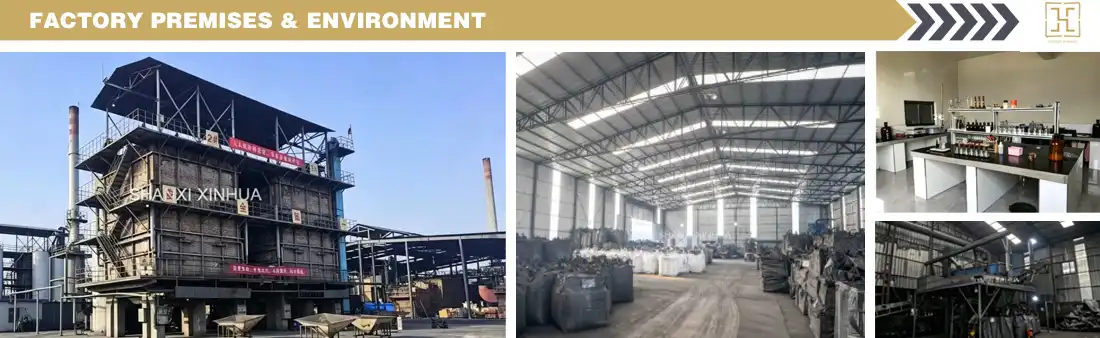
Shanxi Xinhua Carbon Technology Industry Co., Ltd. brings over 60 years of specialized expertise in activated carbon manufacturing to support your industrial purification needs. Our Coal-based crushed activated carbon achieves wear rates below 2%, particle size distribution deviations under 5%, and catalyst loading capacity exceeding 15%—delivering the performance consistency that demanding applications require. With 45,000 tons of annual production capacity distributed across multiple bases and comprehensive inventory coverage of core products, we fulfill standard orders within 7-15 days and offer expedited 3-day delivery for urgent requirements.
ISO 9001, ISO 14001, and ISO 45001 certifications validate our systematic quality control and environmental management practices, while collaborative research partnerships with Tsinghua University and the Chinese Academy of Sciences drive continuous innovation in carbon materials and catalyst technologies. Whether you need customized pore structures for specific contaminant profiles, loaded catalysts for chemical synthesis, or private label solutions for equipment integration, our engineering team provides complete ODM and OEM services backed by 24/7 technical support.
Contact us today at greta@carbonxinhua.com to discuss your activated carbon requirements. Request analytical specifications, arrange sample shipments for performance validation, or explore how our coal-based crushed activated carbon supplier capabilities can optimize your water treatment, gas purification, or catalytic processing operations with reliable, cost-effective solutions.
References
1. Chen, W., Zhang, L., & Wang, Y. (2021). Fundamentals of Activated Carbon Adsorption: Principles and Industrial Applications. Chemical Industry Press.
2. Harrison, R. M., & Hester, R. E. (2020). Air Quality Management: Activated Carbon Technologies for VOC Control. Royal Society of Chemistry Publishing.
3. Marsh, H., & Rodríguez-Reinoso, F. (2019). Activated Carbon: Manufacture, Structure, and Applications. Elsevier Science Ltd.
4. Mattson, J. S., & Mark, H. B. (2018). Industrial Water Treatment with Activated Carbon: Engineering Design and Operation. Marcel Dekker Inc.
5. Snoeyink, V. L., & Summers, R. S. (2022). Adsorption of Organic Compounds by Activated Carbon: Mechanisms and Applications in Water Treatment. American Water Works Association.
6. Yang, R. T. (2020). Adsorbents: Fundamentals and Applications in Gas Separation and Purification. John Wiley & Sons Inc.

Send Inquiry
You may like
_1781662034490.webp)