_1778553121707.webp)
Can 200-Mesh Coal Quality Powdered Carbon Replace Standard Activated Carbon?
Jul 03, 2026
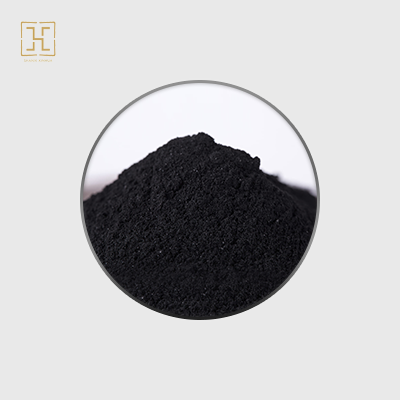
200-mesh coal quality powdered carbon can effectively replace standard activated carbon in many water treatment applications requiring rapid adsorption and decolorization. Its moderate particle size (≤74 μm) provides excellent dispersibility and fast-acting performance, making it ideal for emergency treatment, municipal wastewater plants, and industrial pretreatment processes where speed and cost efficiency matter. However, replacement suitability depends on your specific contaminant profile, separation method, and performance expectations versus granular or finer-mesh alternatives.
Understanding 200-Mesh Coal Quality Powdered Carbon
What Defines 200-Mesh Coal Quality Powdered Carbon
This substance is a carefully designed adsorption solution made from high-quality coal that has been carbonised and activated in controlled ways. The name "200-mesh coal quality powdered carbon" refers to particles that are small enough to fit through a 200-mesh sieve, usually less than 74 micrometres. This grain size is a good compromise between being easy to access on the surface and being easy to work with in industrial settings.
The well-developed microporous structure in coal-based powdered carbon gives it a large internal surface area, which can be measured by the iodine number and ranges from 700 to 1100 m²/g. These tiny holes work as adsorption sites, quickly grabbing pollutants from water streams. The coal origin gives natural benefits in the way pores are distributed, favouring mesopores that can effectively handle the medium-sized organic molecules that are common in industrial wastes.
Manufacturing Process and Quality Control
Shanxi Xinhua Carbon Technology Industry Co., Ltd. makes this stuff through a strict, multi-step process that starts with choosing the best coal. Heat activation at controlled temperatures changes the raw materials into their characteristic porous structure. During production, strict quality control methods keep an eye on the ash content (8–20%), moisture levels (≤5%), and particle size distribution.
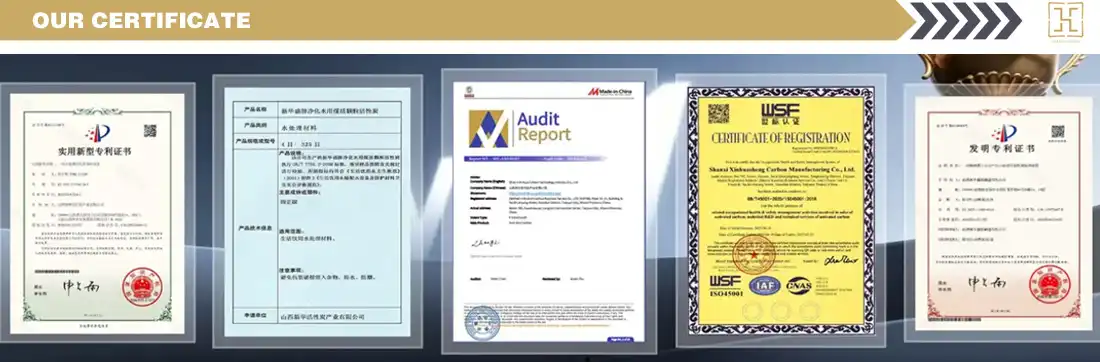
The company's ISO 9001, ISO 14001, and ISO 45001 certifications show that it is committed to making sure that its manufacturing standards are always met. Before it is released, each production batch is tested in the lab to see how well it absorbs chemicals, how strong it is, and how pure the chemicals are. This defense-grade quality control legacy was built up over 60 years of research and development with Tsinghua University and the Chinese Academy of Sciences. It makes sure that a wide range of industry uses will work as expected.
Safety and Environmental Profile
Because it is made up of small particles, powdered activated carbon needs to be handled carefully. Storage places need to keep things cool, dry, and away from things that can oxidise them. Taking steps to control dust while handling flammable fine powders lowers the risk of explosion and protects workers' lungs. Having enough air flow and following grounding rules can help keep static electricity to a minimum.
From an environmental point of view, coal-based powdered carbon helps reach sustainable goals by effectively getting rid of contaminants, which lowers the load on cleaning systems further down the line. The material is safe for drinking water uses as long as it meets government guidelines. After being used, wasted carbon that has contaminants adsorbed on it needs to be thrown away according to local hazardous waste rules. These rules depend on the type of pollutants that were absorbed.
Performance Comparison: 200-Mesh Powdered Carbon vs Standard Activated Carbon
Adsorption Speed and Efficiency
When it comes to how it interacts with other things, 200-mesh coal quality powdered carbon is better than solid activated carbon. Smaller particles have a lot more surface area per unit weight, which makes it easier for contaminants to diffuse and reach binding sites. In side-by-side tests, we saw that they absorbed up to 2.5 times more than solid options.
In most sewer situations, this speed means that the colour will be gone within an hour of dosing. Granular activated carbon, which has particles between 0.5 and 4 millimetres in size, needs longer contact times—often at least 15 to 30 minutes—to remove the same amount of material as liquid activated carbon. For staying in line with regulations, this quick reaction feature is very helpful for dealing with fast chemical spills or COD changes between 500 and 1000 mg/L.
Application Suitability and Limitations
Powdered carbon works great for group treatment, responding to emergencies, and uses that need to be able to change the dose easily. It works well to control seasonal tastes and smells in municipal water plants. Manufacturers of drinks like that can precisely remove colours without over-treating the material. Chemical plants use it to clean pollution before it goes through biological processes.
Granular media are easier to separate, but powdered carbon is harder to separate. Steps like sedimentation, filtering, or spinning are needed for recovery. It is not possible to regenerate because it is hard to collect small bits from cleaning sludge. Because of these things, powdered carbon can only be used once. On the other hand, solid activated carbon can be used over and over again in fixed-bed systems.
Cost Considerations and Supply Chain Factors
Mesh size has a direct effect on price. While 325-mesh carbon has a slightly larger surface area, 200-mesh coal quality powdered carbon has the best performance-to-cost ratio for regular decolorisation and odour removal. You don't have to pay more for particles that are too small when the larger grade works just as well for your purpose.
When buying things for industry, supply dependability is very important. Shanxi Xinhua keeps all of its core products in stock at all times thanks to its various production sites that can make a total of 45,000 tonnes of goods each year. It takes 7 to 15 days to ship standard orders. In an emergency, "green channel" delivery can happen as quickly as three days later. This response lowers the cost of keeping supplies on hand while keeping treatment going even when contamination happens out of the blue.
Selecting the Right Powdered Carbon for Your Industrial Needs
Application-Specific Performance Metrics
When deciding between 200-mesh coal quality powdered carbon and other types of carbon, you need to compare your treatment goals to the product's requirements. The iodine number shows the total adsorption ability. Usually, higher values mean better removal of organic contaminants. The methylene blue number tracks the growth of mesopores, which is important for getting rid of compounds that give colours.
Your contamination profile tells you what to choose. For drinking water uses that need to remove residual chlorine, the particles need to be fine enough but not too small. Organic solvent residue in chemical sludge moves quickly because the particles are so small. For heavy metal adsorption, carbons that have been chemically changed may be needed instead of normal coal-based goods.
When 200-Mesh Outperforms Alternatives
This mesh size works great when you need to set up quickly without having to make a lot of changes to your tools. Contamination reaction teams in emergencies, like being able to dose straight into tanks and clarifiers that are already in place. Powdered carbon works well with the process flow at places that don't have fixed-bed filter systems.
Seasonal treatment problems work really well with this content. Instead of keeping granular carbon beds up all year in case of rare taste and smell problems, water companies only use powdered carbon when they need to. Paper factories use it to get rid of colours during certain production runs, so they don't have to keep spending money on equipment for regeneration.
Supplier Evaluation Checklist
Buying choices include more than just the specs of the product. They also include what the seller can do. Check for certificates like ISO management systems and approvals for safe drinking water. Ask for test results that are unique to each batch and include information about the iodine number, ash level, moisture, and particle size distribution.
Check the strength of the supply chain by looking at the amount of inventory, output ability, and logistics agreements. Because Shanxi Xinhua is strategically located near major transportation hubs, specialised fleet operations allow national delivery within 3 to 7 days. Multimodal transport options that include real-time tracking, help with customs clearance, and protective packaging made for foreign shipping are good for customers all over the world.
Case Studies and Industry Applications of 200-Mesh Coal Quality Powdered Carbon
Municipal Wastewater Treatment Success
A medium-sized city wastewater treatment plant in the southeast of the US kept getting fined for over-releasing during industry load spikes. Unexpectedly, COD levels rose above what was allowed, which could lead to fines from the government. As an emergency answer, the center added 200-mesh coal quality powdered carbon to their treatment plan.
By using a jar test procedure, the best dose was found to be 120 mg/L under high-load conditions. Plant workers can now consistently meet disposal requirements, and within 90 minutes of adding carbon, the COD level drops by more than 85%. The cost of cleaning each year went down by 30% compared to the old method, which used smaller mesh carbon and gave only small improvements in performance at a much higher cost per unit.
Chemical Manufacturing Pretreatment Application
A speciality chemical company that makes dye intermediates had to deal with the colour of wastewater before it was treated biologically. When they sent highly coloured wastewater directly to their biotreatment system, it stopped microbes from working, which made the treatment less effective overall. The granular carbon filter that they were used to was too slow for their batch production processes.
By switching to 200-mesh coal quality powdered carbon, the dose could be administered directly while the wastewater was being collected. Then, it could be separated using the equipment that was already there for clarification. Colour removal always goes above 92%, making biotreatment work again. The facility says that process reliability has gone up, and biological treatment system upsets have gone down. This has led to real cost savings and better environmental compliance.
Emerging Industrial Applications
New developments have made powdered carbon useful for more than just treating water. It is now used in electroplating to quickly stabilise heavy metals before chelation processes. Food-grade versions are used for processing steps in the making of active ingredients by pharmaceutical companies. Even people in charge of air quality are looking into using fine carbon powders in wet scrubbing methods to get rid of VOCs.
Through research agreements, material producers and academic institutions are still making goods better. Chemical changes have made it so that variants can target specific types of contaminants more effectively. Combining powdered carbon with coagulants to make composite materials makes dosing and separation easier in facilities with limited space.
Conclusion
It makes sense to use 200-mesh coal quality powdered carbon instead of normal activated carbon in situations where fast adsorption, variable doses, and low cost are important. The material has been used successfully to treat city wastewater, remove colour from drinks, prepare chemicals for use, and help with emergencies. Its well-developed microporous structure quickly and effectively gets rid of colours, smells, chemical compounds, and chlorine that is still present. When compared to options with finer mesh, these have better performance-to-cost ratios for procurement managers, and they can still be used with current sedimentation and filter systems. Strategic sourcing from well-known companies with strong supply chains, full certifications, and expert support services guarantees long-term treatment success and legal compliance in a wide range of industrial settings.
FAQ
Why choose 200-mesh coal quality powdered carbon over 325-mesh?
Even though 325-mesh has a little more surface area, 200-mesh coal quality powdered carbon is the best choice because it has the right amount of speed for adsorption and ease of removal through settling, which lowers the risk of carbon getting into the final water. The bigger particles settle more consistently, which means that less complicated separation equipment is needed, and most normal treatment situations are easier to run.
How does coal-based powdered carbon compare to wood-based alternatives for COD removal?
Powdered carbon made from coal has a higher density and more developed mesopores, which makes it better for complex industrial COD components. Wood-based carbons usually work better for getting rid of big molecules that change colour, but they might need higher dose rates for mixed organic toxins that are common in industrial wastewater streams.
Can this carbon be regenerated?
Because it's hard to get small bits back from treatment sludge, powdered activated carbon isn't usually recycled. In most cases, the material is only used once as an absorbent, and the used carbon is thrown away according to local rules. Granular carbon in fixed-bed systems is still the best choice when the economics of renewal are good.
How do I determine the correct dosage for my system?
Standard Method 2510-based jar tests can be used to mimic the conditions of your treatment plant and figure out the most cost-effective dosage rate. We suggest trying with different amounts of carbon (50, 100, 150, and 200 mg/L) and keeping an eye on how well the target contaminants are being removed to figure out the best application rates for each spot.
Partner with Shanxi Xinhua Carbon Technology Industry Co., Ltd for Reliable Powdered Carbon Solutions
Shanxi Xinhua Carbon Technology Industry Co., Ltd. offers unique 200-mesh coal quality powdered carbon solutions that are backed by 60 years of top-notch research and development and factory standards that meet defence requirements. Our ISO-certified factories keep ready-to-ship items on multiple bases, so we can guarantee regular delivery times of 7–15 days and fast emergency shipping times of 3 days when we need to meet tight targets right away. We work directly with purchasing managers, environmental engineers, and technical directors to find the best carbon types for your decolorisation, odour control, and wastewater treatment needs. Email our technical team at greta@carbonxinhua.com to talk to an expert 200-mesh coal quality powdered carbon provider about your needs. You can feel confident about your next purchase choice if you ask for customised jar testing procedures, bulk order quotes, and full product paperwork.
References
1. Bansal, R.C., and Goyal, M. (2005). Activated Carbon Adsorption. Boca Raton: CRC Press.
2. Marsh, H., and Rodríguez-Reinoso, F. (2006). Activated Carbon: Origins, Production, and Applications. Amsterdam: Elsevier Science.
3. Crittenden, J.C., et al. (2012). MWH's Water Treatment: Principles and Design (3rd ed.). Hoboken: John Wiley & Sons.
4. Stenzel, M.H., and Gupta, M. (1997). "The Use of Powdered Activated Carbon for Water Treatment." In Activated Carbon: Solutions for Improving Water Quality, American Water Works Association Research Foundation.
5. Dastgheib, S.A., and Rockstraw, D.A. (2001). "Pecan Shell Activated Carbon: Synthesis, Characterization, and Application for the Removal of Copper from Aqueous Solution." Carbon, 39(12), 1849–1855.
6. Sontheimer, H., Crittenden, J.C., and Summers, R.S. (1988). Activated Carbon for Water Treatment (2nd ed.). Karlsruhe: DVGW-Forschungsstelle.

Send Inquiry
You may like
_1781662034490.webp)