_1778553121707.webp)
Bulk Supply 20*50 Mesh Coal Crushing Carbon Manufacturer
Jul 21, 2026
When precise filtration is needed for your industrial water treatment or air cleaning system, 20*50 mesh coal quality crushing carbon works better than any other material. This activated carbon with fine particles has particle sizes that are strictly controlled and range from 0.3 mm to 0.85 mm. It has a large specific surface area and well-developed micropores that quickly remove trace contaminants. This special material has the adsorption power and mechanical strength your operations need, whether you're in charge of pharmaceutical-grade water systems, VOC removal tasks, or liquid-phase decolorization processes.
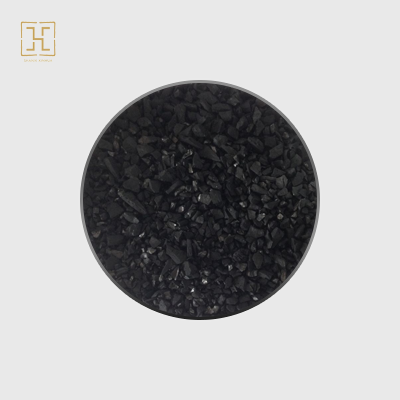
Understanding 20*50 Mesh Coal Quality and Crushing Standards
The name "20*50 mesh" refers to a precise range of particle sizes that are set by normal screening methods. This standard covers things that go through a 20-mesh sieve but stay on a 50-mesh sieve. The particles they make are between 0.30 mm and 0.85 mm in diameter.
Why Particle Size Matters for Filtration Performance
How well activated carbon works in your systems is directly related to how the particles are sized. When compared to coarser grades, particles in the 20–50 mesh range have a lot more external surface area per unit volume. Because there is more surface area, the adsorption process moves faster, which means that contaminants get to active adsorption sites faster. Shorter contact times and better cleanup efficiency help your treatment processes, especially when working with small-molecule organic compounds, trace VOCs, and dissolved color bodies.
Industry Standards Governing Production Quality
Strict quality standards must be followed when making high-quality crushed carbon. ASTM D2862 sets standards for testing particle size distribution, making sure that no more than 5% of the material is outside the mesh range that is given. Following ASTM D3802 for hardness testing supports mechanical integrity, which is important to keep from breaking down too quickly during backwashing cycles. The ASTM D4607 iodine value test measures the growth of micropores. The best grades get between 800 and 1100 mg/g. When purchasing managers look at bulk suppliers, these standardized tests give them objective performance indicators.
The Briquetting Advantage in Crushed Carbon Production
Traditional coal-based carbons that are crushed straight from bigger pieces often have problems with their structure and make too much dust. Advanced makers use a briquetting process in producing 20*50 mesh coal quality crushing carbon, in which finely ground coal is mixed with special binders and then pressed under high pressure. The coal is then carbonized and activated before it is finally crushed. This method has a number of operational benefits. The material is very hard mechanically, usually harder than 90% ball pan hardness values. This keeps the filter from breaking down due to wear and tear. The pores become more evenly spread out across batches of particles, which makes the behavior more predictable. Because the structure is stronger, there is less chance of "black water" problems, which happen when small carbon particles get past the filters.
Technical Insights: How Mesh Size Affects Adsorption Performance
Surface chemistry and mass transfer rules play a big role in the relationship between particle size and adsorption capacity. Knowing about these technical issues helps you choose materials that are best for certain treatment problems.
Micropore Development and Small-Molecule Capture
An internal hole network gives activated carbon its amazing ability to adsorb things. Micropores, which have diameters less than 2 nanometers, are where small organic molecules like pharmaceutical residues, endocrine disruptors, and volatile organic compounds mainly stick. The micropore content of good 20*50 mesh material stays above 65% of the total pore volume. This high micropore percentage is directly linked to the carbon's ability to get rid of small contaminants that materials with bigger pores can't get rid of well.
Because the particles in 20*50 mesh coal quality crushing carbon are smaller, the diffusion paths are shorter. For contaminants to reach internal adsorption sites, they only need to journey a shorter distance from the particle surface. This geometric advantage speeds up the removal rate, so your systems can achieve the desired water quality with less carbon bed depth or shorter contact time.
Balancing Flow Rate and Contact Time
When designing hydraulics, fine-particle carbons need to be carefully thought through. Smaller particles speed up the adsorption process, but they also make it harder for fluids to move through packed beds. Designers of systems need to take into account that pressure drops are greater across filtration vessels. Controlling the flow rate is very important because too much flow can make particles mix and possibly carry over to other areas, and not enough flow doesn't use the carbon bed to its full potential.
When the ship is first loaded, fine particles can't get out because the water is slowly added. Many operators use upflow wetting methods, which let air leave while reducing the amount of turbulence that could lift particles. After getting wet and settling down, the carbon bed can handle standard flow rates without losing particles.
Equipment Compatibility Across Industrial Applications
The 20*50 mesh coal quality crushing carbon works for a variety of filtration setups. The material's fast kinetics are good for fixed-bed pressure tanks, which are often used to treat water in the semiconductor and pharmaceutical industries. The big surface area makes it easy to remove color bodies in liquid-phase batch treatment processes, like decolorization in the production of specialty chemicals. This range of particle sizes is used in even vapor-phase applications, like high-end respirator capsules, where limited canister space requires the highest adsorption capacity per unit volume.
Comparison and Selection: Choosing the Right Mesh Size for Your Operation
When making a purchase decision, people often have to compare particle size options to find the best one for their needs while also keeping costs low.
Performance Characteristics of Different Mesh Ranges
Coarser materials, like 1240 mesh (about 0.42mm to 1.70mm), have less pressure drop and work well in high-volume water treatment tasks where there is time for longer empty bed contact times. The 2050 mesh range has faster adsorption rates, which makes it perfect for tough removal situations or installations with limited room. The right choice is made when you know your system's hydraulic limits and treatment goals.
Application-Specific Selection Criteria for Procurement Teams
Cost Considerations in Bulk Purchasing
Fine-mesh carbons cost more than standard grades, but the total cost includes how often they need to be replaced and how much space they take up in the system. Higher adsorption efficiency usually means longer use between changes, which saves money on work and disposal fees. Smaller ships might be enough for installations where space costs a lot of money. Instead of just looking at the per-ton buy price, procurement directors should look at lifecycle costs as well.
Procurement Guide: Sourcing Bulk 20*50 Mesh Crushed Carbon Products
To find dependable activated carbon suppliers, you need to carefully look at their technical skills and quality control methods.
Essential Supplier Qualifications and Certifications
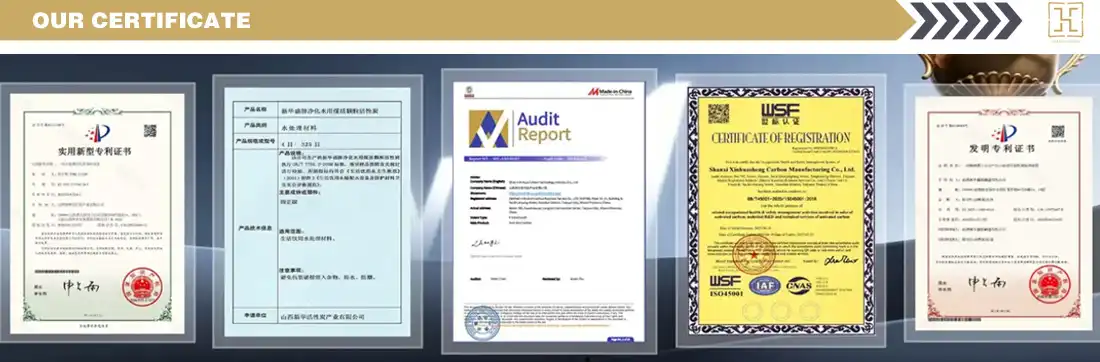
Manufacturers with a good reputation keep their ISO 9001 quality management certification, which shows that they consistently control production. The ISO 14001 certification for environmental management and the ISO 45001 certification for workplace health and safety show that a company is making good products. For each batch of activated carbon, suppliers should give test results that show the iodine value, ash content, moisture level, hardness, and particle size distribution. The NSF/ANSI 61 approval shows that the material is safe for use with drinking water.
Evaluating Manufacturing Capability and Supply Reliability
Disruptions in the supply chain pose big risks to large-scale industry users. Check to see if potential suppliers have enough production bases to meet your annual needs for materials such as 20*50 mesh coal quality crushing carbon. Manufacturers that can produce tens of thousands of tons each year are examples of scalability. How you handle your inventory is just as important. Suppliers who keep a lot of standard goods in stock can fill urgent orders in days instead of weeks. Procurement teams can better manage project timelines when they know the lead times for both stock items and custom formulations.
Logistics and Delivery Considerations for North American Buyers
Shipping goods across borders from Asian manufacturing hubs needs careful logistics planning. Established suppliers offer full freight solutions, such as ocean freight consolidation, help with customs clearance, and delivery to your site in the United States. Integrity in packaging keeps moisture from absorbing during transport; bags that don't absorb moisture and have inner covers protect carbon activity. Real-time tracking of shipments reduces the amount of uncertainty about when they will arrive. Some suppliers keep their stock in North American distribution centers in strategic places. This cuts shipping times by a huge amount and makes the process of importing much easier.
Due Diligence and Quality Verification Steps
Advanced Equipment and Technology Behind Production Excellence
The advanced manufacturing methods and equipment used during production are reflected in the quality of the finished activated carbon.
Precision Crushing Technology for Consistent Particle Sizing
To get a tight particle size distribution, you need special crushing equipment that is set up to reduce the number of particles that are too big or too small. Impact crushers, roll mills, and air classifiers all work together to make sure that the 20*50 mesh coal quality crushing carbon specification is met with little variation. Inline particle analyzers in more advanced systems give real-time input, which lets process changes be made that keep things the same across production runs. This precise engineering stops the filtration issues—early clogging or particle breakthrough—that happen with carbons that have a wide range of sizes.
Activation Process Controls for Pore Structure Optimization
The internal pore network is formed by activating steam at temperatures carefully controlled between 800°C and 1000°C. To get the most micropore volume while keeping particle strength, process engineers change the activation time, the rate of steam flow, and the temperature profiles. Premium carbons are different from commodity goods because they have this delicate balance. Companies that buy advanced kiln systems with multiple temperature zones and atmosphere tracking make carbons that are better at absorbing things and can be used again and again.
Quality Monitoring and Testing Infrastructure
Modern factories have separate labs that are fully equipped to analyze and characterize carbon in a wide range of ways. A BET surface area tester checks the total surface area and the spread of pore sizes. Automatic iodine testing tools make sure that the measurement of micropore activity is always accurate. Scanning electron microscopy shows the shape of the surface and any possible structural flaws. These investments in quality infrastructure help manufacturers find small differences, which keeps the performance level that businesses need for important tasks.
Conclusion
Choosing the right activated carbon provider can affect how well your business runs, how well it follows the rules, and how much it costs to treat everything. The 20*50 mesh coal quality crushing carbon specification has measurable benefits for tough cleaning tasks, like making ultrapure water shiner or getting rid of the color of pharmaceutical ingredients. The performance of a material depends on how well it is manufactured, which includes careful control of particle size, optimal pore development, and strict quality control. Procurement teams make sure that operations don't stop by working with technically skilled suppliers who offer clear certifications, reliable inventory, and quick logistics. This keeps the supply chain stable and helps companies meet stricter standards for quality and the environment.
FAQ
What distinguishes briquetted crushing carbon from standard crushed activated carbon?
Before being activated, briquetted carbon is mixed with binders and compressed under high pressure. This makes the pores more evenly distributed and the material much harder than when it is directly crushed. This way of making things keeps high-flow systems from breaking down too soon and lowers the amount of dust that is made.
How does 20*50 mesh sizing affect pressure drop in filtration systems?
Finer particles make more surface area contact, but they also make it harder for fluids to move. When systems use 2050 mesh carbon, the pressure drops more often than when they use coarser grades like 1240 mesh. Taking particle size into account in hydraulic design makes sure that flow rates are right without needing too many pumps.
Can this carbon type be thermally regenerated for reuse?
Yes, the high mechanical strength that comes from briquettes does make thermal recovery more effective. The material doesn't break down physically during high-temperature reactivation cycles. This keeps the bed intact through many renewal cycles and reduces the production of fines.
What certifications should I verify when sourcing for drinking water applications?
The NSF/ANSI 61 certification proves that the material is safe to touch with potable water. To make sure you're following the rules, you should also make sure the AWWA B604 standards are being followed and ask for leaching test data for heavy metals and organics.
Partner with a Trusted 20*50 Mesh Coal Quality Crushing Carbon Supplier
Shanxi Xinhua Carbon Technology Industry Co., Ltd. has been researching activated carbon for more than 60 years and has been making large amounts of it for 20 years. They can meet the needs of demanding industrial applications all over the world. Our carefully designed 20*50 mesh coal quality crushing carbon manufacturer goods have iodine levels of 800-1100 mg/g, ash contents below 8%, and mechanical hardness levels above 90%. These specs have been checked by quality systems that are ISO-certified. With the ability to produce 45,000 tons per year across multiple bases, we keep a large inventory that allows for standard delivery within 7 to 15 days and faster 3-day service for urgent needs. Working together technically with Tsinghua University and the Chinese Academy of Sciences guarantees that there will always be new ideas for improving pore structure and application performance. You can email our technical team at greta@carbonxinhua.com to talk about your specific purification problems, get performance data, or set up sample testing that shows why top environmental contractors and city water systems trust our defense-grade quality standards.
References
1. American Society for Testing and Materials. (2020). Standard Test Method for Determination of Iodine Number of Activated Carbon. ASTM D4607-14.
2. Bansal, R.C., & Goyal, M. (2005). Activated Carbon Adsorption. Boca Raton: CRC Press.
3. Marsh, H., & Rodríguez-Reinoso, F. (2006). Activated Carbon. Oxford: Elsevier Science.
4. NSF International. (2019). Drinking Water Treatment Chemicals - Health Effects. NSF/ANSI Standard 61.
5. Snoeyink, V.L., & Summers, R.S. (1999). Adsorption of Organic Compounds. In Water Quality and Treatment: A Handbook of Community Water Supplies (5th ed., pp. 13.1-13.83). New York: McGraw-Hill.
6. Yang, R.T. (2003). Adsorbents: Fundamentals and Applications. Hoboken: John Wiley & Sons.

Send Inquiry
You may like
_1781662034490.webp)