_1778553121707.webp)
Bulk Coal Briquette Crushing Activated Carbon for Global Buyers
Jul 29, 2026
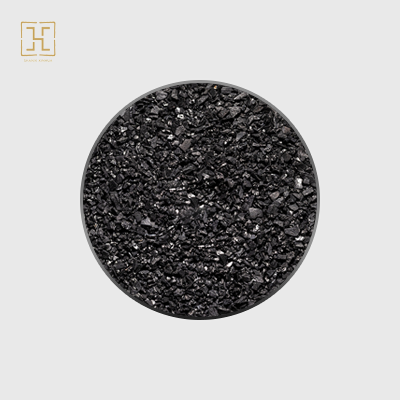
Coal briquette crushing activated carbon is a high-tech adsorption material made through a precise manufacturing process that involves pulverising high-quality bituminous coal, mixing it with a binder, pressing it under high pressure to form briquettes, carbonising it, and activating it with steam before crushing and screening it. This briquette-based method makes macropore and mesopore structures that are evenly distributed and work much better than directly crushed raw coal. It solves important problems in the industry, such as too much pressure drop in deep-bed filtration systems, carbon running out too quickly, and the production of fines that happen with regular coal-based carbons. Buyers around the world who need reliable adsorption solutions like this method of production offer stability and performance in harsh industrial and outdoor settings.
Understanding the Coal Briquette Crushing Process for Activated Carbon
Preparing the material with great care is needed to change raw coal into high-performance activated carbon. Coal briquette crushing is the first step that affects the quality and uniformity of the end product. Instead of directly crushing raw coal as other methods do, the briquetting process adds uniformity and structural integrity, which improves adsorption properties.
Why Briquetting Before Crushing Matters?
By mixing finely ground coal with certain binding agents under controlled pressure, briquettes make a uniform material. This pre-treatment gets rid of the natural variations that exist in raw coal seams, where the amount of moisture, ash, and volatile matter can change a lot within the same deposit. When we carefully mix these coal powders and press them into thick briquettes, we set a starting point for action that we can count on. When these uniform briquettes are then crushed, they make particles with very consistent hole structures. This is in contrast to raw coal pieces, whose internal structures are often not consistent because the fragments break in unpredictable ways. Environmental engineers who are in charge of VOC treatment systems really like this consistency because it makes sure that the breakthrough curves and adsorption capacities are always the same across multiple carbon bed replacements.
The Crushing Sequence and Particle Size Control
By mixing finely ground coal with certain binding agents under controlled pressure, briquettes make a uniform material. This pre-treatment gets rid of the natural variations that exist in raw coal seams, where the amount of moisture, ash, and volatile matter can change a lot within the same deposit. When we carefully mix these coal powders and press them into thick briquettes, we set a starting point for action that we can count on. When these uniform briquettes are then crushed, they make particles with very consistent hole structures. This is in contrast to raw coal pieces, whose internal structures are often not consistent because the fragments break in unpredictable ways. Environmental engineers who are in charge of VOC treatment systems really like this consistency because it makes sure that the breakthrough curves and adsorption capacities are always the same across multiple carbon bed replacements.
The material goes through a series of stages of crushing that are meant to keep the good qualities that were formed during briquetting. Jaw or gyratory crushers are often used for the first step of size reduction. These machines break briquettes into pieces of a medium size. This first stage of crushing works at carefully monitored speeds to avoid making too much heat, which could burn off volatile ingredients too quickly and prevent the best activation. The pieces are then finely ground to specific mesh sizes. 8×16 mesh (about 1.18mm to 2.36mm) is still very popular for liquid-phase applications that need low pressure drops, while 8×30 mesh is widely used in treating drinking water in cities where balanced hydraulic conductivity and contact time are important.
Activation Enhancement Through Proper Crushing
At this point, screening systems get rid of both large particles and fines, and for Coal briquette crushing activated carbon, this quality control step is critical because excessive fines not only reduce the usable product yield but can also pass through filtration media and contaminate treated water in municipal and industrial applications. Managers who buy things for large water treatment plants know that fines that are below the required level not only waste product but can also get through filter media and contaminate treated water. Good makers usually keep the fines content below 5% by weight. This shows how precisely controlled briquette crushing can be compared to direct coal crushing, which usually makes fines of 12–18% by weight.
Equipment and Techniques for Efficient Coal Briquette Crushing
When choosing the right crushing equipment, you have to think about how much it will crush, how much energy it will use, and how much maintenance it will need. Different types of equipment have different benefits depending on the size of the production and the specifications that need to be met.
Primary Crushing Equipment Options
Jaw crushers are the most common type of primary crusher because they are strong and can handle the compressive strength of well-formed briquettes. These machines have a fixed jaw plate and a moving jaw plate that pushes material through a wedge-shaped cylinder. As the briquettes fall, they break apart more and more. Large petrochemical plants that make activated carbon for treating waste gas use jaw crushers because they can handle 50 to 800 tonnes per hour with low running costs. Because the breaking mechanism is simple, it lasts longer. Good jaw plates can usually be used for 6 to 12 months before they need to be replaced when processing coal briquettes, but only 3 to 6 months when dealing with rough materials like silica.
If you need to control the particle size more precisely during the main breaking step, roller crushers are an option. Briquettes are pushed into the crushing zone by two horizontal rollers that spin in opposite directions. Compressive and shearing forces create particles of a more uniform size than the impact-dominated fracture patterns that happen in jaw crushers. When municipal water treatment buying units buy granular activated carbon to get rid of bad tastes and smells, they usually ask for roller-crushed material because it makes fewer fines, which means less carbon is lost during backwashing cycles. Most of the time, they use 15 to 25 percent less energy than similar jaw crusher setups, but they cost 30 to 40 percent more to buy at first.
Secondary Crushing and Sizing Systems
Hammer mills are great for reducing the size of secondary materials after primary crushers have produced 10–25 mm material that needs to be fine-tuned even more to meet final mesh requirements. Rotating hammers on a central shaft hit falling particles at high speed, breaking them against breaker plates and the inside of the housing. When environmental engineering companies add carbon to adsorption tanks, the exact particle size ranges they need are made by impact forces and wear and tear. Operators can change the speed of the hammer tips with variable speed drives, which lets them control the particle size in real time without having to change the equipment. Modern setups have automatic feedback systems that check the size of the product through downstream analysis and change the mill speed to keep specs even though the properties of briquettes naturally change from batch to batch.
At this point, screen interaction is very important. Multi-deck rotating screens sort the crushed material into different mesh fractions at the same time. They send the large material back to the primary crushers, send the on-spec carbon to storage bins, and collect the fines for further processing or other uses. Quality control managers like this setup because it checks the particle sizes all the time and finds any equipment wear or changes in working parameters before the off-spec material gets to customers.
Energy Efficiency and Maintenance Considerations
When industrial buyers look at crushing equipment, they need to figure out the total cost of ownership, which is more than just the purchase price, and for Coal briquette crushing activated carbon, this means evaluating energy consumption, maintenance frequency, and wear parts replacement costs across the equipment's operating life. Equipment choice is a major economic factor because breaking activities usually consume 8–15% of the total cost of activated carbon production. When working with the right amount of material, jaw crushers that are the right size use 1.2 to 1.8 kWh per tonne of briquette output. Hammer mills, on the other hand, need 3 to 5 kWh per tonne for secondary crushing to final mesh sizes. These numbers assume that the equipment is well taken care of. Hammers that are worn out or jaw plates that aren't lined up right can raise consumption by 25 to 40 percent while also making it harder to control particle size.
Schedules for preventative repair have a direct effect on how reliable output is. Leading manufacturers make machines with wear parts that can be quickly replaced. For example, replacing a hammer in a modern mill only takes 45 to 90 minutes, while it takes 4 to 6 hours for older models that need the housing to be taken apart. When discussing the buy of tools, supply chain leaders should make sure that parts are available and set up stocking deals for important parts like jaw plates, hammers, and screen media. Keeping three to six months' worth of consumables on hand is especially helpful for production facilities that are far from manufacturing centers. This way, they don't have to wait for long periods of time for international shipments.
Comparing Coal Briquette Crushing with Alternative Methods for Activated Carbon
Raw material selection and processing methodology profoundly influence activated carbon performance characteristics and production economics. Understanding how coal briquette crushing compares to alternative approaches helps buyers make informed sourcing decisions.
Performance Characteristics Across Feedstock Types
When industrial buyers look at crushing equipment, they need to figure out the total cost of ownership, which is more than just the purchase price. Equipment choice is a major economic factor because breaking activities usually consume 8–15% of the total cost of activated carbon production. When working with the right amount of material, jaw crushers that are the right size use 1.2 to 1.8 kWh per tonne of briquette output. Hammer mills, on the other hand, need 3 to 5 kWh per tonne for secondary crushing to final mesh sizes. These numbers assume that the equipment is well taken care of. Hammers that are worn out or jaw plates that aren't lined up right can raise consumption by 25 to 40 percent while also making it harder to control particle size.
Schedules for preventative repair have a direct effect on how reliable output is. Leading manufacturers make machines with wear parts that can be quickly replaced. For example, replacing a hammer in a modern mill only takes 45 to 90 minutes, while it takes 4 to 6 hours for older models that need the housing to be taken apart. When discussing the buy of tools, supply chain leaders should make sure that parts are available and set up stocking deals for important parts like jaw plates, hammers, and screen media. Keeping three to six months' worth of consumables on hand is especially helpful for production facilities that are far from manufacturing centers. This way, they don't have to wait for long periods of time for international shipments.
Economic Analysis and Cost Optimization
At first glance, it looks like coal briquette crushing activated carbon costs 8–15% more per tonne than directly crushing coal carbon with the same mesh size. Total cost of ownership estimates, on the other hand, show a different economic picture. The higher dynamic strength cuts carbon loss by 12 to 20 percent during handling and recovery, which makes the product last longer. When people buy briquette-based carbon, which has 6–10% ash instead of 12–18% ash in many raw coal carbons, they are buying more active adsorption capacity per tonne, not inactive mineral matter.
The cost of operations also favours materials made from briquettes, and for Coal briquette crushing activated carbon, the uniform particle size distribution reduces pressure drop across packed beds by 18–25% compared to irregularly shaped raw coal carbon, leading to lower energy consumption for fans in gas-phase systems and reduced pumping costs in liquid applications. The uniform particle size lowers pressure drops across packed beds by 18–25% compared to raw coal carbon, where particles are spread out in an uneven way. This means that fans will use less energy in gas-phase applications and pumps will cost less in liquid systems. Just by lowering the pressure, a water treatment plant that handles 10 million gallons of water every day could save $8–12,000 a year on energy costs. When you add these operational savings to the longer service life and regeneration benefits of activated carbon, the total five-year ownership costs are usually 20–30% lower for briquette crushing activated carbon, even though it costs more at first.
Procurement Guide: Where and How to Source Coal Briquette Crushing Activated Carbon?
To navigate the global activated carbon market, you need to know what suppliers can do, what certifications are needed, and how to handle logistics issues that affect the quality and cost of the delivered product.
Identifying Qualified Suppliers
Technical skill is what sets special providers apart from basic makers. Buyers should look at companies that work together with research institutions to make products. Working with groups like Tsinghua University, the Chinese Academy of Sciences, and specialised agencies shows a dedication to developing carbon technology beyond what is normally available. These study links usually lead to unique changes that solve problems in specific applications. For example, catalytic loadings can help catch more mercury, and surface chemistry changes can help chlorine stick to surfaces better in drinking water treatment.
Large industrial users and environmental engineering companies who are working on multiple projects at the same time care a lot about production size and store depth. Suppliers with more than one production base that can produce more than 40,000 tonnes of goods each year can safely meet large orders and make sure that standards are met across all packages. The carbon technology company in Shanxi is called Xinhua. has factories in Shanxi, Ningxia, Fujian, and Xinjiang provinces that make 45,000 tonnes of goods every year, making sure that all of their core products are in stock and that they can send them normally within 7 to 15 days. As regulatory deadlines get closer, emergency procurement situations like these become more common. In these cases, suppliers need to be able to respond quickly and offer three-day delivery for urgent needs.
Certification Requirements and Quality Assurance
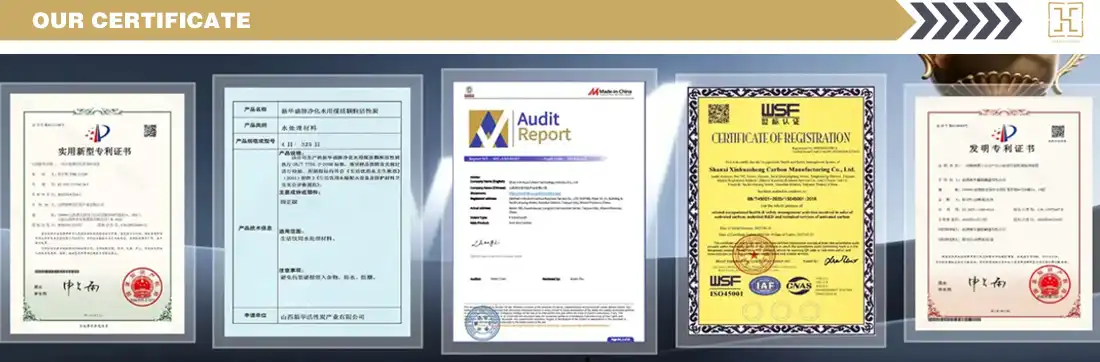
ISO approval gives you basic trust in the regularity of your business. The ISO 9001 quality management, ISO 14001 environmental management, and ISO 45001 health and safety at work certifications show that there are organised ways to keep an eye on production and make improvements all the time. These licenses are especially important for government contracting units that are looking for suppliers for public works-funded water treatment projects in cities. Application-specific certifications are just as important. For example, NSF/ANSI Standard 61 certification makes sure that drinking water is safe for city uses, and AWWA B604 compliance makes sure that granular activated carbon meets the standards of the American Water Works Association.
In addition to certifications, buyers should ask for detailed technical data sheets that show the iodine number (which shows how micropores are developing), the molasses number (which shows how much mesopore and macropore capacity there is), the methylene blue adsorption (which shows how much mesopore volume there is), the ash content, the moisture levels, and the mechanical hardness. Good sellers include a Certificate of Analysis with every package, which lists the qualities that were checked for that particular production lot. When system performance changes need to be looked into, this batch traceability comes in very handy—knowing exact carbon specifications lets engineering teams tell the difference between problems with material properties and operational factors.
Logistics and Delivery Considerations
Different operational scales and handling abilities can be accommodated by different packaging options. Standard 25 kg bags with a waterproof lining are good for smaller facilities and can be handled by hand. On the other hand, 500 kg jumbo bags make logistics easier for large industrial users who use bulk pneumatic transfer systems. International buyers can save the most money by shipping in containers. A normal 20-foot container can hold about 18–20 tonnes of bagged activated carbon, and a 40-foot container can hold 25–28 tonnes, based on how the bags are packed.
Choosing the right way of transportation combines speed and cost, and for Coal briquette crushing activated carbon, ocean freight offers the most cost-effective option for bulk shipments with typical transit times of 25–45 days from Asian factories to North American ports, while air freight reduces delivery to 5–7 days but costs 300–500% more, making it suitable only for emergency restocking where production downtime costs exceed the premium. Ocean freight is the cheapest way to move goods across the continent, but it usually takes 25 to 45 days to get from Asian factories to North American ports. Air freight cuts travel time to 5–7 days, but it costs 300–500% more. This extra cost is only worth it in emergency cases where the costs of production downtime are higher than the costs of faster shipping. Suppliers with a lot of experience, like Shanxi Xinhua Carbon Technology Industry Co., Ltd., arrange intermodal options that include train, truck, ocean, or air transport, real-time tracking, and special protective packing that keeps items from getting wet or damaged during long travel.
Maximizing Activated Carbon Production with Optimal Briquette Crushing Practices
The quality of the activated carbon, the speed of production, and the cost of production are all directly affected by how well the breaking processes are run. Using best practices that have been shown to work helps facilities keep their output steady while reducing downtime and energy use.
Maintaining Optimal Operating Parameters
The amount of moisture in the briquettes that go into the breaking equipment has a big effect on how the particles are sized and how well the equipment works. Target moisture levels of 8–12% give enough flexibility to make durable briquettes without using too much energy to break too dry, solid material or the paste-like behaviour of wet fodder that clogs crushing chambers. Production sites should put in place constant moisture tracking on the briquette lines that feed the crushers, and the dryer output temperatures should be controlled automatically to meet standards. This simple investment in instruments usually pays for itself in 6 to 9 months through less upkeep on the breaker and more consistent output.
The most efficient way for crushing equipment to work is within its designed capacity ranges. When people try to get the most out of their crushers by overfeeding them, they cause them to wear out faster, use more energy per tonne, and lose control over the powder size. Underfeeding wastes resources and makes things less cost-effective. The best filling level is usually between 75 and 85% of the standard capacity. This allows for normal changes in the material while getting the most out of the equipment. Modern crushers have load tracking systems that change the feed rates automatically. However, facilities with older equipment can benefit from training their operators on the cost and quality benefits of consistent, correct loading.
Troubleshooting Common Operational Challenges
Most of the time, problems with briquette manufacturing happen when the crushing chamber gets clogged. These things usually happen when too big of briquettes go into equipment that's meant to handle smaller feeds, when there are sudden changes in moisture levels that cause materials to stick together, or when metal fasteners or welding slag get into the feedstock and contaminate it. Using magnetic separation before the main crushers gets rid of metal contamination, and before the briquettes reach the crushing chambers, they are turned away by automatic size verification screens if they are too big. When blockages happen anyway, equipment designs that make it easy to get to the chamber quickly reduce downtime. For example, hydraulic housing releases let you clear obstructions in 15 to 30 minutes, while manually unbolted designs take hours.
Uneven particle size ranges that appear after breaking processes are a sign of worn-out tools or changes in the way the machine is working. The product from a jaw crusher gets coarser over time as the gap between the fixed and moving jaw plates at the output point gets bigger due to wear. By measuring and changing this gap on a regular basis, specs are kept up between plate changes. The hammer tip wear, rotor speed, and screen hole size all affect the size of the product that comes out of a hammer mill. Facilities should set up routines for measuring wear and replace individual hammers when they hit the manufacturer's wear limits instead of waiting for the whole rotor to be replaced. These routines should include checking the hammer measures every 200 to 300 hours of operation. This method of replacing parts in stages keeps performance stable and spreads out the cost of repair over time.
Emerging Technology Trends
Integration of automation changes crushing operations from time-consuming, labour-intensive tasks that need constant operator attention to mostly self-sufficient systems that can be watched from afar. Machine vision systems are used in modern installations to take pictures of the crusher's product streams and use particle size analysis algorithms to change the machine's settings in real time. These systems keep specifications more tightly under control than human operators could, freeing up workers to do more important tasks like quality assurance and preventative maintenance. The 15–25% drop in off-spec products that these systems usually give quickly pays for themselves, especially for sites that make different types of activated carbon and need to switch out their equipment often.
Variable frequency drives, better crushing chamber shapes, and waste heat recovery are some of the ways that energy economy has improved. Instead of running at full power all the time, variable frequency drives change the motor speed to match the breaking load at any given time. This saves 20–35% of the energy used in normal installations with variable feed rates. Modern chamber designs move things through the breaking zones more efficiently, cutting down on the number of hits and recirculations that waste energy in older designs. Some facilities that are looking to the future use waste heat from breaking to dry the briquettes before they enter the system. This creates a closed-loop energy economy that lowers the cost of production overall.
Environmental compliance requirements drive new ways to control dust. Traditional water spray systems do a good job of getting rid of dust, but they add wetness that needs to be dried later. Modern dry collection systems use high-efficiency cyclones and cloth screens to collect particles without using water. This means that the fines that are collected can be turned right away into briquettes. This gets rid of both the environmental damage caused by dumping wet dust and the economic loss caused by throwing away carbon fines. This shows how environmental and economic goals can work together in well-designed production systems.
Conclusion
Crushing Coal briquette crushing activated carbon improve performance, which helps solve important problems in areas like water treatment, petrochemicals, and industrial air cleaning. The way of briquetting makes hole structures that are evenly spread out and have higher mechanical strength. This allows for longer service lives, multiple renewal cycles, and consistent adsorption performance, all of which have a direct effect on the stability of the system and its total ownership costs. Buyers should know about the production process, factors for choosing tools, and best practices for running a business that set luxury providers apart from basic makers. As environmental laws get stricter around the world and businesses need more advanced adsorption solutions, this type of material is becoming more popular among sophisticated industrial buyers. This is because it can produce consistent high-tech results when properly crushed coal briquettes.
FAQ
What mesh sizes are available and how do I select the appropriate size for my application?
The most common mesh sizes are 8x16 (1.18–2.36 mm), which is best for low-pressure drop liquid systems and high-flow gas applications; 8x30 (0.6-2.36 mm), which is commonly used to treat drinking water in cities; and 12x40 (0.42-1.7 mm), which is best for situations that need the most contact time. Which one to use depends on the hydraulics of your system, the touch time you need, and whether you're treating gas or liquid streams. Based on your flow rates, contaminant profile, and equipment configuration, our technical team can help you choose the right size.
Can this activated carbon be regenerated, and how many cycles are typical?
The high mechanical strength of activated carbon from breaking coal briquettes makes it a great material for heat recovery. When systems are properly built, they can usually go through 5 to 8 regeneration rounds, which is a lot more than the cost of a single-use application. The temperature (usually between 800°C and 900°C), the control of the atmosphere, and the types of contaminants all affect how well the regeneration works. Our material stays structurally sound through more renewal processes than options made from wood-based carbons or directly crushed coal.
How does ash content affect performance in my specific application?
A lower ash content (6–10% in good briquette-based carbon) means more adsorption capacity per tonne and less chance of unwanted catalytic reactions or pH changes in treated water. Carbon with a high ash content may leach minerals into the water, which can change the chemistry of the water, or it may introduce particles that contaminate the finished product. The make-up of the ash is just as important as its quantity. Our detailed Certificate of Analysis lists both the total amount of ash and the specific minerals it contains, so you can see if it meets the needs of your process.
What documentation do you provide for regulatory compliance?
Each package comes with a Certificate of Analysis that lists the qualities that were checked, such as the iodine number, ash level, wetness, hardness, and mesh size distribution. We keep our ISO 9001, ISO 14001, and ISO 45001 certifications up to date, and our goods that are safe for drinking water have cleanliness licenses from local health officials. If you need more proof for a permit or to make sure you're following the rules, we can give you material safety data sheets, performance validation data, and application-specific test reports to back up your regulatory applications.
What is your typical lead time, and do you offer expedited delivery?
Items in stock are shipped within 5 to 7 business days, and regular shipping to most foreign places takes 7 to 15 days thanks to our well-established transport network. Customised specifications take 7–10 working days to make, while large orders over 100 tonnes usually take 15–20 working days. We keep the ability to make emergency purchases and offer fast three-day delivery for important compliance deadlines or system failures that come up out of the blue. Our chosen sites near major transport hubs and long-term freight partnerships make delivery around the world dependable and trackable.
Partner with Shanxi Xinhua Carbon Technology Industry Co., Ltd. for Superior Activated Carbon Solutions
Finding an activated carbon and coal briquette crushing maker with a track record of technical know-how and large-scale output is what separates a successful system from one that has to deal with expensive operating problems. The carbon technology company in Shanxi is called Xinhua. blends more than 60 years of experience in carbon technology with defense-grade quality systems. It has four production sites that deliver 45,000 tonnes of mesh every year. Through our research partnerships with Tsinghua University and the Chinese Academy of Sciences, we are always coming up with new ways to improve performance. Our ISO 9001, ISO 14001, and ISO 45001 certifications make sure that our quality always meets the highest standards. Our technical team can help you with application engineering, whether you need standard mesh sizes for treating municipal water or custom formulations for specific industrial processes. Contact our experienced export team at greta@carbonxinhua.com to discuss your specific adsorption challenges and receive detailed technical recommendations with competitive pricing for your coal briquette crushing activated carbon requirements.
References
1. Bansal, R.C. and Goyal, M. (2005). Activated Carbon Adsorption. CRC Press, Taylor & Francis Group.
2. Marsh, H. and Rodríguez-Reinoso, F. (2006). Activated Carbon. Elsevier Science.
3. Snoeyink, V.L. and Summers, R.S. (1999). "Adsorption of Organic Compounds," in Water Quality and Treatment: A Handbook of Community Water Supplies, 5th Edition, American Water Works Association.
4. Lv, Y., Zhang, X., and Abbas, S. (2012). "Adsorption Characteristics of Coal-based Activated Carbon for Removal of Volatile Organic Compounds," Journal of Chemical & Engineering Data, 57(11), pp. 3173-3180.
5. Çeçen, F. and Aktaş, Ö. (2011). Activated Carbon for Water and Wastewater Treatment: Integration of Adsorption and Biological Treatment. Wiley-VCH.
6. Derbyshire, F., Jagtoyen, M., and Thwaites, M. (1995). "Activated Carbons—Production and Applications," in Porosity in Carbons: Characterization and Applications, Edward Arnold Publishers, pp. 227-252.

Send Inquiry
You may like
_1781662034490.webp)