_1778553121707.webp)
Acid-Etched Coal-Based Activated Carbon Improves Selective Adsorption Efficiency
Aug 20, 2026
When your industrial process demands more than generic filtration—when trace metal contamination could derail an entire production batch or when regulatory limits leave no margin for error—acid-etched coal-based activated carbon becomes the precision tool your operation needs. Unlike standard activated carbon, this chemically refined material undergoes deep acid washing with hydrochloric or nitric acid to strip away mineral ash, heavy metal ions, and water-soluble salts that compromise purity. The result is an ultra-clean adsorbent with ash content below 5%, neutral pH, and controlled metal impurities under 1,000 ppm, delivering selective adsorption performance in applications where conventional carbon simply cannot meet specification.
Understanding Acid-Etched Coal-Based Activated Carbon
What Makes Acid Etching Different from Standard Activation
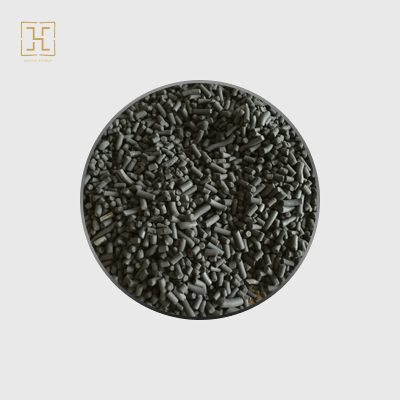
We produce Acid-etched coal-based activated carbon variants using high-quality anthracite coal that goes through the usual high-temperature activation process to get its porous structure. What makes this stuff unique is what happens next: putting it in concentrated inorganic acids at controlled temperatures breaks down iron, aluminum, calcium, and magnesium compounds that are still stuck in the carbon matrix. A normal coal-based activated carbon has between 8 and 15% ash in it. Ash contains minerals that can get into process streams and mess up sensitive chemistry. This ash content is lowered by the acid process to below 5%, and sometimes it can reach ultra-pure grades of less than 1%. The carbon's formed pore network, which includes micropores and mesopores, is kept.
The Chemical Process Behind Surface Purification
When acid washing, reagent-grade hydrochloric acid, nitric acid, or sometimes hydrofluoric acid mixes are used, based on the impurities that need to be removed. The treatment usually lasts between 4 and 8 hours at 60 to 90°C, with acid concentrations running from 10 to 30 percent, based on the purity grade that is wanted. Ion exchange reactions break down metals oxides and salts in this process. This is followed by several rinses with deionized water until the conductivity of the wastewater drops below 20 μS/cm and the pH stays between 6.0 and 8.0. High-temperature drying at 105–120°C then gets rid of any remaining water while keeping the material from getting contaminated again. The changed surface has fewer acidic oxygen functional groups and less hydrophilicity than heavily oxidized carbons. This makes it more selective in non-polar solvent systems and gas-phase applications.
Enhanced Pore Structure and Adsorption Sites
Acid leaching does more than just get rid of large impurities; it also gets rid of mineral deposits that are blocking pore openings and makes the inside surface cleaner for adsorption. In the lab, Acid-etched coal-based activated carbon grades consistently get BET surface areas of 1,000 to 1,250 m²/g, iodine values of 800 to 1,000 mg/g, and methylene blue adsorption levels higher than 120 mg/g. These measurements show that the chemical treatment makes it easier for molecules to move around instead of breaking down the structure. Electron imaging shows that mineral groups that were in the pore mouths dissolve, revealing new carbon surfaces with more active sites. This directly leads to faster rates of adsorption and better use of capacity in systems with changing flow rates where contact time is limited.
Performance Comparison and Benefits of Acid-Etched Coal Activated Carbon
Adsorption Efficiency Versus Non-Etched Coal Carbon
Our work in municipal water treatment plants and petrochemical plants has shown us measurable performance benefits. Standard coal carbon often adds silica and iron to the product stream when cleaning ultrapure water feeds, which needs extra polishing steps. Acid-etched coal-based activated carbon grades stop this leaching, so the outlet conductivity stays below 0.1 μS/cm and there is no secondary contamination. When used in gas-phase applications to remove sulfur dioxide, acid-treated carbon achieves SO₂ capacities greater than 180 mg/g, which is about 25% higher than non-etched equivalents. It also maintains removal efficiencies above 90%, even in biogas streams with a lot of CO₂, where competitive adsorption makes selectivity difficult.
Regeneration Performance and Operating Cost Impact
Thermal recovery, which is needed for factories to keep running, shows another benefit. Acid-etched coal-based activated carbon keeps more than 80% of its original ability to absorb things after being regenerated by steam or heat, while standard grades only keep 60–70% of their original ability. This longer useful life is because there is less catalytic ash, which would normally speed up the burning of carbon during regeneration heating. We have examples of power plants and chemical makers that changed the time between replacements from 18 months to over 30 months. This cut the amount of material used and the cost of waste by a large amount. The acid-etched product costs more up front (15–25% more than regular coal carbon), but it pays for itself in less work and output after the first renewal cycle.
Material Sourcing Advantages Over Coconut Shell Carbon
Coconut shell activated carbon is very hard and doesn't produce much ash, but it's hard to get because the raw material is expensive and supplies change often. Coal-based options, especially those that come from steady anthracite reserves in places like Shanxi Province, offer stable prices and a lot of supply for industrial orders that are measured in tons. Acid-etched coal-based activated carbon fills in the purity gap that used to favor coconut shell products. It meets the same low-ash requirements as coconut shell products while keeping the cost-effectiveness and mechanical strength of coal precursors. This mix of performance, cost, and supply reliability solves major procurement problems for environmental engineering firms that work on a lot of projects, like handling city water contracts or flue gas treatment installations.
Procurement Considerations for Acid-Etched Coal-Based Activated Carbon
Evaluating Supplier Credentials and Production Capability
When looking for Acid-etched coal-based activated carbon for important uses, the level of certification is just as important as the product specification. If you want to buy from a company that meets international standards, look for ones that have ISO 9001 quality management, ISO 14001 environmental management, and ISO 45001 occupational health certifications. For big projects, production capacity is very important. Suppliers with more than one production base that produce more than 40,000 tons of goods a year can support both emergency purchases and long-term framework deals without having to worry about distribution risk. Technical partnerships with research universities like Tsinghua University or the Chinese Academy of Sciences show that the company can do real research and development (R&D), not just dole out work.
Key Commercial Terms and Logistics Planning
Because of the way Acid-etched coal-based activated carbon grades are processed, the minimum order quantity is usually between 5 and 10 tons. However, some suppliers keep smaller sample amounts in stock. Standard lead times are 7–15 days for specifications that are already in stock, and they go up to 15–30 days for customized pore distributions or loaded catalyst variants. As part of global logistics support, all customs paperwork should be taken care of and shipments should be tracked in real time. Multimodal transport coordination should include sea freight for big orders and air freight for urgent compliance targets. Suppliers near major transportation hubs can deliver within 3–7 days within the United States. They also offer fast green-channel service that cuts important delivery windows to 72 hours when environmental compliance dates require it.
Sample Testing Protocols Before Commitment
Don't sign off on buy orders until the work has been checked out in person. Ask for 1–5 kg samples that meet your exact particle size requirements, such as cylinder-shaped pellets with a width of 1.5–3.0 mm or grainy 8–30 mesh, and test them in parallel with your current material. Important bench tests include checking the conductivity of water (aim for less than 50 μS/cm), the acid-soluble iron content with ICP-OES (confirm less than 200 ppm), and the breakthrough capacity with your real process fluid. Keep track of the particles' hardness and abrasion resistance according to ASTM D3802 to ensure that the acid treatment hasn't made them weak, which would cause carbon fines to form that would block filters further downstream. Suppliers with a good reputation give full test results that can be tracked back to batch numbers and are open to third-party proof testing.
Optimizing Selective Adsorption Efficiency: Technical Insights and Best Practices
Pore Size Distribution and Target Contaminant Matching
For selective adsorption to work, the carbon pores must be the right size for the target molecule. Micropores with a diameter of less than 2 nm are great at catching small organic molecules that are volatile and permanent gases. Mesopores with a diameter of 2–50 nm can hold bigger dye molecules and pharmaceutical intermediates. Acid-etched coal-based activated carbon usually has a two-modal pore distribution, with a high micropore volume (0.35-0.45 cm³/g) and a high mesoporosity. This makes it useful for both gas and liquid phase uses. Micropore-dominant grades should be chosen for VOC abatement systems that treat toluene or benzene. Mesopore content becomes more important for kinetic access when color is removed in beverage processing or wastewater cleaning.
Integration into Industrial Water and Gas Systems
The Acid-etched coal-based activated carbon works best when the system is set up correctly. Keep linear speeds between 5 and 15 m/h and bed depths of at least 1 to 1.5 meters in fixed-bed water treatment vessels to make sure there is enough contact time and stop channeling. During pre-filtration, suspended solids are removed that would otherwise stick to carbon surfaces and make it harder for the carbon to work. Controlling humidity is helpful for gas-phase systems; keeping the relative humidity between 40 and 60% is best for adsorption without too much water co-adsorption, which blocks active sites. The carbon is very strong (>90%) and the particle sizes are carefully controlled so that there is less pressure drop and no attrition problems like there are with softer materials in fluidized or moving bed configurations.
Troubleshooting Common Performance Issues
When adsorption efficiency drops without warning, thorough analysis keeps expensive downtime from happening. Low outlet quality after a recent changeout is often a sign of poor pre-treatment that lets fouling or biological growth happen. A rise in pressure could mean that particles are breaking apart because of too many regeneration rounds or that backwashing isn't happening completely, which lets the bed get compacted. If the capacity recovery of regenerated carbon is low, make sure that the regeneration temperatures reached 800-900°C in a controlled atmosphere. If the temperatures weren't high enough, residual adsorbates will block the sites where they should be. Suppliers with a lot of experience in application engineering can do process checks and suggest operational changes that will turn failing systems into assets that work at their best by choosing the right materials and finetuning the operating parameters.
Future Trends and Industry Outlook for Acid-Etched Coal-Based Activated Carbon
Innovations in Surface Modification Techniques
Instead of just using acid washing, research labs are trying out hybrid modification strategies. When you use plasma etching along with selective acid treatment, you can make gradient pore structures with specific surface chemistry along the carbon particles' radius. Electrochemical activation methods let you precisely control surface oxygen groups, which makes the process more selective toward certain types of contaminants without making the overall ash content higher. Adding metal-organic frameworks (MOFs) or zeolite nanoparticles to carbon surfaces that have been cleaned with acid makes composite adsorbents that combine carbon's large surface area with molecular sieving properties. This makes them useful in systems that need to clean hydrogen or capture carbon because regular activated carbon doesn't have enough selectivity.
Market Demand Driven by Environmental Regulations
In North America, Europe, and Asia, stricter emission standards are making the market for high-performance adsorbents bigger. As a result of the U.S. EPA's stricter rules on mercury and other air toxics in power plants, more Acid-etched coal-based activated carbon is needed in systems that clean up waste gases. For water quality rules to lower the amount of PFAS that is allowed to parts-per-trillion, ultra-pure adsorbents that won't add to background contamination are needed. More and more, municipal water officials are asking for low-leachable carbon so that extra treatment steps don't have to be done. This directly helps the adoption of acid-etched products. As regulations continue to grow, so do the business possibilities for providers who can show they support compliance by offering complete technical data packages and certified analytical tests.
Sustainable Production and Supply Chain Considerations
Environmental responsibility goes beyond the product and includes the ways it is made. Leading manufacturers now reuse and recycle used Acid-etched coal-based activated carbon wash solutions. This cuts down on chemical use and wastewater production by over 70% compared to systems that only wash once. The carbon footprint of production is smaller when anthracite is sourced from certified sustainable mines and waste heat from activation kilns is used to heat acid. Customers of closed-loop regeneration services can return used carbon to be reactivated instead of being thrown away. This creates circular economy models that are in line with the sustainability goals of businesses. Along with standard quality and delivery criteria, procurement teams are increasingly judging sellers on these environmental factors as well. This makes green manufacturing practices a competitive differentiator in bid evaluations.
Conclusion
Acid-etched coal-based activated carbon is a unique way to solve problems in industries where regular adsorbents don't work well. It has a very low ash content, keeps metal impurities in check, and improves selective adsorption performance in chemical processing, gas purification, and water treatment. The acid washing process changes regular coal carbon into a precise material that can meet the strict purity requirements of making ultrapure water, making medicines, and filtering high-purity gases. When looking at suppliers, give more weight to those that have all the necessary certifications, a track record of large-scale output, and expert partnerships that show real R&D capability. The material's better regeneration performance and longer service life more than make up for its slightly higher cost, making it a good choice for demanding industrial settings where reliability and following the rules can't be compromised.
FAQ
Why choose acid-etched instead of standard coal-based activated carbon?
By using acid to remove carbon, the amount of ash goes from about 12% to less than 3%. This stops mineral leaching that can affect processes that need to be very pure, like making ultrapure water or medicines. Getting rid of water-soluble inorganic salts and heavy metal ions stops secondary contamination that would need extra polishing steps, which saves money on both the cost of buying new equipment and the cost of running it.
Does the acid treatment affect adsorption capacity negatively?
Despite worries about chemical breakdown, acid cleaning often improves kinetic performance by clearing holes of mineral salts that are blocking them. This makes more surface area available for adsorption. Acid-etched coal-based activated carbon grades regularly achieve iodine values between 800 and 1000 mg/g while keeping BET surface areas of 1,000 to 1,250 m²/g, showing that the pore structure stays intact and is still accessible.
Is there residual acid remaining in the final product?
Professional-grade Acid-etched coal-based activated carbon goes through several rinses with deionized water until the conductivity of the effluent drops below 20 μS/cm. It is then dried at high temperatures to get rid of any remaining moisture. Slurry testing according to ASTM D3838 confirms that the final products have a neutral pH between 6.0 and 8.0. This makes sure that there are no acidic residues left over that could affect equipment or processes further down the line.
Can acid-etched coal carbon be used for gas-phase applications?
Of course. When mineral dust or small chemical interactions must be avoided, this material works great for high-purity gas filters. It is very good at removing SO₂—more than 180 mg/g—and stays effective—above 90%—even in high-CO₂ environments. This makes Acid-etched coal-based activated carbon useful for cleaning biogas, treating flue gas, and industrial exhaust systems that need both high capacity and selectivity.
What is the best on-site test to verify purity?
A 5% carbon-to-deionized water slurry conductivity test is a popular way for people in the business to check things in the field. After adding 5 grams of Acid-etched coal-based activated carbon to 95 grams of deionized water and stirring it well, let it settle for a while and then check the conductivity of the supernatant. Readings below 50 μS/cm show low ionic leachability, which confirms that the right acid washing and rinsing steps were taken during production.
Partner with Shanxi Xinhua Carbon Technology Industry Co., Ltd. for High-Purity Adsorption Solutions
For industrial customers who need a dependable supply of Acid-etched coal-based activated carbon, Shanxi Xinhua Carbon Technology Industry Co., Ltd. has more than 60 years of experience in the field. Our many production bases keep a full stock of particles in a range of sizes, from 1.5 to 3.0 mm cylinder pellets to 8 to 30 mesh granules. This way, we can quickly fill both normal orders (7–15 days) and urgent compliance-driven projects through our 72-hour green channel. As a reliable provider of Acid-etched coal-based activated carbon, we offer fully personalized changes to the pore structure, optimization of the surface area, and loaded catalyst configurations. We are able to do this because we work together on research with Tsinghua University and the Chinese Academy of Sciences. Our ISO 9001, ISO 14001, and ISO 45001 certifications make sure that our quality always meets international standards. Our global logistics network provides smooth multimodal travel with full customs help and real-time tracking. You can email our team at greta@carbonxinhua.com to get technical data sheets, set up sample testing, or talk about your specific selective adsorption problems. We turn difficult purification needs into dependable, low-cost solutions.
References
1.Marsh, H., & Rodríguez-Reinoso, F. (2006). Activated Carbon. Elsevier Science Ltd., Oxford, United Kingdom.
2.Bandosz, T. J. (2006). Activated Carbon Surfaces in Environmental Remediation. Interface Science and Technology Series, Volume 7, Academic Press.
3.Cheremisinoff, N. P., & Ellerbusch, F. (1978). Carbon Adsorption Handbook. Ann Arbor Science Publishers, Michigan.
4.Bansal, R. C., & Goyal, M. (2005). Activated Carbon Adsorption. CRC Press, Taylor & Francis Group, Boca Raton, Florida.
5.Derbyshire, F., Jagtoyen, M., Andrews, R., Rao, A., Martin-Gullon, I., & Grulke, E. A. (2001). Chemistry and Physics of Carbon, Volume 27, Marcel Dekker Inc., New York.
6.Yang, R. T. (2003). Adsorbents: Fundamentals and Applications. John Wiley & Sons, Inc., Hoboken, New Jersey.

Send Inquiry
You may like
_1781662034490.webp)