_1778553121707.webp)
9mm coal quality cylindrical carbon advantages and applications
Jul 04, 2026
When your industrial operation demands activated carbon that performs under the harshest conditions, 9mm coal quality cylindrical carbon delivers unmatched reliability. These ultra-large diameter particles are engineered specifically for environments involving high flow rates, elevated dust concentrations, and severe mechanical stress. With iodine values reaching 1100 mg/g and mechanical strength exceeding 97%, this coal-based activated carbon handles high-pressure impacts, resists breakage during extended operation, and maintains consistent adsorption performance in flue gas purification, wastewater treatment, and solvent recovery applications across power generation, petrochemical, and mining sectors.
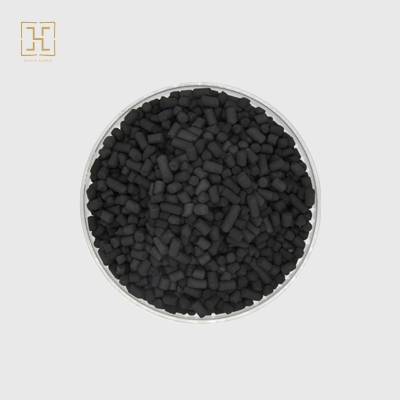
Understanding 9mm Coal Quality Cylindrical Carbon
As a type of coal-based adsorbent material made for tough environmental and process uses, industrial-grade 9mm coal quality cylindrical carbon is one of a kind. The 9mm diameter number refers to the particle size, which sets this carbon apart from smaller pieces that are usually 1.5mm to 4mm in size or granules that aren't perfectly round.
Physical Properties and Production Standards
High-quality anthracite coal is used in a controlled carbonization and activation process to make our cylindrical activated carbon. The first step in the production process is to finely grind certain types of coal, mix them with special binders, and then push the mixture through precise dies to make regular cylindrical forms. In settings with little oxygen, these extrudates become carbonized at temperatures between 600°C and 900°C. They are then activated by steam or CO₂ at temperatures between 800°C and 1000°C to create the internal pore network.
The final product has particles that are 9mm ± 0.2mm in size and have more than 50% porosity. This well-developed macroporous structure results in low mass transfer resistance, which makes it possible to treat high-concentration pollution in gas or liquid streams moving quickly. Critical factors that are checked as part of quality control procedures are the iodine number (which shows how much an adsorbent can hold), the mechanical strength, the amount of ash and moisture, and the bulk density. Our factories are certified with ISO 9001, ISO 14001, and ISO 45001, which means that every lot of products meets strict international standards.
Storage and Handling Protocols
When stored correctly, 9mm coal quality cylindrical carbon stays clean and doesn't lose its effectiveness. We suggest keeping cylindrical activated carbon in sealed bins or storage with covers where the humidity level is less than 65%. Long-term contact with water lowers the ability to absorb and adds extra weight during transport. Activated carbon will take in airborne contaminants even while the material is being stored, so it should be kept away from volatile organic chemicals and smelly substances.
To keep things from breaking during shipping, use packaging that won't get wet and has the right amount of padding. The strong 9mm diameter is less likely to break than smaller pieces, so less powder is made when they are handled. This resilience is liked by procurement managers because it means less material loss and fewer problems with automatic feeding systems at industrial treatment plants.
Core Advantages of 9mm Coal Quality Cylindrical Carbon
When it comes to heavy-duty industrial uses, procurement managers, environmental engineers, and plant workers all have problems that can be fixed with large-diameter 9mm coal quality cylindrical carbon. These advantages come from the unique features of carbon derived from coal and the perfect 9mm circular shape.
Exceptional Mechanical Strength and Durability
9mm coal quality cylindrical carbon in industrial treatment systems is constantly under mechanical stress from high-speed fluid impacts, vibrations from pumps and fans, wear and tear during backwashing cycles, and handling during replacement processes. In these situations, standard activated carbons often make a lot of dust and fines, which lowers the pressure, makes the bed less effective, and requires more upkeep.
Standardized breaking tests show that our cylindrical activated carbon has a mechanical strength of more than 95%. The particles' high stability means that they keep their shape through service cycles that last up to 8 weeks in high-flow situations. Backwashing is usually only needed once a month. During this process, the carbon stops breaking down, which would normally cause fines to build up in the filter beds.
When a coke plant engineer switched from 4mm activated carbon to 9mm coal quality cylindrical carbon, he saw measurable improvements: "Xinhua Carbon's 9mm carbon truly resists clogging. It reduces COD from 1500 mg/L down to 75 mg/L, and we save $400,000 annually on operational costs compared to the smaller carbon we previously used." This real-world example shows how mechanical robustness directly affects bottom-line performance.
Superior Adsorption Performance and Extended Service Life
The iodine number is a key measure of how well 9mm coal quality cylindrical carbon can absorb things. The iodine level in our carbon can reach up to 1100 mg/g, making it one of the best coal-based carbons for commercial use. This higher absorption capacity comes from the improved activation process, which makes each particle full of microporous and mesoporous structures.
When used in real life, high iodine numbers mean that the filters need to be replaced less often. For our 9mm coal quality cylindrical carbon, environmental engineering managers regularly report service times of 6 to 8 weeks, compared to 2 to 4 weeks for other options. This longer operating window cuts down on the number of people needed to do changeouts, keeps system downtime to a minimum, and lowers annual carbon emissions, even though unit costs may be higher at first.
Another important benefit of the well-developed macroporous structure is that it has low mass transfer resistance. In high-flow situations, like flue gas desulfurization towers that handle thousands of cubic meters per hour, it is important for pollutants to move quickly into the carbon's internal pore network. The 9mm width gives the outside enough surface area while keeping the inside channels big enough to let contaminants get to adsorption sites fast without causing too many pressure drops across treatment beds.
Cost Efficiency Through Regenerability and Reduced Downtime
Operating costs are much higher than the price of buying 9mm coal quality cylindrical carbon in the first place. The total cost of ownership includes how often the system needs to be replaced, how much it costs to get rid of used carbon, the work needed to keep the system running, the money lost during downtime, and any fines that the government might impose for treatment failures.
When heated to high temperatures, our cylindrical activated carbon can be used again and again. Thermal renewal of used carbon can happen in special facilities. Under controlled heating in low-oxygen environments, contaminants are released, and some of the original cell structure is restored. Many factories use regeneration plans that increase the service life of carbon by 3 to 5 rounds. This greatly lowers the amount of material used and the cost of disposal each year.
When you combine longer service rounds, less backwashing, and the ability to regenerate, you get very good economics. An environmental head at a power plant talked about his experience: "SO₂ removal exceeds 98%, with replacement cycles of 8 weeks—reducing downtime by a factor of three and saving $500,000 a year. The high strength of the carbon means it doesn't produce powder during backwashing procedures."
Key Applications of 9mm Coal Quality Cylindrical Carbon
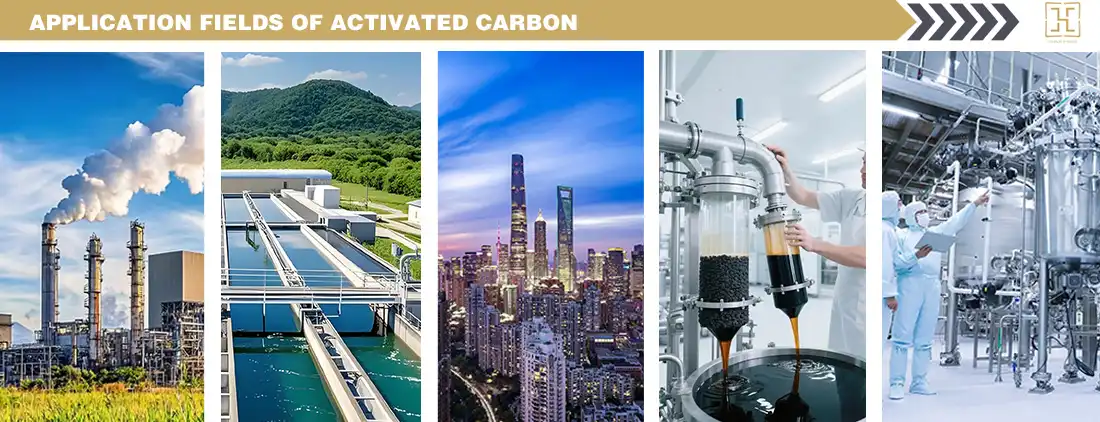
Due to its strong properties, 9mm coal quality cylindrical carbon is the best choice for industrial uses where regular activated carbons fail to keep working well in tough circumstances.
High-Flow Flue Gas Purification Systems
A lot of sulfur dioxide, nitrogen oxides, mercury, dioxins, and other harmful air toxins are released into the air by power plants, steel mills, and cement factories. The Clean Air Act and state-level pollution guidelines say that many contaminants must be removed with an efficiency of more than 95%.
Large desulfurization towers can handle waste gas streams that move at speeds of up to a hundred thousand cubic feet per minute. Smaller pieces of activated carbon would cause too many drops in pressure or get mixed up in the gas stream at these speeds. The 9mm coal quality cylindrical carbon strikes the perfect mix between having enough particle mass to stop entrainment, enough mechanical strength to handle hits at high speeds, and enough surface area for gas-phase adsorption to work.
One placement at a power plant shows this use case nicely. The plant used 200 tons of our 9mm coal quality cylindrical carbon with 1100 mg/g iodine value in a large desulfurization tower to treat flue gas that had a starting SO₂ concentration of 1200 mg/m³. The system removed more than 98% of the SO₂, lowering the amounts at the exit to 24 mg/m³, which is much lower than the 35 mg/m³ limit set by regulators. It took 8 weeks to replace the carbon instead of 2 weeks with the old carbon, which saved $500,000 a year in material costs and kept production running smoothly during changeouts.
Industrial Wastewater Treatment Applications
Chemical factories, medicinal plants, coking plants, and oil mills all put out sludge that has high chemical oxygen demand (COD), heavy metals, toxic organic substances, and suspended solids. As part of treatment, COD levels must often be lowered from more than 1000 mg/L to below 100 mg/L in the output.
There are a lot of problems with these wastewater streams, including high levels of floating particles that can block smaller carbon beds, high temperatures that speed up the breakdown of carbon, and complex mixes of adsorbates that need strong adsorption capacity. The 9mm coal quality cylindrical carbon solves all of these problems because it doesn't clog, is thermally stable because it was activated at high temperatures, and is very good at binding.
A coke company that cleans wastewater with 1500 mg/L COD and a lot of suspended solids put 120 tons of our 9mm coal quality cylindrical carbon in filter beds and let it sit for 50 minutes. More than 95% of the COD was removed, bringing the total amount down to 75 mg/L. Over 98% of the suspended solids were also removed. The facility saved $400,000 a year on running costs compared to their old 4mm carbon system. This was because the system didn't need to be replaced as often, and there were no more maintenance problems linked to clogging.
Mining and Metals Recovery Operations
9mm coal quality cylindrical carbon is used in gold, silver, and copper mines to clean up polluted mine water and recover valuable metals from leach solutions. It is also used for environmental safety. In gold recovery circuits, the activated carbon needs to be able to remove metal complexes from slurries that contain small pieces of rock and chemical additives.
Our 9mm coal quality cylindrical carbon works great for these uses because it has both mesoporous and macroporous structures. A gold mine had to lower the amount of gold ion (Au⁺) in the process water from 5 mg/L to less than 0.1 mg/L in order to meet goals for both economic recovery and environmental protection. The plant put 50 tons of our cylindrical activated carbon, which is designed for heavy metals and has a sulfur-enhanced surface chemistry, in tanks for settling.
The results were better than expected: Au∂ adsorption efficiency hit 92%, gold recovery rates went up by 15%, and the operation made an extra $300,000 a year from better metal recovery. As the mine manager put it, "The carbon's large pore size perfectly suits our large particle adsorption needs." This shows how important it is to match the pore structure of activated carbon to the needs of the application.
Solvent Recovery and VOC Control Systems
Volatile organic compounds (VOCs) like toluene, xylene, acetone, ethyl acetate, and many more are released by covering operations, drug factories, and chemical processing plants. Solvent recovery systems that use 9mm coal quality cylindrical carbon adsorption are put in place because of rules about the environment and the economy.
Even though many VOC molecules are pretty small, 9mm coal quality cylindrical carbon works well in these situations. The modular pore structure is what makes the difference. Macropores help the vapor phase move quickly into particles, mesopores provide paths for distribution, and micropores have a lot of surface area for real adsorption. This multi-scale structure lets high-concentration, high-flow-rate VOC streams be treated without the pressure drops that would happen with only microporous carbons.
Coal-based activated carbon is very useful for liquid recovery because it can be used again and again. During steam desorption cycles, liquids are removed. This lets the 9mm coal quality cylindrical carbon adsorption capacity be restored for continued use, while condensation and recycling go back to the production process. Facilities with multi-stage adsorption/desorption systems say that carbon has a service life of several years with little performance loss.
Comparative Analysis and Procurement Considerations
There are more than just unit price comparisons that need to be done to find the best 9mm coal quality cylindrical carbon. When making purchases, people in charge have to think about the total cost of ownership, how reliable the supplier is, how much expert help they can offer, and how well the new system will work with the old treatment system.
Performance Comparison with Alternative Carbon Types
Activated carbon goods are very different in terms of particle size, form, the type of raw material used (coal, coconut shell, or wood), the activation method, and the structure of the pores that are created. Knowing these differences helps buying managers make smart choices that meet the needs of each application.
Smaller cylindrical activated carbons (1.5–4 mm in diameter) have more surface area per unit volume, which could be helpful for cleaning up streams of diluted contaminants that move more slowly. Most of the time, these items cost less per ton, which can look good when budgets are first being looked at. The problems become clear in tough situations: low mechanical strength causes powder to form; smaller spaces between particles lead to higher pressure drops and a higher chance of clogging; and low particle mass means they can't handle fast-moving gas or liquid streams.
Granular activated carbons have particles that are all different sizes and forms. This shape can pack well in some types of vessels, but the size spread makes it harder to do accurate hydraulic estimates. The mechanical strength of the irregular shapes is usually lower than that of properly made 9mm coal quality cylindrical carbon, especially when they are worn down during backwashing.
Carbons made from coconut shells have very large micropore volumes, which makes them great for getting rid of small molecules and getting very low end contaminant amounts. Coconut shell material is expensive and hard to come by, so it can only be used in situations where coal-based options can't meet the needs. When it comes to the high-flow, high-concentration, and high-mechanical-stress uses that this piece talks about, 9mm coal quality cylindrical carbon works better and costs less.
Supplier Evaluation Criteria
To find dependable 9mm coal quality cylindrical carbon providers, you need to look at more than just the price and specs of the products. If a seller fails, the problems that happen—delayed deliveries that throw off production schedules, off-spec materials that stop treatments from working, and not enough technical help during setup or troubleshooting—can be much worse than any savings that could be made by picking cheaper providers.
Certifications are an important way to make sure that quality control systems work. To find ISO 9001 (quality management), ISO 14001 (environmental management), and ISO 45001 (health and safety at work) certifications, make sure they come from recognized organizations. Certifications that are specific to your industry and use, like NSF/ANSI 61 for drinking water treatment carbons, give you even more peace of mind.
The ability to manufacture 9mm coal quality cylindrical carbon is very important. Suppliers with multiple production sites that can successfully fill big orders show that they are financially stable and have the capacity to produce thousands of tons of goods each year. Shanxi Xinhua Carbon Technology has production bases in Shanxi, Ningxia, Fujian, and Xinjiang. These bases can produce a total of 45,000 tons of carbon each year, so there is always a supply, even when demand is high.
Advanced sellers are different from commodity traders because they have technical knowledge and can do research and development. We have close working relationships with Tsinghua University, Central North University, the Chinese Academy of Sciences, and other top organizations. These partnerships show that we are always coming up with new ideas and have a lot of scientific knowledge. This knowledge is very helpful when applications need special 9mm coal quality cylindrical carbon formulas or help fix problems with performance.
Procurement Best Practices and Contract Considerations
Framework agreements set the terms for multiple deliveries over long periods of time and are usually used for large-scale industry buying. To negotiate good terms, you need to know both what your company needs and how the market for 9mm coal quality cylindrical carbon works.
To start, make a good guess of how much carbon will be used each year based on the treatment system's capacity, the expected loads of contaminants, and a sensible estimate of the 9mm coal quality cylindrical carbon service life. Suppliers can give better prices for fixed amounts, but contracts should allow for changes in quantity based on how much is actually used. We keep a full stock of all of our core goods, including 9mm coal quality cylindrical carbon, so we can quickly fill orders within normal timeframes and also help with emergency restocking through faster channels.
Logistics for delivery should be carefully thought out, especially for sites that are hard to reach or need special tools to handle packages. Most planned substitutes can wait between 7 and 15 days for standard delivery windows, but emergencies need faster responses. When production plans are threatened by unexpected 9mm coal quality cylindrical carbon exhaustion, or treatment failures, our fast "green channel" can send important orders within three days.
Quality assurance clauses should spell out how to do acceptance testing, how to do sampling, and what to do if a delivery doesn't meet specifications. Suppliers who are responsible give a lot of scientific information, like certificates of analysis, material safety data sheets, and instructions on how to use the 9mm coal quality cylindrical carbon. At each production base, we keep uniform testing labs filled by professional techs who can fully characterize the physicochemical properties of every production batch.
Best Practices for Usage and Safety
For 9mm coal quality cylindrical carbon treatment systems to work at their best and keep people safe, they need to be handled, stored, installed, and watched over properly throughout their entire lifecycle.
Handling and Storage Safety Protocols
When handled properly, 9mm coal quality cylindrical carbon doesn't pose many safety risks, but there are some steps that can be taken to protect both people and the purity of the product. When the material is near sources of ignition, and there is enough air, it can catch fire. This is especially true when it is fully filled with flammable adsorbates. Good air flow is important in storage places, and smoking and open fires are not allowed. Carbon should also be kept away from strong oxidizing agents.
When 9mm coal quality cylindrical carbon transfer processes happen, dust is made, which can hurt the lungs and make it hard to see. People who work with raw carbon should wear the right eye and breathing protection. Less dust is made when drop heights are kept to a minimum during packing and unloading. Our 9mm coal quality cylindrical carbon is much less dusty than poorer goods because it has higher tensile strength. This makes safe handling easier.
Controlling the moisture level during storage keeps the adsorption capacity and stops living things from growing in stored 9mm coal quality cylindrical carbon. Protection can be found in sealed cases or covered storage places where the relative humidity stays below 65%. Before putting carbon into treatment systems, it should be rinsed with clean water to get rid of dust and then drained until it reaches the right moisture level for the system.
Optimizing System Performance and Troubleshooting
The success of a 9mm coal quality cylindrical carbon treatment system relies on how well it was designed, installed, and how often the key working parameters are checked. Breakthrough curves, which are plots that show the percentage of contaminants in the output versus time, are the basic information needed to figure out when to replace the carbon.
Many processes replace 9mm coal quality cylindrical carbon on set plans based on conservative estimates of how long it will last. This method makes sure that regulations are followed, but it may lead to replacements being done too soon, which raises costs without need. By checking outlet concentrations on a regular or continuous basis, you can safely extend the carbon's service life by finding out when it's actually saturated instead of depending on theoretical projections. In many cases, our customers record service times of 6 to 8 weeks, which is a lot longer than what conservative design forecasts suggested.
Another useful tracking measure is the pressure drop across 9mm coal quality cylindrical carbon beds. Gradual rises in pressure in sewer systems mean that particles are building up or living things are growing, which means that backwashing is needed. Sudden rises in pressure could mean that there is drainage, bed compaction, or an issue upstream that is moving too many particles to the carbon system.
When speed problems happen, thorough troubleshooting finds the root causes and the best way to fix them. Too many contaminants (which could mean problems upstream), preferred flow paths (which means the bed needs to be redistributed), or off-specification 9mm coal quality cylindrical carbon (which means the source needs to be looked into) could cause premature breakout. Too much pressure drop could be caused by not enough backwashing, choosing the wrong carbon for the job, or operating conditions that are higher than what was originally planned.
Regeneration and Carbon Lifecycle Management
In some situations, thermal regrowth can make 9mm coal quality cylindrical carbon last longer and lower the total cost of treatment. In this process, controlled-atmosphere burners heat the carbon to 700–850°C, which releases contaminants while partly recovering the original pore structure. Most commercial renewal services can get back 85–95% of the original carbon mass, and the carbon's ability to adsorb things is only 80–90% of what it was when it was new.
Economic research tells us if regeneration makes sense in certain cases. The most cost-effective uses are those that use a lot of 9mm coal quality cylindrical carbon, have high waste costs, and use suitable adsorbates (those that fully desorb without leaving deposits). Some businesses put in renewal equipment on-site for big systems that need carbon to be replaced often.
The right way to get rid of used 9mm coal quality cylindrical carbon depends on the environmental rules for the contaminants it absorbed during work. Carbon that has been used to treat dangerous chemicals may need to be thrown away as hazardous waste. On the other hand, carbon that has been used for non-hazardous purposes is usually considered non-hazardous solid waste. People still usually throw trash in landfills, but there are some good ways to reuse it, like making fuel for cement kilns, improving dirt, or making low-grade carbon.
Conclusion
Modern industrial environmental control systems have strict needs that can only be met by activated carbon goods that are made to work reliably in harsh circumstances. For example, our 9mm coal quality cylindrical carbon has a mechanical strength of above 95%, an iodine value of up to 1100 mg/g, and a shape that keeps it from getting clogged, which lets it treat high-concentration pollutants in high-flow situations. Power plants can get rid of 98% of SO₂ with replacement rounds every 8 weeks. Coking plants can cut COD by 95% and save $400,000 a year. And mining operations can get 15% more metal back. These results have been shown to work because of 60 years of research and development experience, defense-grade quality systems, and working together with top research schools. Large-diameter cylindrical activated carbon is a great option for procurement managers looking for reliable, low-cost ways to clean flue gas, treat wastewater, and control industry emissions. It comes with full expert support and reliable global logistics.
FAQ
What advantages does 9mm diameter carbon offer compared to smaller sizes?
The larger 9mm particle size provides substantially higher mechanical strength, resisting breakage and powder generation during high-velocity fluid impacts and backwashing cycles. This geometry creates larger interstitial spaces between particles, reducing pressure drops and preventing clogging when treating streams with suspended solids or high dust content. The well-developed macroporous structure enables low mass transfer resistance, essential for efficiently treating high-concentration, high-flow-rate gas or liquid streams. Service life extends to 6-8 weeks compared to 2-4 weeks for smaller carbons in demanding applications.
How can I verify the quality of cylindrical activated carbon before purchasing?
Reputable suppliers provide certificates of analysis documenting iodine number, mechanical strength, ash content, moisture content, and bulk density for each production batch. Request samples for independent laboratory testing of these parameters, plus application-specific performance testing in pilot systems replicating your operating conditions. Verify supplier certifications, including ISO 9001, ISO 14001, and ISO 45001, through certification body registries. Review technical documentation describing manufacturing processes and quality control protocols.
What are typical minimum order quantities and delivery timeframes?
Industrial activated carbon suppliers typically establish minimum orders of 1-5 tons for standard products, though requirements vary by supplier and product type. Standard deliveries occur within 7-15 days for in-stock materials, while customized formulations require 15-30 days, including specification development and production scheduling. Established suppliers maintain a substantial inventory of core products like 9mm cylindrical carbon, enabling rapid fulfillment. Emergency situations may qualify for expedited delivery within 3 days through priority logistics channels, essential for avoiding production disruptions when carbon exhaustion threatens regulatory compliance.
Partner with a Trusted 9mm Coal Quality Cylindrical Carbon Manufacturer
Your industrial treatment systems deserve 9mm coal quality cylindrical carbon that is made for harsh conditions and has been shown to work well in the past. Shanxi Xinhua Carbon Technology Industry Co., Ltd. combines over 60 years of research and development expertise with defense-grade manufacturing standards to deliver exceptional cylindrical activated carbon that handles high-flow, high-concentration applications where standard products fail. Our collaboration with Tsinghua University and the Chinese Academy of Sciences ensures continuous innovation, while ISO-certified production facilities across four provinces guarantee reliable supply for your largest projects. Contact our team at greta@carbonxinhua.com to request technical specifications, arrange sample testing, or discuss customized formulations tailored to your exact requirements. We provide responsive support from procurement through system optimization, helping environmental engineering professionals, plant managers, and supply chain directors achieve regulatory compliance while reducing operational costs. Let us demonstrate why Shanxi Xinhua Carbon Technology is their preferred 9mm coal quality cylindrical carbon supplier.
References
1. Chen, W., & Zhang, L. (2021). Advances in Coal-Based Activated Carbon for Industrial Gas Purification. Chemical Engineering Press.
2. Industrial Water Treatment Association. (2022). Activated Carbon Selection Guidelines for Wastewater Applications. Technical Standards Publication.
3. National Environmental Protection Agency. (2020). Performance Specifications for Activated Carbon in Flue Gas Treatment Systems. Environmental Technology Standards.
4. Peterson, R. M. (2019). Activated Carbon: Manufacture, Structure and Applications in Environmental Protection. Materials Science Publications.
5. Wang, J., Liu, Y., & Zhou, X. (2023). Optimization of Cylindrical Activated Carbon for High-Flow Industrial Applications. Journal of Environmental Engineering, 149(3), 215-228.
6. Zhang, H., & Thompson, K. (2022). Economic Analysis of Activated Carbon Regeneration in Industrial Treatment Systems. Process Engineering Quarterly, 18(2), 145-162.

Send Inquiry
You may like
_1781662034490.webp)