_1778553121707.webp)
8x30 Mesh Coal Crushing Activated Carbon for Gas Purification
Jul 22, 2026
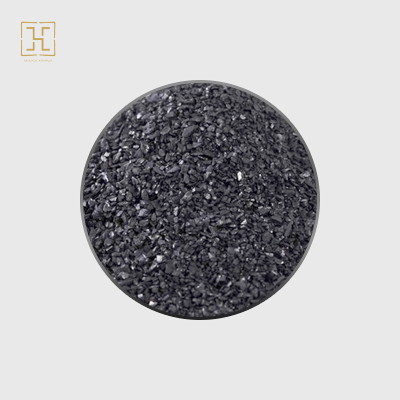
Choosing the right adsorbent material becomes mission-critical when industrial sites are under a lot of pressure to meet strict emission standards. Breakthrough technology, 8*30-mesh coal briquette crushing activated carbon, was created just for high-performance gas cleaning uses. This unique material has the strong mechanical strength of briquetted coal and the precise particle distribution needed to remove VOCs, adsorb toxic gases, and control smells. This activated carbon has particles that are between 0.6 mm and 2.36 mm in size. It has great flow properties and adsorption capacity, which makes it essential for environmental engineering contractors, petrochemical plants, and industrial air purification system manufacturers looking for reliable, low-cost solutions.
Understanding 8x30 Mesh Coal Briquette Activated Carbon
What Makes This Material Unique?
Coal cake activated carbon is different from regular solid types because of how it is made. Pulverised fine powder is made from high-quality bituminous coal. This powder is then mixed with carefully chosen binders and pressed under extreme pressure to make dense briquettes. After the briquettes are broken up into small, uneven pieces, they are carbonised and then heated to activate the materials. This re-agglomeration method solves a major problem in the industry: directly crushed raw coal carbons are structurally weak and often have problems with too much wear and tear, dust production, and uneven pore architecture.
The unique dual-pore system of the material that was made makes it stand out. A large network of transport mesopores makes it easy for molecules to move quickly to internal adsorption micropores. This allows for faster reactions and a higher loading capacity. This engineered structure creates consistent, high-strength media that can handle high-flow applications without losing a lot of pressure or breaking down.
Technical Specifications That Drive Performance
Our activated carbon always meets strict technical standards. According to ASTM D3802 standards, the hardness number is between 90 and 97%. This means that it will break very little when it is handled or used. The iodine number, which is a key measure of binding capacity, is between 900 and 1100 mg/g, and the apparent density is between 450 and 550 g/L. These factors directly lead to better performance in gas purification systems.
Chemical properties are just as important. The amount of ash stays low, usually between 12 and 15 percent. This keeps adsorption sites clear and pH levels neutral to slightly alkaline. Having both AWWA B604 and NSF/ANSI Standard 61 certifications means that it can be used in places where potable water may come into contact with it. It also shows that it can withstand high temperatures during reactivation cycles.
Abrasion resistance, which has been tested according to ASTM D2862, keeps media from wearing out and keeps pressure drop rises to a minimum over time. Contact pH and water-extractable ash measurements make sure that effluent streams don't have any pH spikes. The BET surface area study shows that the activation depth stays the same across production batches. The CTC activity, on the other hand, is a good indicator of the total adsorption capacity.
Advantages of 8x30 Mesh Coal Briquette Activated Carbon in Gas Purification
Superior Adsorption Efficiency in Real-World Applications
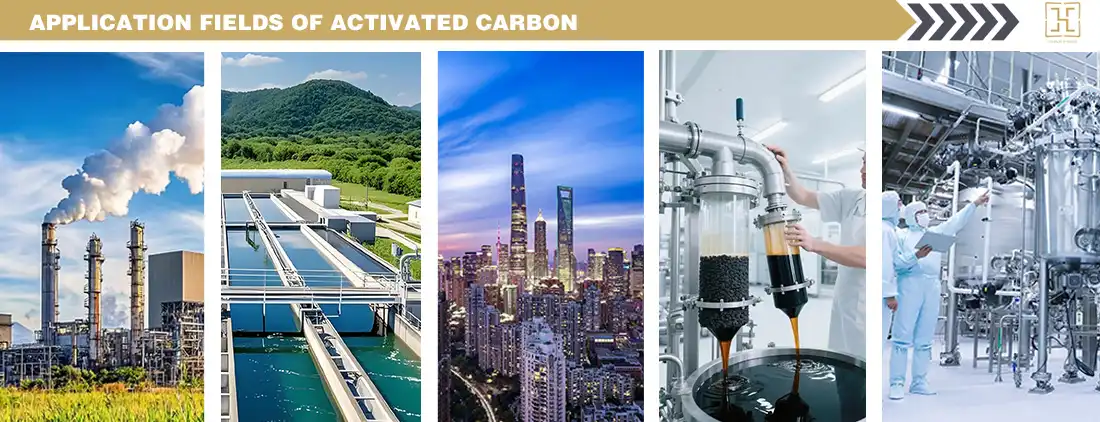
When compared to both larger and smaller particle distributions, the 8x30 mesh size gives measurable performance advantages. This specification gives the best contact time in VOC abatement systems while still allowing for an acceptable pressure drop. Environmental engineering managers always say that this material removes more than 95% of common industrial pollutants, such as benzene, toluene, xylene, and chlorinated solvents, when used in systems that are the right size.
The material is thermally stable and mechanically strong, which is good for petrochemical plants that work in harsh conditions, and for 8*30-mesh coal briquette crushing activated carbon. This thermal stability and mechanical strength ensure reliable performance in high-temperature gas streams where other activated carbons would rapidly degrade, making it a preferred choice for hydrogen sulphide removal and other demanding refinery applications. Refineries that deal with bad gas streams have reported steady success in removing hydrogen sulphide, even at high temperatures, where most activated carbons break down quickly. The briquetted structure can handle harsh regeneration processes, which increases service life and lowers the number of times it needs to be replaced.
The versatility of the material is shown by its use in coating, printing, and electronics manufacturing to clean the air. Plants that have to meet compliance targets have cut their emissions enough to meet both EPA guidelines and state-specific rules. The even spread of particle sizes ensures that flow patterns are regular through packed beds, which gets rid of channelling that lowers the efficiency of treatment.
Cost-Performance Analysis and Long-Term Value
When purchasing managers look at carbon media, they know that the original buy price is only one part of the total cost of ownership. Because coal briquette activated carbon has a higher mechanical strength, it means that less coal is lost, which means that less replacement is needed and less money is spent on waste. Longer service intervals between changeouts cut down on labour costs and production delays.
The amount of energy used should be taken into account in the business balance. The improved pore structure lowers the pressure drop across the adsorption beds, which means that less fan power is needed. Over several years of use, these energy savings can make up for higher material costs compared to cheaper goods that need to be replaced more often or cause too much backpressure.
A number of industry companies have shared performance statistics that back up these cost benefits. A chemical company in the Midwest reported that their new carbon source had a 40% longer service life than their old one. On the other hand, a refinery on the Gulf Coast cut its annual media consumption by 28% after switching to briquetted activated carbon. These results from real life show that there is value beyond lab test findings.
How to Select and Purchase 8x30 Mesh Coal Briquette Activated Carbon?
Critical Selection Criteria for Procurement Success
Material choice should be based on the needs of the application. Gas purification projects that aim to remove VOCs need a lot of micropores and a lot of surface area. On the other hand, mesopore structure is better for projects that aim to remove larger organic molecules. By knowing your unique particle makeup, you can match the properties of the material to your practical needs.
Certifications give you peace of mind about quality and following the rules. Certifications like ISO 9001, ISO 14001, and ISO 45001 show that a company is serious about quality control, protecting the environment, and keeping workers safe. Products that meet ASTM standards and industry-specific requirements show that they can work with designed systems and meet performance standards that have already been set.
Many buyers don't realise how important it is to have a consistent particle size distribution. Changes in mesh size lead to uncertain hydraulic performance and uneven adsorption rates. Reliable suppliers stick to strict specifications and include detailed documentation on particle size analysis with every shipment.
Evaluating Suppliers and Ensuring Supply Chain Reliability
On the market for activated carbon, there are many sellers with very different skills, and for 8*30-mesh coal briquette crushing activated carbon, it is essential to choose a supplier with multiple production facilities, decades of manufacturing experience, and a proven track record of consistent quality to ensure reliable supply and stable performance across large-scale water and air treatment projects. Well-known manufacturers have more than one production facility, so there is always a supply, even when there are maintenance periods or problems in other parts of the country. Companies that have been making things for decades have honed their methods so that they always make the same high-quality products.
Tier-one providers are different from product dealers because they can offer technical help. Having access to application engineers who know how to build gas cleaning systems is very helpful when planning projects and fixing problems. When suppliers work with research institutions, they bring new ideas and tools for fixing problems that help build long-term relationships with clients.
Logistics infrastructure affects how long a project takes to finish. Being close to major transportation hubs speeds up delivery, and long-term freight partnerships offer low shipping costs. Multinational companies need to be able to use a global supply chain to make sure that all of their sites in different areas use the same materials. Help with clearing customs and multiple modes of transportation makes foreign buying easier.
Optimizing the Use of 8x30 Mesh Coal Briquette Activated Carbon
Storage and Handling Best Practices
Preserving adsorption capacity starts before the material even gets to the machine that cleans it. Activated carbon quickly pulls moisture and flammable chemicals from the air, making less space for target pollution. Keeping things in covered cases in climate-controlled spaces keeps them from getting too wet too soon.
The way things are handled should cause as little dust and damage as possible. The choice of transfer equipment affects the quality of the material; for example, air-moving systems need to run at the right speeds to avoid damage. Training employees on how to properly handle materials cuts down on waste and keeps safety standards high at work.
During all stages of material handling, care must be taken to avoid contamination. Dedicated equipment keeps substances that don't mix from getting into each other. Clean transfer systems make sure that outside pollutants don't damage new activated carbon before it is used.
System Integration and Performance Monitoring
Proper system design is just as important as choosing the right materials for gas cleaning. When figuring out bed depth, superficial velocity, and residence time, you have to take into account the properties and concentration levels of the contaminants. Undersized systems don't remove waste as efficiently as they should, and oversized installations waste money and cause pressure drops that aren't necessary.
Monitoring performance makes it possible to plan repairs ahead of time. Tracking pressure drops helps find bed plugging or channelling before the treatment stops working as well. Effluent concentration readings show that enough waste is being removed, and let you know when progress is about to happen. Temperature tracking finds exothermic adsorption events that could mean things are dangerous.
Breakthrough curves give useful information about operations, and for 8*30-mesh coal briquette crushing activated carbon, these curves allow operators to track the actual adsorption capacity depletion over time, enabling accurate predictions for filter change-out schedules based on effluent concentration trends rather than fixed time intervals, which reduces unplanned downtime and optimizes media replacement costs. By plotting the concentration of wastewater against time, you can see how full the bed really is in real life, which lets you make accurate predictions about when to change the filter. Instead of guessing, this data-driven method uses measurable performance measures to make repair plans work better and cut down on unexpected downtime as much as possible.
Future Trends and Innovations in Coal Briquette Activated Carbon
Technological Advancements Enhancing Product Quality
As manufacturing techniques improve, activated carbon's efficiency properties keep getting better. Newer methods of breaking make the particles more evenly spread out and produce fewer fines. This improves the hydraulic qualities and lowers the amount of material lost. Precision activation methods make pore structures that are specifically designed to remove certain types of contaminants. This moves us away from goods that are one size fits all and toward solutions that are application-engineered.
Surface change methods are a new area of research. Adding catalytic materials to activated carbon makes it possible for pollutants to be absorbed and burned at the same time. This is especially useful for destroying harmful compounds instead of just capturing them. These mixed media make equipment last longer and cost less to throw away for places that deal with dangerous waste.
Sustainability efforts are changing the way things are made. Activation processes that use less energy leave smaller carbon footprints and cost less to make. Concerns about the environment can be addressed through research into different binders and raw material sources that don't hurt performance. These changes are in line with corporate sustainability goals that are becoming more important in procurement decision matrices.
Market Dynamics Driving Demand
North America and Europe are continuing to tighten their rules on emissions, which is making the market for high-performance adsorbents bigger. The EPA's decision to raise National Emission Standards for Hazardous Air Pollutants has an impact on many industries, making it urgent to find proven solutions that can clean the air. Often, state rules are stricter than federal ones. This forces the use of higher-quality products that can lower emissions.
As more people learn about issues like environmental justice and the quality of the air in the workplace, they put more stress on industrial facilities. Communities that are close to factories are calling for more responsibility for the pollution and smell problems. Facilities that use advanced activated carbon systems to control emissions in a proactive way show that they are responsible while avoiding enforcement actions from regulators.
Industrial growth in developing markets makes it possible to share technology and use best practices. Companies that want to build facilities in places where new environmental laws are being considered should use proven cleaning systems from the start of the project instead of making changes after problems have happened.
Conclusion
When choosing the right activated carbon for gas cleaning systems, you have to think about how well it works technically, how much it costs, and how reliable the supply chain is. 8*30-mesh coal briquette crushing activated carbon has the best properties for tough industrial uses, combining high mechanical strength with excellent adsorption capacity. When purchasing managers know the technical differences between standard carbons and customised goods, they can make smart choices that improve business performance and keep long-term costs low. As environmental laws change and companies are put under more pressure to show they care about the environment, working with experienced suppliers who offer technically advanced products and full support services becomes more important for meeting compliance goals and staying ahead of the competition.
FAQ
What factors most significantly influence the adsorption performance of this material?
The distribution of pores has a direct effect on the speed and amount of adsorption. The total adsorption capacity for small molecules like VOCs is based on the micropore volume, and the mesopore networks speed up transport to the adsorption sites. Surface chemistry changes how well certain contaminants stick to a surface; polar functional groups make it easier for some chemicals to stick. Conditions like temperature, humidity, and the amount of contaminants in the air also affect effectiveness.
How does the 8x30 mesh size compare to alternative specifications for gas purification?
For most industrial gas cleaning tasks, the 8x30 mesh is the best compromise between pressure drop and contact efficiency. Smaller mesh sizes expose more surface area, but they cause too much pressure drop and more dust. Coarser particles make it easier for fluids to flow, but they might not give the contaminants enough time to fully adsorb, especially when the flow rate is high or the contaminants move quickly.
What lead times and minimum order quantities should buyers expect?
Standard goods usually ship within 7–15 days for stock items, while customised items take 15–30 days, based on how complicated the changes are. Different suppliers have different minimum order amounts, but for normal types, they are usually between 1 and 5 metric tonnes. Established suppliers keep an inventory of common specifications on hand in case of an emergency. For critical applications, faster delivery is possible through priority processing and dedicated logistics channels.
Partner with Shanxi Xinhua Carbon Technology Industry Co., Ltd. for Your Gas Purification Needs
To solve your industrial emission problems, you need more than just common materials. You need an 8*30-mesh coal briquette crushing activated carbon manufacturer with a track record of technical excellence and reliable supply. Shanxi Xinhua Carbon Technology Industry Co., Ltd. has been innovating with activated carbon for more than 60 years and has study ties with Tsinghua University and the Chinese Academy of Sciences. Our many factories in Shanxi, Ningxia, Fujian, and Xinjiang make sure that there is a steady supply of our core goods, and we can get them to you quickly. We offer customised pore structures, loaded catalysts, and formulations made just for your application. Our work is backed by ISO 9001, ISO 14001, and ISO 45001 certifications. Connect with our technical team at greta@carbonxinhua.com to discuss your specific gas purification requirements, request performance data sheets, or arrange a sample evaluation. Visit xhcarbontech.com to explore our comprehensive product portfolio and discover how our technical expertise can optimize your emission control systems while ensuring regulatory compliance and operational reliability.
References
1. Bansal, R.C., and Goyal, M. (2005). Activated Carbon Adsorption. CRC Press, Boca Raton, Florida.
2. Marsh, H., and Rodríguez-Reinoso, F. (2006). Activated Carbon. Elsevier Science, Oxford, United Kingdom.
3. Derbyshire, F., Jagtoyen, M., Andrews, R., Rao, A., Martin-Gullon, I., and Grulke, E. (2001). "Carbon Materials in Environmental Applications," in Chemistry and Physics of Carbon, Volume 27, Marcel Dekker, New York.
4. Suzuki, M. (1990). Adsorption Engineering. Kodansha Ltd. and Elsevier Science Publishers, Tokyo and Amsterdam.
5. American Water Works Association (2011). AWWA B604-11: Granular Activated Carbon Standard. American Water Works Association, Denver, Colorado.
6. Activated Carbon: Solutions for Improving Water Quality (2019). Technical Report, American Water Works Association Water Science Division, Denver, Colorado.

Send Inquiry
You may like
_1781662034490.webp)