_1778553121707.webp)
8-30 mesh coal quality crushed carbon designed for gas purification systems
Jul 16, 2026
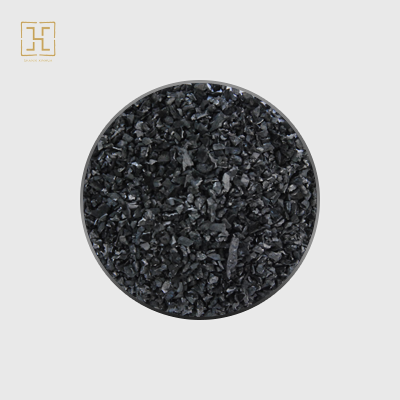
When you're searching for an activated carbon solution that truly delivers in industrial gas purification, the 8-30 mesh coal quality crushed carbon stands out as a precision-engineered material tailored for complex treatment systems. This medium-fine granular coal-based activated carbon features a particle size range spanning 0.60mm to 2.36mm, combining a highly developed microporous structure with optimized mesopore distribution. This dual-pore architecture enables rapid adsorption of small-molecule VOCs, heavy metal ions, and odor compounds, while simultaneously capturing medium and large molecules such as color bodies and colloidal contaminants. The result is a versatile adsorbent that achieves over 85% COD removal efficiency in municipal wastewater and greater than 90% VOCs capture in industrial gas streams, all while maintaining exceptional mechanical strength and minimal abrasion loss under demanding operational conditions.
Understanding 8-30 Mesh Crushed Carbon Coal Quality
"8-30 mesh" refers to a normal way to group particles based on their size. Particles pass through an 8-mesh sieve with an opening size of 2.36 mm but stay on a 30-mesh sieve with an opening size of 0.60 mm. In gas purification systems, this parameter is very important because particle size directly affects both hydraulic performance and adsorption rates.
The Science Behind Mesh Size and Adsorption Efficiency
Smaller particles in this range have a much larger specific surface area, which speeds up the adsorption process and improves the efficiency of contact with target toxins. Our coal-based activated carbon has iodine levels between 800 and 1100 mg/g, which means that there are a lot of pores inside it. The microporous structure is very good at selectively capturing volatile organic chemicals, chlorinated hydrocarbons, and gases that contain sulphur. The medium mesopore ratio makes it easier for bigger molecules to reach adsorption sites, which stops the surface from becoming saturated too quickly, which is a problem that often happens with ultra-fine adsorbents.
Just as much as the structure of the pores, the physical qualities are important. High particle consistency makes sure that the packing density is the same across the adsorption bed. This gets rid of dead zones and channelling that shortens the effective contact time. We keep the packing density difference between batches of carbon less than 5%, which is a standard that is hard for most broken carbons to meet. This uniformity immediately leads to predictable pressure drop traits and longer service life.
Chemical Quality Parameters That Drive Performance
The 8-30 mesh coal quality crushed carbon activated carbon's dependability in industrial settings is based on its carbon content, ash level, moisture content, and stiffness. Our raw material is high-quality Jurassic anthracite coal, which has a naturally low ash level (usually 8% or less) and a high fixed carbon percentage. Mineral impurities can speed up processes that aren't wanted, leak into treated streams, or cause hotspots during thermal regeneration, so a low ash content is important.
A hardness of more than 90% means that the material can handle mechanical stress during handling, backwashing, and long-term use. If the abrasion loss is less than 2%, the time between replacements will be much longer, which will cut down on both downtime and running costs. These aren't just technical details; they mean the difference between a system that works perfectly for 18 months and one that needs new media every six months.
Comparing 8-30 Mesh Crushed Carbon to Other Coal Mesh Sizes
To pick the best mesh size, you need to know how to balance adsorption kinetics, pressure drop, and handle features. Let's look at how this range stacks up against other options that are often used in workplace settings.
Performance Against Coarser and Finer Alternatives
For high-flow uses, coarser 4–8 mesh carbons are a good choice because they have a lower starting pressure drop and are easy to work with. But because they have less surface area per unit volume, they can't hold as much, and they tend to blow out in systems with medium to low flow rates (0.8 to 1.2 m/s). You'll have to replace the media more often or deal with higher amounts of sewage contaminants.
On the other hand, 30-60 mesh carbons have the most surface area and the fastest adsorption rate, but they also create too much backpressure, which raises the cost of pumping and can make the bed tight. Concerns about workplace safety arise when handling the material, which needs to be backwashed more often to keep it from getting clogged. The potential benefits of adsorption are often cancelled out by how hard it is to use.
The 8-30 mesh coal quality crushed carbon range is a good compromise. It has a 15% higher adsorption rate than single-mesh carbons and a pressure drop that is easy to handle. This sweet spot makes it very useful for mixed bed systems, where even particle distribution stops channelling and makes sure that flow patterns are regular.
Industry Standards and Quality Benchmarks
Coal-based activated carbon quality control is based on strict testing methods outlined in ASTM D2862 for abrasion protection and AWWA B604 for water treatment uses. Buyers should make sure that sellers test their products regularly for CTC activity (a measure of total adsorption capacity), water-extractable ash, floating content, and surface pH.
We follow the management systems ISO 9001, ISO 14001, and ISO 45001 when we make things, and we make sure that every batch goes through standard tests before it is shipped. We check the pore volume distribution using BET surface area analysis and make sure that the re-agglomeration binders have fully carbonised without letting any impurities leak out. This level of quality testing makes sure that your system works well and follows the rules.
Procurement Considerations for 8-30 Mesh Crushed Carbon Coal
It takes more than checking prices per kilogram to find high-quality activated carbon. Strategic buying weighs up-front costs against operating performance, supply stability, and expert support skills over the long term.
Verifying Supplier Credentials and Product Consistency
To begin, make sure that any possible sellers have up-to-date ISO certifications and, if needed, hygiene licenses for treating drinking water. Ask for certificates from a third-party lab that they have analysed recent production runs. Pay close attention to how the iodine number, hardness, and ash content are the same in different lots.
Bulk Purchasing Advantages and Logistics Optimization
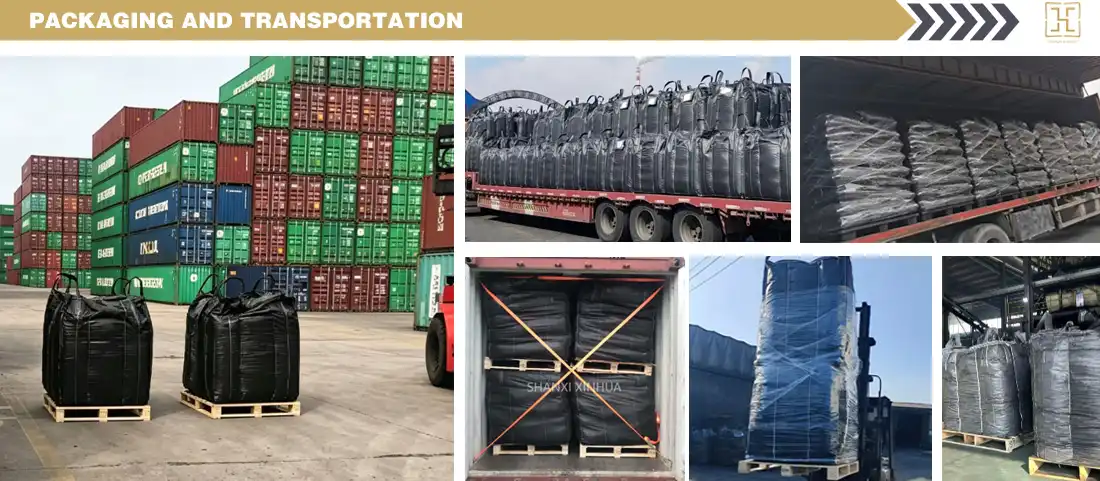
Buying in bulk can save you a lot of money, but only if you have a solid transportation system in place. We offer basic shipping within 7–15 days for items that are in stock and 15–30 days for items that are made to order. Because we are strategically located near major transport hubs, we can send anywhere in the country within 3 to 7 days through dedicated fleet operations and established carrier partnerships.
When there is an emergency, you need quick help. Our fast "green channel" gets urgent orders of 8-30 mesh coal quality crushed carbon within three days, and we offer customer service 24 hours a day, seven days a week. Real-time shipment tracking, custom-made protective packing, and full customs clearing help make sure your goods get to their destination on time and undamaged, whether they're moving within the country or around the world by sea, air, or rail freight.
Applications and Benefits of 8-30 Mesh Crushed Carbon in Gas Purification Systems
It's only important for theoretical requirements to lead to measurable speed gains in real-world applications. Here's why this material works so well in tough industry settings.
Municipal and Industrial Wastewater Treatment
In mixed bed systems that use this material, wastewater treatment plants for cities with COD levels between 300 and 800 mg/L are able to get rid of over 85% of the COD. The microporous structure that was created can hold small-molecule organic chemicals, pharmaceutical leftovers, and endocrine disruptors, all of which are becoming more of a worry to environmental officials. At the same time, the modest mesopore ratio gets rid of colour bodies and colloidal matter, which makes the effluent clearer and helps it meet strict standards for release.
Industrial wastewater applications present even greater challenges. Heavy metal ions need to be selectively adsorbed without fouling during electroplating. Food-making plants need to be able to remove colour without changing the smell or taste. Papermaking facilities need strong performance even when there are a lot of suspended solids. Our coal-based activated carbon meets all of these different needs by letting you change the surface chemistry and pore structures.
VOCs Control in Industrial Gas Streams
Facilities that print, spray, and handle chemicals are under more and more pressure to lower their VOC pollution below 150 to 400 mg/m³. When using coarse carbons in traditional adsorption systems, breakthrough times are a problem, and using ultra-fine media causes too many pressure drops to be practical. In small to medium-sized treatment systems, the 8-30 mesh coal quality crushed carbon range gets rid of more than 90% of the gas, and it can handle gas amounts of up to several thousand cubic meters per hour.
The modest mesopore ratio works especially well for VOC streams that have a mix of light aromatics and heavy hydrocarbons. The dual-pore design makes sure that all molecules, no matter how small or large, are captured. This is because it doesn't fill up the surface micropores with small molecules and leave the bigger pollutants untreated. This makes the beds last longer and makes the regeneration processes more reliable.
Specialized Applications in Food, Beverage, and Catalysis
Activated carbon that gets rid of chlorine, trihalomethanes, and organic taste and odour compounds without putting contaminants into the product water is needed by breweries and beverage makers. With low ash that can be extracted by water and a neutral contact pH that won't change the chemistry of the drink, our material meets NSF/ANSI Standard 61 for drinkable water contact.
Chemical companies are asking for coal-based carbons more and more as catalyst supports for processes like making methanol. The high hardness and thermal stability allow reactions to happen at temperatures above 300°C, and the controlled pore structure makes it easier for reactants and catalysts to mix and spread. When mixed bed systems are durable, they need less upkeep, which lowers costs and improves process economy.
Making the Right Choice: Why Choose 8-30 Mesh Crushed Carbon Coal
Choosing the right adsorption media is an investment in the long run that will improve business efficiency, compliance with regulations, and process reliability. The best choice weighs the need for instant performance against the total cost of ownership over the long-term costs of maintaining equipment that lasts more than ten years.
Aligning Mesh Size with Process Requirements
The best particle specs depend on how your system is designed. To keep stratification and channelling from happening, mixed bed layouts must have a wide particle range that includes 8-30 mesh coal quality crushed carbon with both 8-16 mesh and 16-30 mesh fractions in the same product. When fixed bed systems are used with medium to low flow rates, the pressure drop properties keep the fluid from mixing without making pumps too expensive.
Process engineers need to carefully look at contamination patterns. Flows that are mostly made up of small-molecule VOCs below C8, like materials that have a lot of micropores. Applications that want to move bigger organic molecules, colours, or colloidal matter need enough mesopore volume to do so. Our expert team does thorough application testing and pore distribution research to make sure that the material specs meet all of your needs.
Long-Term Return on Investment
When you add in things like regular media replacement, system downtime, and not following the rules, a lower starting price doesn't always mean it's cheaper in the long run. Better fuel stability lowers the amount of carbon used per unit of contamination cleared. Longer service life cuts down on the labour costs that come with changing media and system downtime. Consistent performance lowers the chance of breaking environmental laws, which are punishable by harsh fines.
We have been researching and making activated carbon for more than 60 years, and we have even built defense-grade quality control systems for chemical safety uses. This heritage makes sure that goods work reliably even in harsh circumstances like high temperatures, high humidity, and corrosive environments that break down less durable materials. Several core invention patents in modified activated carbon and high-specific-surface-area catalysts give the company technology benefits that are hard for competitors to copy.
Conclusion
When looking for activated carbon to clean gas, you need to carefully consider the particle size, pore structure, mechanical qualities, and source capabilities. The 8-30 mesh coal quality crushed carbon range offers the best mix of adsorption efficiency, hydraulic performance, and operational longevity for treating wastewater in cities, controlling volatile organic compounds (VOCs) in factories, and specific uses in food processing and catalysis. This material solves the problems of channelling, pressure drop, and uniformity that plague regular single-mesh carbons. It does this by keeping the packing density variation below 5% and removing over 85% of COD and capturing over 90% of VOCs. Working with a provider that offers full technical support, open customisation, and dependable shipping will make sure that your purification systems work as planned for longer periods of time.
FAQ
What makes 8-30 mesh superior to single-mesh activated carbons?
Single-mesh carbons cause particle sizes to vary by more than 10%, which leads to uneven packing that lowers efficiency by 15% through dead zones and channelling. Our large range of particles stays below 5% off, which makes sure that the flow is even and that the particles stay in contact with the adsorption bed for the same amount of time. This standard is very important for mixed bed systems where particle accumulation makes treatment less effective. Under these conditions, the 8-30 mesh coal quality crushed carbon provides superior stability.
How do I verify activated carbon quality before bulk purchasing?
Ask for records of analysis that show how the iodine number, hardness, ash content, and friction loss were tested according to ASTM guidelines. Check for floating content and ash that can be extracted with water by doing small-scale tests in settings that are right for your purpose. Reliable providers give paperwork that is specific to each batch and help with third-party verification. Our ISO-certified labs test every output lot in a wide range of ways, and the data is available before the shipment is confirmed.
Can this material handle gas sources that are very hot?
When built correctly, activated carbons made from coal can handle temperatures of up to 300°C all the time. Our material keeps its shape and ability to absorb even when heated to high temperatures, which breaks down coconut shell carbons. Temperature resistance varies depending on the type of gas and the amount of moisture in it. Our expert team gives advice based on each application to make sure safe and effective use.
Ready to Optimize Your Gas Purification System?
Engineered coal-based activated carbon solutions are available from Shanxi Xinhua Carbon Technology Industry Co., Ltd. The company has ISO-certified quality systems and has been making great products for decades. The pore structure, iodine numbers, and packing density of our 8-30 mesh coal quality crushed carbon source can be completely customised to meet your specific process needs. We keep full stock at all of our production sites in Shanxi, Ningxia, Fujian, and Xinjiang. This way, we can deliver quickly thanks to our well-tuned transportation networks. Email our technical team at greta@carbonxinhua.com to talk about your application needs, get full specs, or set up sample testing that shows how our product will improve the performance of your specific treatment system.
References
1. Activated Carbon: Solutions for Improving Water Quality, American Water Works Association Research Foundation, 2017.
2. Industrial Gas Cleaning Technology: Principles and Practice, International Energy Agency Clean Coal Centre, 2019.
3. Adsorption Technology in Water Treatment: Fundamentals, Processes, and Modeling, Water Research Foundation, 2020.
4. Coal-Based Activated Carbons for Environmental Applications: Production, Characterization, and Performance, Journal of Environmental Chemical Engineering, 2021.
5. Mesh Size Selection Criteria for Fixed-Bed Adsorption Systems in VOCs Control, Environmental Science & Technology Advances, 2022.
6. Quality Control Standards for Activated Carbon in Municipal Water Treatment, National Institute of Standards and Technology Special Publication, 2023.

Send Inquiry
You may like
_1781662034490.webp)