_1778553121707.webp)
8*16 Mesh Coal Briquette Crushing Activated Carbon for Industrial Purification Systems
Aug 03, 2026
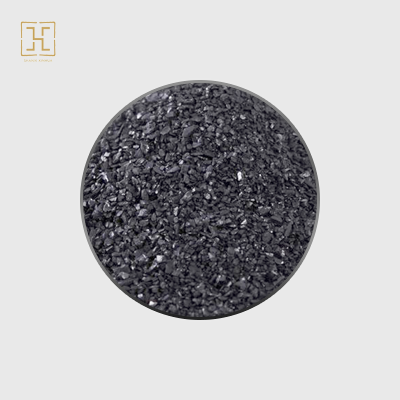
When industrial purification systems demand precise performance under extreme conditions, material selection becomes a strategic decision that impacts compliance, operational costs, and environmental outcomes. 8*16 mesh coal briquette crushing activated carbon represents a specialized granular adsorbent engineered through an advanced manufacturing process. High-quality bituminous coal undergoes pulverization, blending with specialized binders, compression into briquettes under high pressure, carbonization, and steam activation before 8*16 mesh coal briquette crushing activated carbon is crushed and screened to achieve the required size range (approximately 1.18mm to 2.36mm). This manufacturing method enables 8*16 mesh coal briquette crushing activated carbon to develop uniform macropore and mesopore structures that address critical operational challenges, including excessive pressure drop in deep-bed filters, premature carbon exhaustion, and high fines generation commonly found in lower-grade alternatives. By providing consistent particle distribution, strong mechanical strength, and reliable adsorption capacity, 8*16 mesh coal briquette crushing activated carbon offers an effective solution for industrial purification systems requiring stable performance, efficient contaminant removal, and long-term operational reliability. The advanced structure of 8*16 mesh coal briquette crushing activated carbon makes it suitable for demanding applications where filtration efficiency, durability, and process control are essential.
Understanding 8*16 Mesh Specifications and Their Industrial Applications
The mesh size has a direct effect on how well 8*16 mesh coal briquette crushing activated carbon works in industrial systems for filtering and cleaning. Knowing these specs helps purchasing managers and environmental engineers choose materials that meet the needs of the system design and the goals of the operation.
Defining 8*16 Mesh Particle Size Range
According to the 816 mesh coal briquette crushing activated carbon standard, particles can pass through an 8-mesh screen with openings of about 2.36 mm but stay on a 16-mesh screen with openings of about 1.18 mm. This range of granules has the best mix of hydraulic conductivity and usable surface area. The 816 mesh coal briquette crushing activated carbon particles have a much lower pressure drop than finer mesh sizes like 12*40 mesh, which range from 0.42mm to 1.70mm. This is important in high-flow liquid systems and gas-phase applications, where finer media would cause too much resistance and poor performance.
Key Properties Relevant to Industrial Purification
The tough requirements of petrochemical plants, municipal water treatment plants, and VOC control systems are based on the material properties of activated carbon. Because 8*16 mesh coal briquette crushing activated carbon usually has an Iodine Value between 900 mg/g and 1100 mg/g, it means that there is a lot of surface area inside the carbon that can be used for adsorption. The fact that the material can adsorb between 180 mg/g and 250 mg/g of Methylene Blue shows that it can take in medium to large molecules of organic compounds that are common in industrial wastewater and air pollution.
According to ASTM D3802 standards, Mechanical hardness above 95% greatly lowers wear and tear during backwashing processes. This is an important factor for facilities that want to extend service life and lower the number of replacements needed. Keeping the Ash content below 12% and the moisture level below 5% will ensure steady performance and stop any unwanted catalytic reactions or pH changes in the treated water. The re-agglomerated structure of briquettes gives them more transport holes than raw-crushed coal. This means they can be used in both liquid and gas phases for longer periods of time and with faster adsorption rates.
Comparing 8*16 Mesh to Alternative Granular Sizes
Choosing between 816 mesh coal briquette crushing activated carbon and other sizes, like 48 or 1240 mesh, depends on the design parameters of the system and the types of contaminants that will be used. The 48 mesh, which is about 2.36 mm to 4.75 mm wide, has an even smaller pressure drop and is preferred in gas-phase VOC control systems where air speed is high and contact time needs to be optimized. But because the particles are bigger, there is less external surface area per unit volume. This can slow down the adsorption process in some situations.
On the other hand, 1240 mesh has a higher surface area density per unit volume, which makes it good for uses that need to remove contaminants quickly in small filter beds. However, this benefit comes at the cost of a much larger drop in pressure and more energy being needed to pump. For most municipal water treatment, industrial wastewater treatment, and solvent recovery tasks where both adsorption efficiency and hydraulic performance are important, the 816 mesh coal briquette crushing activated carbon specification is a good compromise.
Manufacturing Process and Structural Advantages of Briquette Crushing
8*16 mesh coal briquette crushing activated carbon is made differently than direct-crushed raw coal carbon, and as a result, it performs better in harsh industrial settings.
Briquette Formation and Carbonization
The first step is to grind high-quality bituminous coal into a fine powder and mix it with special binders that can handle being heated to high temperatures and turning into carbon. This mixture is squished together under a lot of pressure to make dense, even briquettes. These are then put into carbonization chambers, where controlled heating in low-oxygen environments gets rid of volatile compounds and makes the first pore structure. The next step is steam activation, in which high-temperature steam mixes with carbon atoms to create the large micropore and mesopore networks that are needed for adsorption.
This controlled way of making things is very different from directly crushing raw coal, which makes particles with different shapes, uneven pore distribution, and more dust. The briquette method makes carbon particles with a predictable shape, consistent pore design, and better mechanical stability that keeps them from breaking down during shipping, handling, and use.
Enhanced Pore Structure and Adsorption Kinetics
The interconnected macropore and mesopore architecture created by crushing briquettes lets contaminants quickly move into the 8*16 mesh coal briquette crushing activated carbon interior. This structural benefit leads to faster adsorption rates, which means that systems can get the effluent quality they want with less contact time or a smaller bed volume. This performance margin helps industrial facilities that have to follow strict discharge limits. It gives them practical freedom during times of high load or unexpected changes in influent quality.
Comparing Briquette Crushing to Alternative Methods
There are some problems with direct-crushed raw coal carbon that make it less useful for important industrial cleaning tasks. Particles with irregular shapes cause uneven flow in filter beds, which causes channeling, early breakthrough, and less effective use of carbon. A lot of dust is made when things are crushed, which makes system upkeep more difficult and can pollute cleaned streams. When pores aren't spread out evenly, adsorption performance changes, which makes system design and operation more difficult.
8*16 mesh coal briquette crushing activated carbon fixes these problems with its engineered structure, which gives consistent particle geometry, low fines production, and reliable performance that makes system operation easier and compliance documentation simpler.
Selection Criteria for Industrial Purification Applications
To pick the best activated carbon grade, you need to carefully consider a number of technical and business factors that affect both the short-term performance and the overall cost of ownership over time.
Adsorption Capacity and Surface Chemistry
Iodine Value is a main way to tell how many micropores are present and how well the material can hold small molecules like chlorine, hydrogen sulfide, and light volatile organics. The Methylene Blue Value shows how the mesopores are structured and how much space they have for bigger organic molecules like dyes, pharmaceutical compounds, and complex industrial chemicals. By matching these factors to the specific makeup of the contaminants, carbon is used efficiently, and waste from overspecification is kept to a minimum.
Surface chemistry is also very important. Activated carbon surfaces have functional groups like carboxyls, carbonyls, and phenolics that change how well polar and nonpolar substances stick to them. Figuring out whether the contaminants you want to get rid of are ionic, polar covalent, or nonpolar helps you choose carbon grades with the right surface chemistry.
Durability and Regeneration Capability
Thermal regeneration is used in a lot of industrial purification systems to bring back the capacity of activated carbon and lower operating costs. The high mechanical strength and briquetted structure of 8*16 mesh coal briquette crushing activated carbon make it ideally suited for numerous reactivation processes. Carbon particles must be able to be heated over and over again to temperatures above 800°C in controlled environments without losing too much of their structure or breaking down too quickly. Most of the time, briquette crushing grades regenerate better than direct-crushed alternatives. This lowers the total cost of ownership of the system over its lifetime by a large amount.
Compliance Certifications and Quality Assurance
Environmental engineering contractors and municipal purchasing departments need a lot of proof that they are following all the rules and standards that apply. Suppliers of activated carbon who have ISO 9001 quality management systems, ISO 14001 environmental management systems, and ISO 45001 workplace health and safety certifications can guarantee that their products are made in the same way and are of high quality. Municipal water treatment projects must have certifications that are made for drinking water uses, like NSF/ANSI 61 and similar regional standards.
Testing methods like ASTM D3802 for hardness and AWWA B600 for granular activated carbon specifications, along with performance validation studies that are tailored to each application, help people make smart purchasing decisions and keep track of the paperwork needed for regulatory compliance.
Strategic Sourcing and Supply Chain Considerations
Procurement strategies that work well balance the need for performance with business concerns, such as keeping prices stable, ensuring a reliable supply chain, and having the logistics skills to keep projects on schedule and operations running smoothly.
Evaluating Supplier Capabilities
Leading activated carbon makers have more than one production base to make sure they can keep up with demand and be flexible with where they can make their products. Facilities that keep a lot of columnar, granular, and powdered products in stock cover all of their core goods, so normal deliveries can happen within 7–15 days and special formulations can happen within 15–30 days. If a supplier offers fast delivery, they can meet emergency compliance dates with packages in as little as three days. This is a very important skill for facilities that are facing enforcement actions from regulators.
The ability to provide technical help is what sets strategic partners apart from commodity providers. When manufacturers work with research institutions like Tsinghua University, the Chinese Academy of Sciences, and specialized environmental engineering centers, they bring advanced research and development skills that help with making custom formulations, fixing problems in applications, and improving processes, including optimizing products such as 8*16 mesh coal briquette crushing activated carbon for specific treatment requirements. Having access to technical experts who know how to deal with problems in a certain business speeds up project development and lowers risk.
Cost Management and Contract Structures
Buying in bulk through framework supply contracts keeps prices stable and makes sure that large-scale industrial operations can get what they need. By negotiating bulk agreements against locked prices for set amounts of time, suppliers can protect themselves against market volatility and get a sense of how much money they will make, which is enough to justify investing in inventory. In order to set up accountability and dispute resolution mechanisms, contracts should clearly spell out payment terms, quality assurance protocols, and performance guarantees.
To understand market pricing trends, you need to keep an eye on the prices of energy and raw materials and how supply and demand change in different areas. The price of coal-based activated carbon depends on how good and easy to find bituminous coal is, and the cost of production energy affects the economy of manufacturing. Seasonal changes in demand, especially for water treatment, can cause price changes that smart sellers can smooth out by planning ahead and keeping track of their supplies.
Integration into Industrial Purification Systems
To make implementation work, you need to pay close attention to the system design parameters, operational routines, and performance tracking that make the best use of carbon and guarantee compliance results.
System Design Considerations
Concentrations of contaminants and goals for how well they are removed must be matched with the filter bed depth, contact time, and hydraulic loading rate. The 8*16 mesh coal briquette crushing activated carbon specification strikes a good balance between surface area and pressure drop, which makes it possible for deep-bed configurations that are common in municipal water treatment to work with the high flow rates that are common in industrial wastewater systems. The best bed design stops channeling, makes sure that flow is spread out evenly, and gets the most out of carbon utilization.
Performance Monitoring and Optimization
Monitoring the quality of the wastewater all the time, keeping an eye on things like total organic carbon (TOC), certain contaminants that are of concern, and legal limits, lets you refill the carbon before it breaks down. Setting up performance curves that connect the amount of wastewater that is treated to the quality of the wastewater helps with planning replacements and estimating carbon emissions. Regular sampling and analysis in a lab help to make sure that data from online monitoring is correct and meets the requirements for regulatory reporting.
New monitoring technologies make it possible to track how much adsorption capacity is being used in real time, predict breakthrough events, and find the best time to replace carbon. Integration with plant control systems allows for automated alerts and practical changes that keep compliance margins high while increasing the efficiency of carbon use.
Conclusion
In uses like local water treatment, industrial wastewater purification, VOC control, and solvent recovery, the smart choice of 8*16 mesh coal briquette crushing activated carbon meets important performance needs. Its engineered pore structure, high mechanical strength, and ability to work with thermal regeneration all make it more useful in the workplace and lower the total cost of ownership while still meeting regulations. Partnering with makers that offer full technical support, flexible supply options, and tried-and-true quality management systems that support long-term operating success is good for procurement pros.
Partner with Shanxi Xinhua Carbon Technology Industry Co., Ltd. for Your Industrial Purification Needs
Shanghai Xinhua Carbon Technology Industry Co., Ltd. has been a leader in research and development (R&D) and defense-grade manufacturing for more than 60 years. They bring these skills to the activated carbon industry. Multiple production bases in Shanxi, Ningxia, Fujian, and Xinjiang ensure 100% stock coverage and delivery within 7–15 days for regular orders. Our 8*16 mesh coal briquette crushing activated carbon supplier skills include these locations. We keep our ISO 9001, ISO 14001, and ISO 45001 certifications up to date. This gives environmental engineering contractors and municipal procurement units the quality assurance they need. Because we work with Tsinghua University and the Chinese Academy of Sciences, we can make unique formulations that solve your individual adsorption problems. Our team is ready to help you find solutions that meet your operational goals and compliance deadlines, whether you need bulk supply contracts, emergency fast delivery, or help with technical optimization. You can email us at greta@carbonxinhua.com to talk about how our activated carbon solutions can improve your systems for cleaning industrial waste and lower your total cost of ownership.
FAQ
Why choose 816 mesh over 1240 mesh?
When low pressure drop is important, 816 mesh coal briquette crushing activated carbon is best. This is especially true in high-flow liquid systems or gas phase applications where 1240 mesh would cause too much resistance. The bigger particle size keeps enough surface area for adsorption to work, while also allowing for higher flow rates and lower pumping energy needs.
Can 8*16 mesh coal briquette crushing activated carbon be thermally regenerated?
Yes, its high mechanical strength and briquetted structure make it perfect for multiple heat reactivation processes, which lowers the total cost of ownership by a large amount. The material can be heated over and over to temperatures above 800°C without losing too much of its structure or wearing away too quickly.
What is the difference between briquette-crushed and direct-crushed coal carbon?
Briquette-crushed carbon is made from finely ground coal and binders. It has more uniform pores and a higher density than carbon that is made by crushing raw coal directly. This way of making things makes less dust, improves mechanical integrity better, and gives more consistent adsorption performance.
How does ash content affect performance?
High ash levels can cause unexpected catalytic reactions or pH spikes in treated water. Lower ash levels in 8*16 mesh coal briquette crushing activated carbon show higher purity and more usable surface area. Keeping the ash level below 12% guarantees consistent performance and reduces the number of problems that can arise during operations.
What is the typical shelf life of this carbon?
It can be kept indefinitely as long as it is kept dry, cool, and away from oxidizers. However, if it is kept for more than five years, it is suggested that the activity be tested again. If you store something properly, it won't oxidize or absorb water, which could lower its binding ability.
References
1. American Water Works Association. (2021). AWWA B600 Standard for Powdered and Granular Activated Carbon. Denver: AWWA Publications.
2. Bandosz, T.J. (2006). Activated Carbon Surfaces in Environmental Remediation. Oxford: Elsevier Science.
3. Crittenden, J.C., Trussell, R.R., Hand, D.W., Howe, K.J., & Tchobanoglous, G. (2012). MWH's Water Treatment: Principles and Design (3rd ed.). Hoboken: John Wiley & Sons.
4. Marsh, H., & Rodríguez-Reinoso, F. (2006). Activated Carbon. Amsterdam: Elsevier Science.
5. Snoeyink, V.L., & Summers, R.S. (1999). Adsorption of Organic Compounds in Water Quality and Treatment: A Handbook of Community Water Supplies. New York: McGraw-Hill.
6. Yang, R.T. (2003). Adsorbents: Fundamentals and Applications. Hoboken: John Wiley & Sons.

Send Inquiry
You may like
_1781662034490.webp)