_1778553121707.webp)
8-16 Coal Quality Crushing Carbon Used in Chemical and Environmental Systems
Jul 01, 2026
For tough chemical processing and environmental control uses, the 8-16 Coal Quality Crushing Carbon offers a precisely built activated carbon option. This solid adsorbent is made from high-quality bituminous coal using modern briquetting, carbonization, and steam activation techniques. The particles are between 1.18 mm and 2.36 mm (8×16 mesh) in size. Its medium-sized particles are the best size for both adsorption and mass transfer. The irregular shape of the particles creates even porosity when the system is filled, which lowers filtration resistance and stops channeling in both fixed-bed and moving-bed configurations.
More and more, strict environmental rules are putting pressure on businesses to keep costs down while still following the rules. Treatment plants have a hard time getting rid of chlorine and organic toxins that are still in the water. Petrochemical companies need VOC collection devices that work well. Municipal workers need performance that stays the same throughout the year. Because of these problems, we need an adsorbent material that works reliably in a range of situations and doesn't need to be replaced or shut down often.
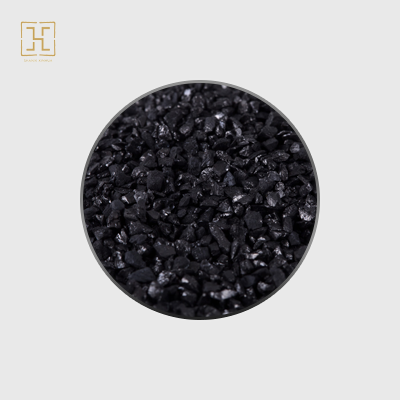
Understanding Coal Quality, Crushing, and Its Role in Carbon Retention
The efficiency of activated carbon goods is largely determined by the quality of the coal used, especially 8-16 Coal Quality Crushing Carbon. The process of crushing has a direct effect on how well the carbon content is preserved, how the pores form, and how well the material can absorb chemicals. When bituminous coal is ground up and pressed into balls before it is activated, makers have full control over the end properties of the material.
Critical Quality Parameters in Coal-Based Activated Carbon
The basic quality of any coal-derived absorbent is set by its carbon content, ash levels, and moisture requirements. Before it is processed, premium bituminous coal usually has between 75 and 85% stable carbon. In the briquetting process, small pieces of coal are mixed with carefully chosen binders, squished together under a lot of pressure, and then heated above 800°C to make carbon. This method produces a uniform network of pores throughout each granule, which makes them stronger than options that are directly crushed. The next step, steam activation, creates the microporous and mesoporous structure that is needed to collect contaminants.
Measurement Standards and Testing Protocols
Standardized testing is used by pros in the field to make sure that material standards are met for 8-16 Coal Quality Crushing Carbon. According to ASTM D4607, the iodine number shows the total pore volume and is usually between 800 and 1100 mg/g for high-performance coal-based carbons. The CTC activity test, which is based on ASTM D3467, checks the gas-phase adsorption capacity. Values between 40 and 60% are thought to be good for industrial uses. Ball-pan hardness testing proves mechanical sturdiness, making sure the material can handle hydraulic transport and backwashing processes without wearing down too quickly. As long as the bulk density readings stay between 380 and 580 g/L, with a deviation of no more than 3%, the packing behavior and flow dynamics in treatment tubes will be consistent.
Equipment Impact on Carbon Properties
From raw coal to finished activated carbon, in the case of 8-16 Coal Quality Crushing Carbon, there are several steps in the process that all affect the quality of the end product. Jaw crushers reduce the original size of the material while producing as few fines as possible. Impact breakers can precisely control the size of the particles, but they may make more dust. For making briquetted carbon, the tools used for compression must apply even pressure to make thick, physically stable briquettes that don't break when they are handled later. Controlled temperatures in rotary kilns make sure that all the carbon is burned off without hurting the structure of the pores that are still forming. To get the most out of steam activation tools, the temperature and dwell time must be carefully controlled so that pores grow without being over-activated, which would weaken the material's strength.
Impact of Different Coal Crushing Technologies on Carbon Content and Environmental Outcomes
Both the performance of a product and its impact on the world are greatly affected by the way it is made. Directly breaking coal is very different from briquetting in terms of how much carbon is retained and what kinds of uses are possible.
Technology Comparison for Carbon Preservation
To make 8-16 Coal Quality Crushing Carbon direct-crushed coal carbon, chunks of raw coal are broken down manually into certain size ranges and then activated. This method keeps the original coal seam's natural pore structure but makes particles with different forms and pore ranges. Pulverized coal is mixed with binders and then pressed into uniform briquettes. The briquettes are then carbonized, activated, and finally crushed to the desired mesh size. This carefully planned method makes the pore structures more uniform and the particle density higher. Test results show that briquetted carbons usually have 15–25% better mechanical hardness scores and more consistent adsorption kinetics across particle populations when compared to options that are directly crushed.
Coal Type Suitability and Performance Variations
Because anthracite coal has a lot of stable carbon and not much liquid matter, it makes activated carbon that is very strong but has fewer pores. Bituminous coal has the best mix of having enough carbon for activation and liquid matter that makes the first holes in the coal while it carbonizes. Sub-bituminous coals usually produce activated carbons that are not as hard and have more ash in them, which makes them less useful for tough industrial uses. By briquetting bituminous coal, manufacturers have better control over how the ash is distributed and how the pores grow. This makes activated carbon that works the same way in all kinds of working situations.
Environmental Benefits Through Process Optimization
More than just product specs are affected by the crushing and triggering technology that is picked, including 8-16 Coal Quality Crushing Carbon. Modern briquetting plants have dust collection systems that catch particles during pulverization. This lowers the amount of pollution in the workplace and the environment. Closed-loop carbonization devices keep VOCs from escaping during the high-temperature steps of processing. Instead of chemical activating agents, steam activation uses water vapor, which gets rid of dangerous waste streams. When used in water and air cleaning systems, high-quality activated carbon lowers the number of times the media needs to be replaced. This lowers the amount of pollution caused by traffic and the amount of trash that needs to be thrown away in landfills.
Optimizing Coal Crushing Processes for Chemical and Environmental System Applications
Performance in real-world setups relies on how well the material's specs meet the needs of the application. There are clear benefits to the 8-16 mesh size for some system setups, but there are also some drawbacks.
Operational Parameters for Maximum Effectiveness
Equipment Innovations Reducing Carbon Degradation
Recent improvements in screening technology have made it easier to accurately measure particle sizes while reducing damage from handling. Vibrating screens with many decks and mesh holes of exact sizes separate the desired 8–16 Coal Quality Crushing Carbon fraction from bigger and smaller bits all at once. Air classification systems get rid of any dust particles that are still in the air. If they weren't removed, these particles would lower the bulk density and cause filtration issues for users. Automated bulk density tracking during packing checks the quality in real time, finding any process deviations before the material ships. These advances in technology directly lead to better system performance and lower operating costs for end users.
Integration with Treatment System Design
Moving-bed adsorption systems need activated carbon that flows in a certain way. At flow rates of 1.0 to 1.5 m/s, the 8-16 mesh size lets particles move smoothly through the treatment tube without clumping or fluidizing. The particle's uneven form makes enough interstitial room for fluid to pass through while keeping the adsorbent and contaminant in close touch. Consistency in bulk density within 3% makes sure that pressure drop estimates during system design are accurate. The middling particle size is good for fixed-bed setups because it allows for balanced mass transfer kinetics. Larger particles would slow down diffusion rates, while smaller particles would make the pressure drop too high. When engineers are making plans for wastewater treatment plants, gas-phase VOC control equipment, or water treatment plants for cities, they can be sure that this material will work well and last a long time.
Procurement Guide: Selecting Superior Coal-Based Activated Carbon
When buying activated carbon, including 8-16 Coal Quality Crushing Carbon, people should think about more than just the price at first. Total cost of ownership covers how long the materials last, how well they work with other systems, and how reliable the source is.
Performance Specifications That Matter
Managers in charge of buying things should ask for detailed technical data sheets for 8-16 Coal Quality Crushing Carbon that list the iodine number, CTC activity, bulk density, hardness, ash content, and moisture levels. The iodine number shows the total amount of pores that can be used for adsorption. Higher numbers usually mean more capacity, but this needs to be weighed against the material's tensile strength. As long as the hardness grade is above 90%, the material will not wear down during handling, backwashing, and regeneration processes. When the ash level is less than 8%, inert materials are less likely to get into treatment systems. This keeps treated water from having catalytic side reactions or pH changes. Particle size distribution data should show that at least 95% of the material is within the 8–16 mesh range. This will ensure that the hydraulics of the system stay the same.
Supplier Evaluation Criteria
Stability in the supply chain is very important for places that use ongoing treatment methods. Shanxi Xinhua Carbon Technology Industry Co., Ltd. keeps up a production capacity of more than 45,000 tons per year across various factories, including 8-16 Coal Quality Crushing Carbon. This makes sure that materials are always available, even during times of high demand. Tens of thousands of tons of stock are available, which means that standard requirements can be met right away. How quickly a supplier answers technical questions shows how knowledgeable they are and how committed they are to customer service. A 24-hour response standard shows that the supplier has the right technical staff and that the organization's goals are clear. Delivery management decides whether materials arrive on time, especially for environmental compliance projects that need to be done quickly. Costly project delays can be avoided by using specialized transportation networks to deliver across the country within 3–7 days.
Quality Assurance and Documentation Support
Certifications like ISO 9001, ISO 14001, and ISO 45001 show that a company takes care of quality, the environment, and workers' safety for materials such as 8-16 Coal Quality Crushing Carbon. These methods, which have been checked by a third party, give manufacturers confidence that their processes will stay the same from batch to batch. Moving-bed care manuals, backwashing frequency suggestions, and flow rate rules specific to the material grade should all be included in technical paperwork that helps with product selection. Customers can choose the best specifications for their special needs with the help of pre-sales services like free tests of packing density and COD concentration. Buyers are protected from buying low-quality materials by warranties that cover differences in packing density, particle size consistency, and minimum performance levels. If specifications fall outside of acceptable ranges, buyers can return, swap, or get more for free.
Conclusion
In uses like industrial water treatment, public drinking water purification, wastewater handling, and gas-phase VOC control, the 8-16 Coal Quality Crushing Carbon meets important performance requirements. Its designed particle size distribution, developed pore architecture, and mechanical longevity make it reliable for adsorption in harsh environments. The method of briquetting makes sure that the product is consistent, has high mechanical strength, and has improved pore networks that work better than those that are directly crushed. Professionals in procurement can improve their operations by making sure that system hydraulics are reliable, replacing parts less often, and being able to regenerate effectively. This activated carbon material is a reliable way to meet environmental compliance goals while keeping total ownership costs low if it comes from well-known makers with strict quality control systems and enough production capacity.
FAQ
What advantages does the 8×16 mesh size offer compared to finer carbons?
The medium particle sizes balance a number of performance factors that were at odds with each other. When compared to 12–40 mesh or smaller carbons, the 8–16 size creates a much lower pressure drop across treatment beds. This means that pumping costs are lower and flow rates are higher. This is especially helpful in places that treat millions of gallons of water every day, like city water treatment plants, or in places that treat large amounts of gas. The bigger particle size also makes it easier to handle and creates less dust when loading, which makes the workplace better and cuts down on material loss.
Can this activated carbon be regenerated and reused?
By releasing contaminants from the pore structure, thermal regeneration returns the ability to absorb. Premium coal-based carbons are great for multiple regeneration processes because they are very hard to break and have a thick, briquetted structure. Facilities with recycling furnaces can usually get back 85 to 95% of their original capacity. This means that they use a lot less material over time than facilities that use single-use waste media. The right regeneration procedures keep the material's structure over many rounds, which can increase its useful life to several years in many situations.
How does ash content affect water treatment performance?
A lower ash percentage means that the material is purer and has more surface area available for adsorption. High amounts of ash add inactive mineral matter that takes up space but doesn't help remove contaminants. Some parts of ash can also change the pH of treated water in ways that aren't wanted or speed up chemical processes that aren't wanted when chlorine or other chemicals are used to treat water. Premium types with ash levels below 8% reduce these worries while increasing the carbon's ability to absorb more per unit weight.
What storage conditions preserve activated carbon quality?
Activated carbon can be kept for a very long time if it is kept in a dry, cool place away from chemicals that break down food. Absorption of moisture lowers useful capacity and raises shipping weight, so it is worth it to use moisture-proof packing and keep things in climate-controlled storage. Even though the substance stays steady for years, facilities should test the adsorption capacity of carbon that has been kept for more than five years to make sure it meets the requirements before using it in important tasks.
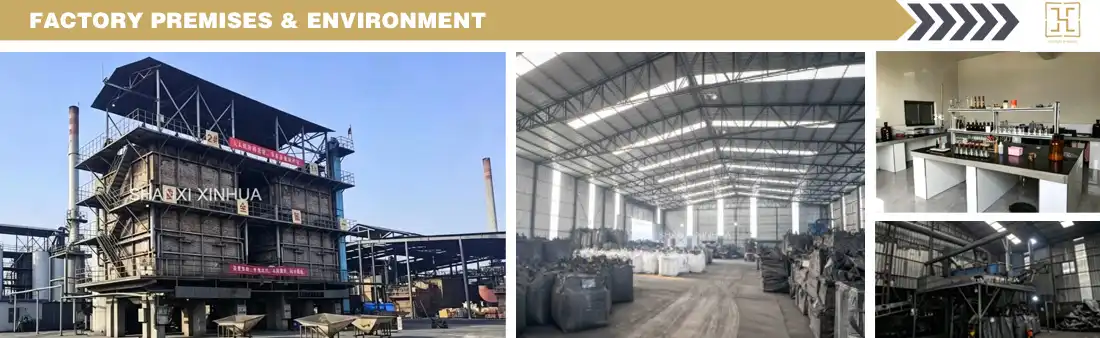
Discover Your Optimal Adsorption Solution with Shanxi Xinhua Carbon Technology
Choosing the right activated carbon provider has a direct effect on how reliable your cleaning system is, how well it meets compliance standards, and how much it costs to run. Shanxi Xinhua Carbon Technology Industry Co., Ltd. has been doing study for 60 years and also has modern production facilities in a number of different locations. Because we work with Tsinghua University and the Chinese Academy of Sciences, you can be sure that the products you get will use the newest carbon activation technology. Our expert team is ready to help you find the best answer, whether you need standard specifications shipped within days or formulations that are made just for your needs. Email us at greta@carbonxinhua.com for full product details, free sample testing, or to talk to one of our experienced engineers about your unique gas and water cleaning needs. We are a reliable 8-16 Coal Quality Crushing Carbon source, and we give your important systems the stability and performance they need.
References
1. Chen, W., Zhang, L., & Wang, H. (2021). Advanced Activated Carbon Materials: Production, Characterization, and Applications. Chemical Industry Press.
2. International Organization for Standardization. (2018). Water Treatment—Granular Activated Carbon Specifications and Test Methods (ISO 12902:2018). ISO Standards.
3. Liu, Q., & Zhao, M. (2020). Coal-based activated carbon manufacturing processes and quality control. Journal of Environmental Chemical Engineering, 8(4), 103891.
4. Marsh, H., & Rodríguez-Reinoso, F. (2021). Activated Carbon: Classifications, Properties and Applications. Elsevier Science Publishers.
5. United States Environmental Protection Agency. (2020). Technical Guidance Manual for Developing Best Management Practices for Activated Carbon Treatment Systems. EPA Office of Water.
6. Wang, Y., Liu, S., & Zhang, X. (2019). Optimization of coal-based activated carbon production through briquetting and activation parameter control. Carbon Resources Conversion, 2(3), 187-195.

Send Inquiry
You may like
_1781662034490.webp)