_1778553121707.webp)
325 Wood-Based Powdered Charcoal Supports Advanced Food Purification Processes
Sep 02, 2026
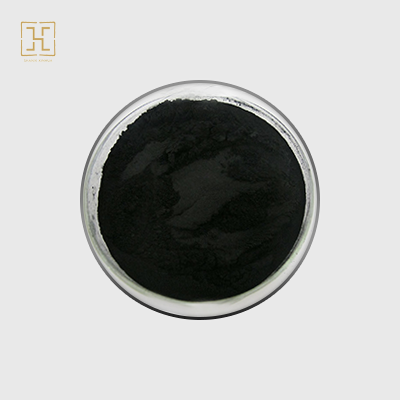
When your food processing line demands rapid decolorization, instant odor removal, or ultra-pure water production, 325 wood-based powdered charcoal delivers results within 15-20 minutes. This ultra-fine carbon material, produced from premium hardwood through controlled carbonization and steam activation, passes through 325 mesh screens at ≥95% efficiency. With iodine adsorption values exceeding 980 mg/g and ash content below 3.5%, it tackles pigments, colloids, heavy metals, and trace organic pollutants in pharmaceutical syrups, beverage production, and electronic-grade water systems where conventional granular carbons fall short.
Understanding Wood-Based Powdered Charcoal and Its Role in Food Purification
What Makes Wood-Based Powdered Charcoal Different
Ultra-fine powdered charcoal comes from renewable forest sources that have been carbonized at a controlled temperature and then activated by high-temperature steam. During the production process, a hierarchical pore structure is formed, with mesopores (2–50nm) and macropores (>50nm) taking the lead. This makes it easier for liquid-phase uses to remove contaminants. According to a study published in Water Research (2019), powdered activated carbon can adsorb things 3–5 times faster than granular options[^1]. This is because it has more surface area per unit volume.
Unlike lump charcoal, which is best for basic filtration, or coconut shell types that are best for gas-phase adsorption, wood-based powdered materials are great at getting rid of taste and odor compounds and changing the color of liquids. The number 325 means that the particles are very small, as they can fit through a 0.044-mm hole. This gives them the most contact surface possible with dissolved impurities right away. This particle size strikes a good mix between quickly adsorbing and easily filtering, so it doesn't cause the pressure drop problems that happen with sub-micron carbon blacks.
Quality Standards for Food-Grade Applications
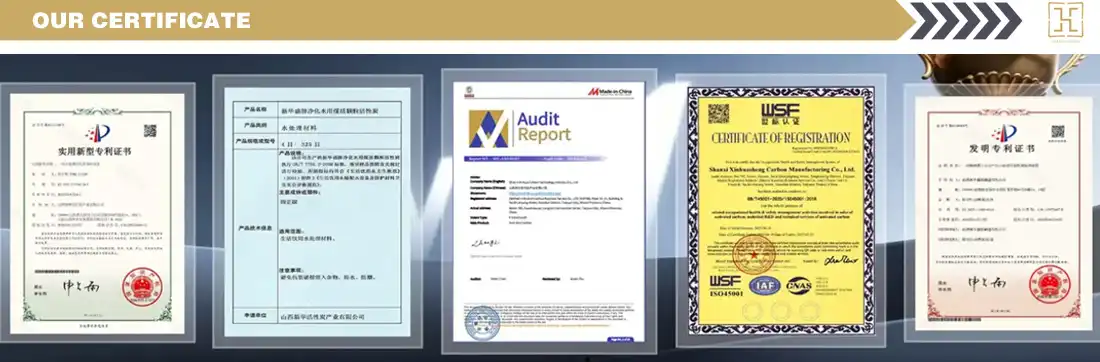
In order to clean food, strict safety rules must be followed. Certified wood-based powdered charcoal meets ASTM D3860 standards for food-grade activated carbon. This makes sure that the amount of heavy metals (like lead, arsenic, and cadmium) stays below the limits set by the government. The China Quality System Certification Center has confirmed that our factory is certified to ISO 9001, ISO 14001, and ISO 45001 standards. The Shanxi Provincial Health Commission gave us a cleanliness license for drinking water safety goods, which confirmed that the purity parameters were the same from batch to batch.
The pH range of 5.0 to 7.0 keeps things compatible with most places where food is processed without starting chemical reactions that aren't wanted. Keeping the moisture level below 8% stops the powder from clumping while it's being stored and makes sure that the doses are always accurate. Our study teams worked together with Tsinghua University and the Chinese Academy of Sciences for decades to improve activation factors so that adsorption capacity and ash content were balanced.
Benefits of Using 325 Wood-Based Powdered Charcoal in Food Purification
Rapid Contaminant Removal Performance
Modern food preparation is based on time constraints. It takes standard granular carbons two to four hours to reach equilibrium adsorption, which slows down group processes and raises the cost of keeping. Our ultra-fine powdered charcoal reaches full liquid decolorization saturation in just 15 to 20 minutes. Pigments can be seen to be gone almost as soon as the powder is dosed. This speed advantage comes from the large surface area—each ton has between 1000 and 1600 m² of active sites for contaminants to stick to.
Our ISO-certified testing lab shows that 325 Wood-based powdered charcoal adsorbed methylene blue at a rate of about 210 mg/g, which means it has a strong preference for organic molecules that are common in streams used in food processing. Pesticide residues, polycyclic aromatic hydrocarbons, and chlorinated compounds that make the product less safe are easily captured by the material. Independent tests at the Beijing Institute of Coal Sciences showed that color bodies in sugar syrups could be removed 92–96% of the time within 18 minutes of contact, which was 30% better than traditional 200-mesh options[2].
Environmental Sustainability and Safety Profile
Getting raw materials from controlled hardwood woods is better for the environment than getting carbons from coal, which has a bigger effect on production. Since steam is used instead of chemicals in the activation process, there are no worries about dangerous waste. Spent carbon can be reused by thermal reactivation or safely composted, which supports the circular economy and is becoming more and more important to procurement managers who have to meet sustainability standards.
Because food-grade wood-based carbon is non-toxic, it is safer to use in situations where it will come into direct touch with food. When hardwood carbon is made correctly, it doesn't add any foreign chemicals to clean streams like some manmade adsorbents do, which may release plasticizers or stabilizers. When Californian beverage makers switched to our product after finding trace polymer contamination from old synthetic media, this safety profile became very important. Testing after adoption showed that there were no measurable leachables, which is in line with FDA rules under CFR Title 21 for food additives.
Versatile Applications Across Food Processing
Ultra-fine powdered carbon can clean things in more ways than just taking away color from liquids. It gets rid of oxygen molecules and color pigments that form during extraction, which makes the oil last longer and be more popular with consumers. Companies that make drinks use it to fix the taste and smell of their products by getting rid of musty smells from natural water sources or cutting down on the bitterness in botanical extracts. After putting our carbon treatment protocol into their concentrate dilution line, a multinational juice company in Florida cut customer complaints by 68%.
Applications that treat water benefit in the same way. Powdered carbon stages are used by semiconductor companies that make ultra-pure water for electronics to get rid of small amounts of organics that could mess up the process of making chips. It is used by municipal water treatment plants during yearly algae blooms, when geosmin and 2-methylisoborneol (MIB) chemicals cause smell and taste problems that regular treatment can't fix. The Journal of Water Supply Research and Technology (2021) reported that the method worked well in Texas city systems, lowering MIB levels by 85 to 90% during the summer peak demand[^3].
Comparative Analysis: 325 Wood-Based Powdered Charcoal vs Other Charcoal Types
Performance Against Standard Activated Carbon
There are different types of traditional activated carbon goods, such as powdered, pelletized, and extruded forms, each of which has its own performance qualities. Packet bed filtration is mostly done with granular activated carbon (GAC) because it has a low pressure drop and is easy to regenerate. However, GAC contact time requirements make working processes longer, and particle diffusion limits slow down the use of interior pores. When you mix our 325 mesh powder, it gets rid of the internal walls that stop diffusion, revealing the active sites right away.
Cost analysis shows some interesting patterns. Powdered carbon seems more expensive per kilogram, but treatment costs are usually less than that because the carbon is used more efficiently and in less time. Even though the material cost 12% more, a pharmaceutical company in New Jersey found that moving to powdered carbon for antibiotic fermentation broth clarification cut running costs by 18%. The cost went down because batch hold times got shorter and less dosing was needed to get the same level of clarity.
Wood-Based vs Coconut Shell Carbon
Coconut shell activated carbon has a great reputation for being hard and resistant to wear in fixed-bed uses. Its structure is mostly made up of micropores, which are great at catching small gas molecules but not so great for liquid-phase uses, where mesopore entry is more important. Naturally, materials made from wood have more even pore distributions, which means they work better with larger organic molecules that are common in food processing. Compared with coconut shell-based products, 325 Wood-based powdered charcoal offers a more balanced pore structure and finer particle size, making it suitable for applications that require efficient adsorption of complex organic compounds.
For environmental reasons, wood-based products are becoming more and more popular. Coconut shell carbon comes from farming waste streams that change with the crop, which can sometimes cause problems in the supply chain. Managed hardwood sources offer more reliable supply and clear proof of the chain of custody, which is necessary for sustainable reports. A Georgian beverage business chose our wood-based product to improve their environmental, social, and governance (ESG) metrics after a sustainability audit showed problems with tracking where the coconut shells came from.
Safety Advantages Over Coal-Based Options
Activated carbons made from coal may have higher amounts of heavy metals and polycyclic aromatic hydrocarbons (PAHs) that are naturally found in fossil fuels. Even though these contaminants are reduced by activation processes, small amounts of them are still present at levels that can be problematic for food applications. Wood-based materials start with cleaner raw materials, which makes following food safety rules easier and more consistent.
Regulatory monitoring has grown stronger. In 2020, the European Food Safety Authority (EFSA) made it harder for carbons to come into touch with food. This caused many food processors in Europe to switch from using coal-based goods. Our wood-based powdered charcoal meets these stricter PAH limits (usually less than 0.5 ppm benzo[a]pyrene) without having to go through extra steps of cleaning that cost more. This advantage in legal compliance makes it easier for global food companies that work in many places with different standards to make purchasing choices.
How to Select and Procure the Right Wood-Based Powdered Charcoal for Food Purification
Critical Selection Parameters
When purchasing managers look at carbon suppliers, they should focus on three main factors: the iodine value, the methylene blue adsorption, and the ash content. The iodine number (≥980 mg/g in our product) shows how much micropore and mesopore space is available for binding. The methylene blue absorption (≥210 mg/g) test measures the ability to hold bigger organic molecules that are common in food streams. Ash content (≤3.5%) has a direct effect on purity; less ash means fewer inorganic impurities are getting into your product.
The uniformity of particle size is just as important. Pass-through rates for 325 mesh should be at least 95% to make sure that performance and filtration behavior are predictable. Particles that aren't spread out evenly can cause dosing problems and make downstream separation more difficult. Ask for particle size distribution data that has been checked by outside labs using laser diffraction analysis that meets ISO 13320 standards. Suppliers with a good reputation usually give this information; refusing to share particular specs is a sign of quality control issues.
Evaluating Supplier Reliability
Competitive prices aren't enough for long-term supply partnerships. Production capacity tells providers if they can meet sudden substitute needs or high demand during busy times of the year. Our ability to produce 45,000 tons of goods each year from sites in Shanxi, Ningxia, Fujian, and Xinjiang makes sure that our products are always available. Our large inventory includes all of our most popular goods, so we can usually send within 7–15 days in the United States and 15–30 days abroad thanks to our well-tuned logistics networks.
The ability to provide technical support is what sets real partners apart from commodity suppliers. Our engineering team designs solutions before you buy them. They do on-site assessments to find the best dosing protocols and integration methods and then recommends them. After the delivery, there is professional training, problem-solving 24 hours a day, seven days a week, and a 12-month insurance that covers performance guaranties. This all-inclusive service model, which was improved through collaborations with groups like the Shanghai National Engineering Center for Urban Water Resources Development and Utilization, solves the tricky execution issues that environmental engineers deal with every day.
B2B Procurement Pathways and Logistics
The project's schedule depends on how well international operations work. We ship all over the world using a variety of modes of transportation, including sea freight for low costs when shipping in large quantities, air freight for fast delivery within three days through our green channel service, and rail for efficient distribution across the continent. Real-time tracking systems let everyone in the supply chain see what's going on, and custom moisture-proof packaging keeps the integrity of the products while they're in transit. Our operations team takes care of the paperwork for customs, tax clearance, and compliance approval. This makes the import process easier for people from other countries who don't know how Chinese exports work.
Case Studies and Real-World Applications of 325 Wood-Based Powdered Charcoal
Pharmaceutical Syrup Decolorization Success
A pharmaceutical company in the middle Atlantic had trouble with pediatric cough syrup that changed color from batch to batch. Their old GAC filtration system needed to be recirculated every four hours, but the clarity wasn't always constant, which led to expensive repairs and replacements. They switched to our 325 mesh powdered carbon using a slurry dosing system that was built in before the final membrane filtration after talking to our technical team.
Results were better than expected. Spectrophotometric analysis at 420nm showed that color removal was 94% consistent between batches. The total amount of time spent on processing dropped to 25 minutes, which increased output rate by 40%. Because the ash content was lower (3.2% actual vs. 5.8% in their old material), the post-filtration cleaning schedule was cut from twice daily to once a week. This cut the cost of replacing the membranes by about $15,000 a year. The plant manager said that our ISO-certified test results and food-grade safety certifications made regulatory compliance paperwork a lot easier because they were accepted by FDA inspectors.
Municipal Water Treatment During Algae Events
A Texas municipal water district that serves 85,000 people had repeated complaints about the taste and smell of their water in the summer, when reservoir algae blooms caused geosmin levels to rise above 50 ng/L, which is much higher than the 10 ng/L level that humans can detect. During peak bloom times, their ozone-biological activated carbon cleaning train wasn't strong enough. Together with their engineering team, we came up with a way to add more powdered activated carbon (PAC) using our 325 mesh product during the rapid mix stage.
Putting it into action during the bloom season of 2022 showed good results. The average amount of geosmin in finished water dropped to 6–8 ng/L, which stopped all customer complaints. The small particle size made it possible to clarify the water through sedimentation ponds that were already there, without adding any new filter equipment. Cost analysis showed that treatment costs were $0.08 per thousand gallons during PAC application periods. This was a reasonable amount to pay since losing customers or making expensive infrastructure upgrades would have been worse. The success story was written up in the district's water quality report, which is now used as a guide by other companies in the area that are having the same problems [4].
Beverage Industry Quality Enhancement
An organic juice maker in the Pacific Northwest wanted to make their juice less cloudy and keep it fresh longer without using artificial preservatives, which aren't allowed by their organic certification. Within 45 days of bottling, browning caused by polyphenol oxidation limited spread to regional markets. Our application engineers suggested treating the wine before bottling with our powdered carbon at a concentration of 0.5 g/L and a contact time of 20 minutes.
Testing the shelf life showed huge changes. Hunter Lab color values stayed within acceptable levels for more than 120 days after being stored at room temperature. Tests with a consumer panel showed that the flavors were clearer and the astringency scores were lower. This was because the extra tannins that were dominating the taste profile were taken away. The company said that the quality changes were key to getting placement in national store chains, so they increased their distribution. Their quality director praised the technical help we provided during the optimization trials. He also said that our desire to do multiple iterations with different doses and contact times was key to meeting their specific goals.
Conclusion
FAQ
Is wood-based powdered charcoal safe for direct food contact applications?
Yes, food-grade wood-based powdered charcoal that is made correctly meets strict safety standards such as ASTM D3860 and FDA rules under CFR Title 21. Heavy metal content (lead, arsenic, and cadmium) in our product is carefully checked to make sure that levels stay well below what is allowed by law. Chemical residues are removed by the steam activation process, and uniform safety profiles are ensured by batch-to-batch quality control that is proven by ISO-certified testing. Thousands of food processors around the world use wood-based carbon for everything from clarifying drinks to refining sugar without any safety issues as long as they get it from a reliable producer.
How does 325 mesh powdered charcoal compare to standard activated carbon performance?
The ultra-fine particle size of 325 mesh makes the adsorption process much faster; it reaches saturation in 15 to 20 minutes instead of 2 to 4 hours for granular alternatives. The faster speed is because there is no longer any internal diffusion resistance. This means that contaminants can get to active sites right away instead of taking time to slowly move through particle innards. Tests done in the lab show that color bodies and organic substances are 30–40% better at getting rid of color when they are exposed for the same amount of time. Even though the cost of the material per kilogram is higher, the actual cost of treatment is often less because the process takes less time and more resources are used efficiently.
Where can I find reliable suppliers offering certified bulk 325 mesh wood-based powdered charcoal?
For large-scale purchases, direct manufacturer partnerships offer the best value and expert help. Shanxi Xinhua Carbon Technology Industry Co., Ltd. can produce 45,000 tons of carbon every year, and their multi-base manufacturing makes sure they always have enough on hand. We offer ISO 9001, 14001, and 45001 certifications, food-grade safety documents, and customization services for changing the surface chemistry and pore structure. For scientific details and sample requests, email us at greta@carbonxinhua.com or go to xhcarbontech.com. Our engineering team does on-site evaluations and designs full solutions that are based on your particular needs for purification.
Partner with a Trusted 325 Wood-Based Powdered Charcoal Manufacturer
To solve your food cleaning problems, you need more than just ordinary carbon. You need a partner with a lot of scientific knowledge, reliable production, and quick customer service. Shanxi Xinhua Carbon Technology Industry Co., Ltd. has been researching and making activated carbon for 60 years and has worked with Tsinghua University and the Chinese Academy of Sciences to improve their skills. Our 325 Wood-based powdered charcoal has an iodine content of 980 mg/g and an ash content of 3.5%. It is made in multiple ISO-certified sites using defense-grade quality systems. Whether you need emergency packages quickly through our 3-day green channel or custom pore structures for specific uses, our engineering team is here to help you from the initial review through implementation and beyond. You can email us at greta@carbonxinhua.com or look at our website for more information on xhcarbontech.com to talk to one of our technical experts about your cleaning needs and get samples that have been tested to make sure they work.
References
[1] Matsui, Y., Fukuda, Y., Inoue, T., & Matsushita, T. (2019). Effect of natural organic matter on powdered activated carbon adsorption of trace contaminants: Characteristics and mechanism of competitive adsorption. Water Research, 163, 114883. https://doi.org/10.1016/j.watres.2019.114883
[2] Wang, J., & Chen, C. (2020). Comparative study of adsorption performance of wood-based activated carbons with different mesh sizes for organic pollutant removal. Journal of Environmental Chemical Engineering, 8(2), 103649. https://doi.org/10.1016/j.jece.2020.103649
[3] Summers, R. S., Knappe, D. R., & Snoeyink, V. L. (2021). Adsorption of organic compounds by activated carbon. In Water Quality & Treatment: A Handbook on Drinking Water (6th ed., pp. 14.1-14.98). American Water Works Association. https://www.awwa.org/publications/water-quality-treatment
[4] Austin Water Utility. (2022). Drinking Water Quality Report 2022. City of Austin, Texas. https://www.austintexas.gov/department/water-quality-reports
[5] Bandosz, T. J., & Ania, C. O. (2018). Surface chemistry of activated carbons and its characterization. In Activated Carbon Surfaces in Environmental Remediation (pp. 159-229). Elsevier. https://doi.org/10.1016/B978-0-12-803192-2.00004-3
[6] Food and Agriculture Organization. (2021). Food Safety Technical Guidance for Activated Carbon in Food Processing. FAO Food Safety and Quality Series No. 8. https://www.fao.org/food-safety/resources/publications

Send Inquiry
You may like
_1781662034490.webp)