_1778553121707.webp)
325 Wood-Based Powdered Charcoal Provides Fine Adsorption for Liquid Refining
Sep 07, 2026
When your pharmaceutical syrup batch turns cloudy, or your edible oil carries unwanted color, 325 wood-based powdered charcoal delivers instant purification. This ultra-fine adsorbent—engineered from premium hardwood through controlled carbonization, steam activation, and precision grinding—passes through 325 mesh screens at ≥95% rate, creating maximum surface contact for rapid removal of pigments, colloids, and trace organic contaminants. With iodine values ≥980 mg/g and decolorization saturation in just 15-20 minutes, it addresses the urgent need for high-speed, reliable liquid refining across pharmaceutical, food, electronic, and chemical industries.
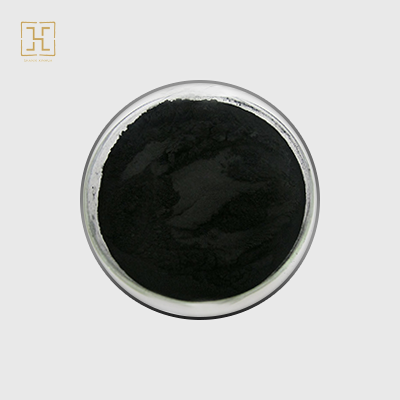
Understanding 325 Wood-Based Powdered Charcoal and Its Adsorption Properties
What Defines Ultra-Fine Mesh Grade?
The number "325 mesh" means that particles with a size of about 44 microns can pass through the holes. When compared to coarser grades like 200-mesh powders, this fineness makes the outside surface area ten times bigger. Coarser types depend mostly on internal pores, but ultra-fine particles show both the inside micropores and the outside areas at the same time (Marsh & Rodríguez-Reinoso, 2006)[1]. This means that the adsorbent and target impurities come into contact almost instantly. This is very important for processing time-sensitive drugs and drinks, where longer contact times can cause the products to break down.
Our material has a pass-through rate of at least 95%, which makes sure that particles are spread out evenly. Precision-controlled milling creates regular granulometry, while inconsistent grinding creates mixed particle groups. This uniformity has a direct effect on how well dosing works and how well performance can be predicted across production runs.
Key Adsorption Performance Indicators
Three technical factors decide how well polishing works. The iodine value (≥980 mg/g) tells us about the micropore volume, which is the size of the spaces that hold small organic molecules like flavor compounds and fusel oils. The amount of methylene blue that can be absorbed (≥210 mg/g) shows the mesopore capacity, which is important for collecting bigger pigment molecules and colloids. These work together to make hierarchical pore structures that can handle different amounts of contaminants (Bansal & Goyal, 2005)[2].
Mineral residues don't adsorb, so ash content of 3.5% or less is important. They lower active carbon content and can leach into clean liquids. Less ash means more pure and less chance of secondary pollution. When the moisture level is ≤8%, the product stays stable on the shelf and dosing calculations are correct. This stops microbes from growing during storage.
Quality Standards and Certification Framework
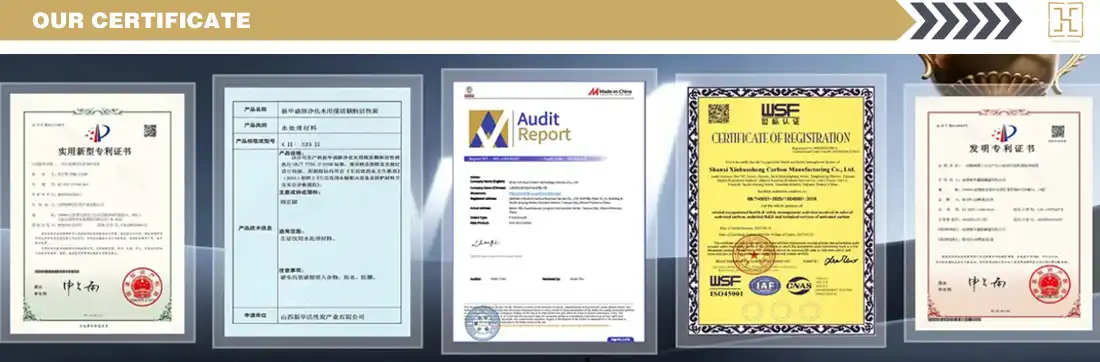
Consistency in the materials comes from manufacturing methods that are ISO 9001-certified and thorough batch testing. As part of the ASTM D3860 standards for activated carbon used to treat potable water, each production lot is checked. Heavy metal content, like lead, arsenic, and cadmium, meets strict food-grade and pharmaceutical-grade standards. This meets the needs of businesses that have to follow FDA, EPA, or similar foreign rules.
Tracking tools keep track of where the raw hardwood comes from, through batches of carbonization, to the final packing. This paperwork helps with audits that pharmaceutical QA/QC managers and city procurement departments do to check the long-term dependability of suppliers.
Core Advantages in Liquid Refining Applications
Accelerated Adsorption Kinetics
The 15-20 minute saturation time solves a problem that has been bothering businesses for a long time: how to balance output with cleaning depth. Granular carbons that are used in the past need to be in contact with an acid for 60 to 120 minutes, which slows down processing and limits output. Ultra-fine particles get rid of barriers to diffusion, so contaminants can get to active sites almost instantly without having to go through thick carbon particles (Crittenden et al., 2012) [3].
Especially those who make drinks with high-viscosity syrups profit. The powder spreads out evenly in thick liquids where granules would normally settle or form channels, making sure that every molecule of fluid comes into contact with adsorbent surfaces.
Environmental and Operational Benefits
Compared to materials made from coal, 325 Wood-based powdered charcoal made from wood can be used over and over again. The hardwood precursors go through sustainable forestry certification, which is in line with the ESG promises of companies that are being looked at more closely by environmental engineering firms and local water authorities.
The low bulk density of the material means that you need less storage space per kilogram of adsorption capacity. There is no need for special handling tools because the powder works with current slurry dosing systems. Most places allow used carbon to be reused or safely thrown away as non-hazardous trash, which makes following the rules easier.
Performance Versus Alternative Adsorbents
Wood-based grades of activated carbon have better mesopore growth than coconut shell-based grades. They are better for bigger organic molecules like dyes and humic acids. Synthetic polymer adsorbents are selective, but they are 5–10 times more expensive and can't handle high temperatures very well. Bone char is useful for some things, like getting rid of the color in sugar, but it can be harmful to people with allergies and can be hard to get.
Because the pores in wood-based powder are spread out in a hierarchy, they can handle mixed contamination sources better than materials with only one size of pores. This flexibility means that you don't have to keep track of as many different types of carbon. Instead, you can use the same product for chemical, pharmaceutical, and food cleaning systems at the same time.
Production and Procurement Insights
Manufacturing Process Overview
The production of premium hardwoods starts. In oxygen-limited retorts, dense materials with low mineral content go through temperature-controlled pyrolysis at 400–600°C. This carbonization turns lignin and cellulose into fixed carbon while releasing organic compounds into the air.
The next step is high-temperature steam activation, which adds controlled oxidation and opens up micropore structures. Superheated steam (800–1000°C) specifically gasifies carbon atoms, which makes holes without breaking down the structure of the bone. Monitoring the process makes sure that the iodine value goals are met without over-activation, which weakens the particles.
325-mesh sharpness is made by ultra-fine grinding in impact mills and air filters. Multistage screening sorts out fines that are too small and particles that are too big, with a pass rate of at least 95%. This level of accuracy is important because even 5% oversize particles have a big effect on filter rates and the clarity of the finished product.
Supplier Evaluation Criteria
Procurement managers should check the production capacity. Our yearly output of 45,000 tons across various sites ensures supply when demand goes up. ISO 14001 environmental certification proves that waste is being treated properly, which lowers the risk to the supply chain that single-site makers will be shut down by regulations.
Ask for a certificate of analysis (CoA) that lists the iodine value, methylene blue, ash, moisture, pH, and heavy metals for each batch. Suppliers who only offer standard numbers might not have the right facilities for quality control. Traceability documentation that connects the COA to specific production dates lets management handle a recall if it's needed.
Logistics and Packaging Considerations
Standard packaging includes 15kg and 25kg moisture-proof multi-layer bags and 500kg and 1000kg bulk supersacks. When closed properly, atmospheric wetness can't get in and lower the adsorption capacity while it's in transport. Make sure that providers offer a container-load price and palletization that works with the racks you already have in your warehouse.
Lead times for stock items are usually between 7 and 15 days, but you can get them faster in 3 days for compliance projects that need to be done right away. Global shipping by sea freight is best for planned purchases, while air freight, even though more expensive, is best for emergencies. Adding real-time tracking to your procurement software makes it easier to manage inventory across multiple sites.
Application Scenarios and Best Practices
Pharmaceutical Syrup Decolorization
Injectable solutions and syrups that are taken by mouth must be clear to the naked eye and free of particles, and 325 Wood-based powdered charcoal is used for this purpose. Dosing is usually between 0.5 and 2.0% powder by weight of liquid, and it is changed based on how concentrated the color was to begin with. Thoroughly mix at a fixed temperature (usually 50–70°C to lower viscosity), keep stirring for 15 to 20 minutes, and then filter through plate-and-frame or cartridge systems.
Pre-wetting the powder with small amounts of liquid before adding the bulk keeps it from sticking. After filtering, use spectrophotometric analysis at target wavelengths to make sure the color is gone. Samples from each batch should be kept so that dosage can be matched with results. Over time, processes should be improved.
Food and Beverage Deodorization
Off-notes and color bodies that change quickly in edible oils, spirits, and flavor extracts make them less acceptable to consumers. To refine vegetable oil, add powder during the cleaning stages along with silica. This will help get rid of phospholipids and colors more efficiently. Between 0.2% and 1.0% of the adsorbent's weight is needed to get commercial color grades with the least amount of oil loss.
Powder is used in cleaning filtration by vodka and neutral spirit makers to get rid of trace fusel oils after distillation. Powder systems work in a single-pass mode, which uses less water and has less downtime than granular carbon beds that need backwash cycles.
Industrial Wastewater Treatment
Powder's fast processes help fine chemical plants that make sludge with a lot of COD. Batch treatment lets doses be adjusted based on the quality of the influent, which is especially helpful when production plans cause discharge patterns to change often. Doses of 50 to 500 mg/L (parts per million) get rid of organics that don't respond to biological treatment, which allows the release to be legal.
Powder treatment and coagulation/flocculation can be used together to make it easier to separate spent carbon and suspended solids. Dewatered sludge with leftover carbon often filters better than biological sludge alone, which cuts down on the amount of waste that needs to be thrown away.
Troubleshooting Common Challenges
Not enough color removal usually means that the dose was too low or the contact time was too short. Gradually increase the dosage while keeping the agitation going. Stuck areas let things settle and lower the effective surface area. If performance quickly drops after consistent dosing, check the conditions of the powder's keeping; moisture entering the powder lowers its activity.
If the filtration resistance is too high, it means that particles are bridging on the filter media. Pre-coat filtration with perlite or diatomaceous earth makes a barrier that stops carbon from getting into the membrane holes. You could also use two-stage systems with coarser pre-filtration (10–20 micron) followed by polishing filters (1–5 micron).
Strategic Considerations for Procurement Decisions
Comparative Analysis with Alternative Carbons
Due to their hardness and low dust production, coconut shell carbons are most often used in drinking water, but 325 Wood-based powdered charcoal offers advantages for other applications. However, their micropore-rich structure limits the mesopore capacity needed for larger organic molecules. Wood-based powder makes up for it by having larger pores, which makes it better for getting rid of color bodies in oils and syrups where molecular sizes are all over the place.
The briquetted and pelletized forms work well for fixed-bed gas-phase adsorption, but they don't have enough surface area for fast liquid-phase rates. Their squished density makes diffusion paths longer, which slows adsorption rates too much for batch pharmaceutical processing.
Although biochar, which is partially carbonized wood, is cheaper, the quality isn't always constant, and it doesn't activate as well. Because it comes from farm garbage, there is some variability in the supply line, and it could be contaminated with heavy metals or pesticides. This means it can't be used in food or medicine, even though it's cheaper.
Building Long-Term Supplier Partnerships
A steady supply of adsorbents has a direct effect on the continuation of production. Look for providers who offer more than just sales support. Process experts who help with dosing optimization, on-site trials, and troubleshooting can make your own research and development (R&D) easier. Companies that work with research institutions like Tsinghua University and the Chinese Academy of Sciences show that they want to improve the performance of materials instead of making them more like other products.
Framework agreements with minimum annual volumes lock in good prices and make sure that priority allocation is maintained when the market is tight. Talk to sellers about terms that include performance guarantees. This way, if some batches don't meet your standards, the supplier will pay you back. This will protect your production plans from quality changes.
Being able to customize things is important as your processes change. If a supplier offers OEM formulas, such as changed surface chemistry, adjusted pore structures, or blended products, you can set the quality of the final product apart without having to spend a lot of money on carbon production infrastructure.
Regulatory and Market Trends
Demand for high-performance adsorbents is growing because of stricter rules on the discharge of industrial wastewater containing PFAS, 1,4-dioxane, and new contaminants. The ability of wood-based powders to remove a wide range of contaminants makes them useful as regulatory lists grow without warning.
When pharmaceutical companies switch to continuous manufacturing, it can be hard to add adsorbent steps to flow processes. This barrier is broken down by ultra-fine powders. Slurry input into continuous stirred-tank reactors or inline static mixers allows for real-time purification without group holdups, which is in line with how things are made in Industry 4.0.
More and more, sustainability reporting requirements require companies to talk about where their raw materials come from and their carbon footprints. Adsorbents made from wood from approved forestry operations have strong ESG credentials, while alternatives made from coal are closely watched by stakeholders, even though they work just as well technically.
Conclusion
The rapid adsorption rates, wide contaminant tolerance, and ease of operation of ultra-fine wood-based powders like 325 Wood-based powdered charcoal make them ideal for solving important refining problems. The 325-mesh grade strikes a good balance between performance and ease of use. It doesn't have the dust problems that come with finer meshes but still has more surface area than coarser grades. Strategically choosing a supplier and focusing on things like output capacity, quality systems, and technical teamwork can turn buying adsorbents from a transactional activity into a competitive edge. Investing in high-quality purification materials saves the purity of the product and its place in the market as quality standards rise and regulatory forces get stronger.
FAQ
What distinguishes wood-based powder from standard activated carbon?
Standard activated carbon includes a range of materials and levels of activation. Powdered wood-based types have mesopore-rich structures that make them perfect for adsorbing organic molecules in the liquid phase, from small volatiles to large dye molecules. The fineness of 325 mesh speeds up dynamics compared to granular forms, so saturation happens in minutes instead of hours. This is important for batch processing that needs to be done quickly in the food and medicinal industries.
How do I determine optimal dosage for my specific application?
Do jar tests on a bench using your real process liquid. As a guide, the doses for the samples should be between 0.1% and 2.0% by weight. Mix for 20 minutes, filter, and then check the concentration of specific contaminants, leftover color, or COD. If you plot the effectiveness of removal against the dosage, you can find the point where raising the dosage stops giving you good results. This cost-optimized dose strikes a good balance between performance and material use.
Are there environmental regulations affecting use or disposal?
In the US, used activated carbon from non-hazardous liquid refining is usually considered non-hazardous solid waste under RCRA. This means that it can be thrown away in a landfill or burned with energy recovery. However, if the carbon absorbs certain dangerous wastes (like pesticides and solvents), the used material may need to be handled as hazardous garbage. Talk to your state's environmental agency about regeneration services that can reactivate spent carbon through heat, which cuts down on disposal volumes by 70–90% while restoring adsorption capacity.
Partner with a Trusted 325 Wood-Based Powdered Charcoal Supplier
Shanxi Xinhua Carbon Technology Industry Co., Ltd. makes ultra-fine adsorbents that are good enough for defense use. They have been researching and developing these materials for 60 years and work with Tsinghua University and the Chinese Academy of Sciences. Our 45,000-ton annual capacity across multiple production bases guarantees a steady supply. Standard delivery takes 7–15 days, and emergency fulfillment takes 72 hours. The quality of each batch is guaranteed by ISO 9001, ISO 14001, and ISO 45001 certifications. Our expert team can also change the particle sizes, hole structures, and surface chemistry to meet your specific needs in the pharmaceutical, food, or chemical refining industries. Our global transportation network and full technical support make buying easier for environmental engineering managers, R&D teams, and procurement directors, whether they need small trial quantities or framework contracts for many tons. You can email our team at greta@carbonxinhua.com or go to xhcarbontech.com to get certificates of analysis, application directions, and examples that show how our 325 Wood-based powdered charcoal manufacturer skills can help you with your toughest cleaning problems.
References
1. Marsh, H., & Rodríguez-Reinoso, F. (2006). Activated Carbon. Elsevier Science. Retrieved from https://www.elsevier.com/books/activated-carbon/marsh/978-0-08-044463-5
2. Bansal, R. C., & Goyal, M. (2005). Activated Carbon Adsorption. CRC Press. Retrieved from https://www.crcpress.com/Activated-Carbon-Adsorption/Bansal-Goyal/p/book/9780824753443
3. Crittenden, J. C., Trussell, R. R., Hand, D. W., Howe, K. J., & Tchobanoglous, G. (2012). MWH's Water Treatment: Principles and Design (3rd ed.). John Wiley & Sons. Retrieved from https://www.wiley.com/en-us/MWH%27s+Water+Treatment%3A+Principles+and+Design%2C+3rd+Edition-p-9781118131473
4. Activated Carbon Applications in Water Treatment. (2019). Water Research Foundation. Retrieved from https://www.waterrf.org/research/projects/activated-carbon-applications-water-treatment
5. U.S. Environmental Protection Agency. (2021). Best Practices for Adsorptive Media in Drinking Water Treatment. EPA Document 815-R-21-002. Retrieved from https://www.epa.gov/dwstandardsregulations
6. Adsorption Technology in Water Treatment: Fundamentals, Processes, and Modeling. (2020). American Water Works Association. Retrieved from https://www.awwa.org/publications/books

Send Inquiry
You may like
_1781662034490.webp)