_1778553121707.webp)
20*50 Mesh Crushed Coal Carbon for Air and Water Treatment
Jul 21, 2026
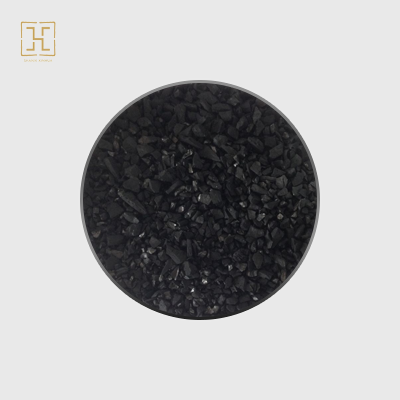
When environmental compliance dates are coming up and filter systems aren't working right, procurement managers often have to choose between keeping the structure strong and making sure that the system absorbs water well. This problem is directly dealt with by the 20*50 mesh coal quality briquette crushing activated carbon. This material is made by grinding up high-quality bituminous coal, mixing it with special binders, and forming briquettes under high pressure before carbonisation and steam activation. It has uniform pore distribution and is very hard to work with. The precise particle size range of 0.30mm to 0.85mm stops high-flow systems from breaking down too soon and having "black water" problems. This makes it an essential solution for industries that need reliable, long-term filtration performance.
Understanding 20*50 Mesh Crushed Coal Carbon and Its Properties
Mesh Size Terminology and Material Composition
The "20*50 mesh" number refers to the particle size distribution found by a standard sieve test. This standard covers things that go through a 20-mesh screen with 0.85mm holes but stay on a 50-mesh screen with 0.30mm holes. This granulometry is the best of both worlds: the particles are big enough to keep the structure intact during backwashing, but small enough to allow fast absorption by increasing the external surface area per unit volume.
Direct coal pulverisation is very different from crushing coal into briquettes. In the briquetting process, binders are used to compress coal powder under pressures greater than 10,000 psi. This makes each particle the same density. After being activated, crushing these briquettes produces pieces with consistent internal pore architecture. This is very different from direct crushing, which produces particles with irregular shapes that have different adsorption zones.
Critical Physical and Chemical Characteristics
The technical profile tells you why this material works so well in tough situations. Iodine levels between 900 and 1,100 mg/g show that the material has a lot of micropores that can hold small organic molecules. Between 50% and 70% carbon tetrachloride activity shows good mesopore development for bigger contaminant molecules. A ball pan that is harder than 95% (ASTM D3802) makes sure that there is little wear and tear during rough flow conditions. This lowers the costs of replacing media and clearing out the system.
The apparent density of 20*50 mesh coal quality briquette crushing activated carbon is usually between 450 and 550 g/L, which makes the bed very stable without causing excessive pressure drop. A low ash level of less than 12% prevents mineral bleed-off that could lower the quality of treated water or introduce unwanted substances into air treatment processes. All of these factors work together to ensure consistent performance even when temperature, pH, and chemical conditions vary in industrial applications.
Industry Quality Standards and Testing Protocols
The first step in making sure the quality is checking the particle size distribution according to ASTM D2862 and making sure that no more than 5% of the material is outside the range given. Purchasing managers should insist on test certificates that are specific to each batch. These certificates should show the methylene blue adsorption (which shows the mesopore capacity), the moisture content (which affects the shipping weight and storage stability), and the floating content (which stops media loss in liquid phase applications).
Breakthrough curve analysis under simulated operating conditions is part of advanced testing. This shows how long the service life is expected to be. X-ray diffraction patterns show that the graphitic structure develops correctly during activation, and scanning electron microscopy shows that the pore network is regular. These are two important differences between high-quality materials and cheaper ones.
Crushing Processes and Equipment for Optimal 20*50 Mesh Coal Briquettes
Mechanical Methods and Their Performance Impact
The crushing stage has a big effect on the quality of the final product. When hammer mills are used for impact grinding, particles are made by fast strikes that create angled pieces with a lot of surface area. This method works well for high-throughput tasks, but the speed needs to be carefully set so that too many fines below 50 mesh don't form.
Jaw crushers reduce the size of materials by controlled compression, making them perfect for breaking up briquettes before they are processed further, and for 20*50 mesh coal quality briquette crushing activated carbon, this controlled crushing is critical because it preserves the internal pore structure better than high-impact methods, ensuring that the final product maintains its high adsorption capacity for water and air treatment applications. Roller crushers used in attrition methods apply slow cutting forces that make particles with more uniform forms and fewer micro-fractures. This method keeps the internal pore structures better than impact methods, which is especially helpful when keeping the ability to absorb substances is very important. A lot of companies use stepped crushing, where jaw crushers are used for initial reduction, roller mills are used for final size reduction, and rotating screens are used for sorting.
The size of the 2050 mesh is an engineering compromise. Finer models, like 50100, have faster dynamics, but they need more pumping energy and lose more material over time. Coarser grades, like 1240, have lower pressure drops but slower diffusion rates, which means that more contact time is needed. The 2050 specification provides fast adsorption, which is necessary for systems with short residence times, while also ensuring mechanical durability over many regeneration cycles.
Equipment Selection Considerations for Procurement Teams
When picking out breaking tools, the production size and performance goals must be in line with each other. Batch-type hammer mills may be enough for operations that process less than 10 tonnes of material per month because they can handle a range of product grades. Continuous jaw-roller pairs are good for mid-scale plants that process 10 to 50 tonnes of material every month because they balance capital investment with regular output quality. Large-scale makers need automatic systems with feedback settings and inline particle size analysers to make sure they meet specifications without having to do anything by hand, especially when producing 20*50 mesh coal quality briquette crushing activated carbon, where consistent particle size and crushing efficiency are critical for maintaining product performance.
Compatibility between pieces of equipment goes beyond capacity ratings. The amount of wetness in the material affects how well it crushes. Briquettes that are too dry lose dust, and screens that have too much moisture become useless. Controlling the temperature stops volatile organic compounds from desorbing during mechanical processes. The working factors should be included in the procurement specs, and vendors should be asked to provide paperwork on the suggested feed conditions and repair times. This will help avoid unexpected downtime during key production periods.
Applications and Benefits of 20*50 Mesh Activated Carbon Coal Briquettes in Air and Water Treatment
Industrial Air Purification and VOC Control
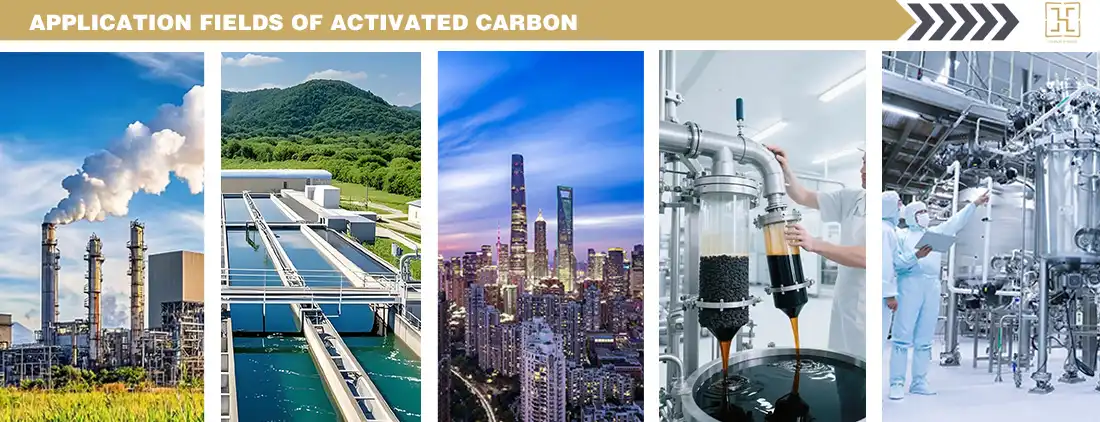
There are strict rules about volatile organic compound emissions for coating, printing, and electronics factories. The 20*50 mesh coal quality briquette crushing activated carbon works very well in carbon canisters and packed bed reactors where gas speeds need strong media. A paint factory in the Midwest found that their toluene removal system worked 98.5% of the time for 12 months straight, even when the pressure dropped below 15%. This showed that the material was resistant to particle degradation and pore blockage.
The high packing density of the material makes it useful for gas-phase applications because it lets smaller footprint designs be made without sacrificing treatment capacity. The even distribution of particle sizes helps gas flow evenly, which stops channelling that lowers contact efficiency. Defense-grade quality control, which was built up over decades of using chemicals for safety, makes sure that batch-to-batch stability is maintained, which is important for keeping operations in line with regulations when they are being inspected.
Water Treatment Performance and Contaminant Removal
This material is used in the cleaning stages after filtration in municipal water treatment plants that deal with outdoor water sources. The particle size makes it possible to remove chlorine quickly without requiring too much contact time, which is very important for keeping up treatment throughput when demand is high. A Western regional water authority reported that 2050 mesh carbon cut trihalomethane precursors by 99.2%, and the contact time was 30% shorter than with traditional 1240 mesh options. This meant that the basin amounts were smaller and the capital costs were lower.
Industrial wastewater uses show that they can handle a wide range of contaminants, and for 20*50 mesh coal quality briquette crushing activated carbon, the material's micropore structure and high hardness enable effective removal of pharmaceutical residues, phenolic compounds, and aromatic hydrocarbons from industrial effluents while withstanding the backwashing cycles that extend service life and reduce media replacement frequency. Because of the material's micropore capacity, pharmaceutical factories can get residual API concentrations below ppb. Using petrochemicals gets rid of phenolic compounds and aromatic hydrocarbons, which keeps biological treatment systems further down the line safe. The high hardness of the ball pan means it can survive the harsh backwashing methods needed to extend service life. This lowers running costs by lowering the number of times the media needs to be replaced.
To make ultrapure water for use in electronics and medicine, you need low extractables and consistent performance. The briquetting process creates materials with few surfaces that can break apart and spread particles. The big micropore volume makes it easy to get rid of small amounts of organic matter, and the controlled ash content stops ions from escaping, which would break the resistance requirements.
Comparative Advantages Over Alternative Materials
Coconut shell carbon has bigger pores, but it costs two to three times more per kilogram, so it cannot be used for large-scale commercial purposes. Wood-based carbons have lower mechanical strength and break down 20–40% more quickly in dynamic systems. Directly crushed coal carbons that have not been briquetted have uneven pore distribution, which means that some areas of the media bed break through too soon while other areas stay underused. In contrast, 20*50 mesh coal quality briquette crushing activated carbon offers a more uniform pore structure and stable adsorption performance, making it suitable for large-scale commercial applications where consistent filtration efficiency and cost control are required.
The 20*50 mesh standard from briquette crushing optimises cost-performance in a way that buying decision-makers can understand, since they have to balance performance needs with budget limits. Longer service life due to higher hardness means lower total cost of ownership, even if the initial unit price is higher. Because fewer fines are made during thermal revival cycles, regeneration rates go up. This lets sites that can regenerate media on-site get the most out of their media.
How to Choose and Procure 20*50 Mesh Coal Briquettes and Crushing Solutions?
Critical Evaluation Parameters for Quality Assessment
Verification of mesh size stability needs sieve analysis reports from outside labs, not just maker approvals. When you ask for retention data for 18-mesh, 20-mesh, 50-mesh, and 60-mesh screens, you can see distribution tails that slow down the system. Too many large particles in a material can cause it to bridge in narrow vessels, while too few fine particles can cause the pressure to drop and let air escape through the screen supports.
For adsorption capacity tests, you should use toxins that are right for your purpose. Iodine numbers let you compare things in a standard way, but they might not be related to how well they work against your target molecules. For example, 20*50 mesh coal quality briquette crushing activated carbon may require more specific evaluation methods depending on its application, as more useful information is obtained by asking for methylene blue numbers for water treatment purposes or toluene/benzene limits for air systems. Make sure that the testing procedures you use fit your actual working conditions. In the real world, weather, humidity, and the presence of co-contaminants can all affect how well something works.
Using the ASTM D3802 ball pan hardness tests to measure mechanical strength can help you guess how long the media will last. Values below 90% show poor briquetting or weak activation control, leading to premature replacement costs. According to ASTM D2866, an ash level study should include a chemical breakup that shows minerals that could be harmful. A lot of silica speeds up equipment wear, and soluble salts make cleaned waters dirty.
Supplier Qualification and Certification Verification
ISO 9001 certification shows that quality management is systematic, but it doesn't mean that the company has technical knowledge in making activated carbon, and for 20*50 mesh coal quality briquette crushing activated carbon, this distinction is important because the material's pore structure, hardness, and adsorption performance depend on deep process expertise that goes beyond basic quality systems. When suppliers work with research institutions, like when they form partnerships with universities or state labs, they usually have better R&D resources to help with customisation and fixing problems. This method is used by Shanxi Xinhua Carbon Technology Industry Co., Ltd., which works with Tsinghua University and the Chinese Academy of Sciences to turn study advances into changes that can be used in production.
In North America, products that come into touch with drinkable water must be certified by NSF/ANSI 61. AWWA B604 compliance covers requirements set by cities. For many products to be sold in European markets, they need to be CE marked and registered with REACH. Check that the certifications are still valid and cover the exact types of products you want to buy, since some certifications only cover certain things from a manufacturer's line.
Assessing production ability keeps supplies from being interrupted during the scaling-up stages. Manufacturers who have more than one production base with a total annual capacity of more than 40,000 tonnes show that their facilities can handle problems in other parts of the country. Inventory policies are also important. Suppliers who keep 100% of core specifications in stock can meet standard delivery times of 7–15 days, which work with project schedules, and emergency green channel options can be used to meet last-minute compliance deadlines.
Procurement Strategy and Logistics Optimization
Different suppliers have very different ways of setting prices for 20*50 mesh coal quality briquette crushing activated carbon. While buying on the spot market gives sellers freedom, it also exposes them to price changes that are caused by the cost of coal fuel and energy. Long-term framework agreements guarantee stable prices and give priority during times of limited supply. They usually need minimum annual commitments of 100 to 500 tonnes, depending on the size of the manufacturer. When you commit to a higher level of volume, you often get 8–15% off the price, which makes it worth it to combine your needs across multiple facilities.
Minimum order quantities find a balance between the cost of shipping and the cost of keeping inventory. For foreign shipments, container load sizes (20–25 tonnes for 20-foot containers) are best for lowering freight costs. For local sales, full van amounts around 20 tonnes may be more cost-effective. Different types of packaging affect how well they can be handled. For example, bulk bags (500–1000 kg) work well with automated discharge systems, while smaller bags (20–25 kg) make handling easier by hand but cost more in labour.
When shipping things, you need to pay attention to how they are made. Because 20*50 mesh coal quality briquette crushing activated carbon is sensitive to moisture, it needs to be packed in a way that keeps moisture out when it is shipped by ocean or stored in humid places. Extreme temperatures don't hurt the material, but they can damage the structure of the package. Lead times range from 15 to 30 days for special specs that involve changing the pore structure or adding catalysts, while they are only 7 to 15 days for regular stock items. Global suppliers with regional distribution networks cut down on travel times. Facilities carefully placed near shipping hubs allow for 3–7-day domestic delivery through relationships with specialised fleets.
Optimizing Performance and Maintenance of 20*50 Mesh Activated Carbon Briquettes
Quality Control Protocols and Testing Procedures
Before checking the quality after breaking, the particle size is confirmed using wet sieve analysis, which gives a more accurate picture of the distribution than dry methods because it stops particles from sticking together. If you don't follow the sampling rules in ASTM D2013, you might get wrong results from your tests. For example, if you take samples from the tops of bags or the sides of containers, the samples might get mixed up during travel.
Standard studies can't prove success, but adsorption testing done in real-world situations can. Pilot column studies using your process water or air stream at typical flow rates, temperatures, and levels of contaminants show how the breakthrough works and how long you can expect it to last. These tests find interactions between different toxins that single-component tests in the lab miss. This keeps expensive underperformance shocks from happening during full-scale execution.
By testing the material's crushing strength, we can be sure that transportation hasn't damaged its structure, and for 20*50 mesh coal quality briquette crushing activated carbon, this testing is particularly critical because the high hardness and ball pan integrity required for water treatment applications can be compromised by rough handling during shipping, leading to increased fines and reduced adsorption performance. Ball pan hardness below the standard level means it was handled roughly or was not made well to begin with. Setting acceptance standards and doing receiving inspections stop putting in poor parts into systems where failure could lead to breaking the law or stopping production.
Storage and Handling Best Practices
Activated carbon quickly pulls flammable organic substances and water from the air, which lowers its usable capacity before it is used. For up to five years, material qualities are kept intact when stored in its original moisture-barrier packaging in a climate-controlled setting. After being opened, things should be eaten or resealed in vapor-tight cases with desiccant packets within 30 to 60 days.
Chemical contact isn't the only way to stop contamination. Metal on metal contact during handling can create catalytic sites that speed up processes that aren't needed. Separate transfer equipment made of high-density polyethylene or stainless steel keeps other materials from getting dirty. People who work with activated carbon need to be trained on how to keep the dust under control. The material itself doesn't pose a health risk, but airborne particles make cleaning harder and cause product loss.
Regeneration and Lifecycle Extension Strategies
Different ways of healing work better in some situations. When steam is regenerated at lower temperatures (200–300°C), volatile compounds are removed effectively without full thermal reactivation. This means that it takes longer between full regeneration cycles. Chemical renewal with caustic or acid washes gets rid of certain types of contaminants, like metal ions or sulphur compounds. This is especially useful for treating water when heating methods wouldn't work.
Problems with operations, like premature breakthrough or too much pressure drop, are often caused by things that can be avoided. Channelling happens when the bed isn't loaded properly, and it makes low-resistance paths that go around most of the carbon bed. In water treatment systems, biological growth takes up space in the pores and leads to fouling. Regularly checking performance by keeping an eye on pressure drops and testing grab samples on a regular basis lets you fix problems early, before they get so bad that the system fails and media has to be replaced in an emergency.
Conclusion
The 20*50 mesh coal quality briquette crushing activated carbon is a well-thought-out solution that strikes a good balance between adsorption performance, mechanical durability, and cost-effectiveness. Procurement experts can make smart choices that improve both treatment efficiency and operating costs by learning about the product's production process, properties, and benefits for specific uses. Long-term success is guaranteed by quality control methods, seller approval standards, and good upkeep practices for a wide range of air and water cleaning problems. As rules about the environment get stricter and the need for operational efficiency grows, this material specification keeps showing that it is useful by offering measurable performance benefits backed by decades of industrial validation.
FAQ
Why Choose 2050 Mesh Over Coarser Grades Like 1240 Mesh?
The smaller particle size makes the adsorption process go much faster, which cuts the contact time needed in dynamic systems by 25–35%. In situations where room is limited or flow rates are high, this benefit is very useful because it maximises treatment capacity per unit volume, which drives economic returns. Even though coarser materials have smaller pressure drops, the difference in energy use isn't important when compared to the performance gains, especially in short-cycle uses like responding to an emergency spill or decolorising a batch of chemicals.
Does Briquetting Process Affect Regeneration Performance?
In fact, briquettes help the economy of renewal. Because they are stronger mechanically, they produce 40–60% fewer fines during thermal reactivation than direct-crushed carbons, which increases the amount of material that can be recovered. Because each atom has the same mass, the heat will always be able to get through during renewal, which will remove more contaminants. Facilities that can regenerate on-site say they can use the same materials two to four more times before they need to be replaced, which greatly reduces the overall cost of ownership.
How Does This Material Handle High-Velocity Water Flow?
In fact, briquettes help the economy of renewal. Because they are stronger mechanically, they produce 40–60% fewer fines during thermal reactivation than direct-crushed carbons, which increases the amount of material that can be recovered. Because each atom has the same mass, the heat will always be able to get through during renewal, which will remove more contaminants. Facilities that can regenerate on-site say they can use the same materials two to four more times before they need to be replaced, which greatly reduces the overall cost of ownership.
Partner with Shanxi Xinhua Carbon Technology Industry Co., Ltd. for Superior 20*50 Mesh Coal Quality Briquette Crushing Activated Carbon
Finding high-performance absorbent materials is more than just looking at different datasheets. You need a seller with a lot of scientific knowledge, a large production capacity, and quick customer service. Shanxi Xinhua Carbon Technology Industry Co., Ltd. has more than 60 years of research and development experience in defense-grade chemical protection technology. This experience has helped them make activated carbon that is more consistent and can be customised in ways that no one else can. Our work with Tsinghua University and the Chinese Academy of Sciences leads to constant improvements in pore structure and catalytic modification, which meets the changing needs of industry.
With 45,000-ton-per-year production bases in multiple regions, operating these bases ensures supply stability, which is important for large-scale operations, while also keeping full stock of all core specifications, including 20*50 mesh grades, and for 20*50 mesh coal quality briquette crushing activated carbon, this multi-site production capacity ensures that even large-volume orders can be fulfilled without compromising quality or delivery timelines. Our ISO 9001, ISO 14001, and ISO 45001 standards show that we take a structured approach to quality, safety on the job, and protecting the environment. Whether you need standard material right away (7–15 days) or customised formulas with specific added components (15–30 days), our expert team can help you with pilot testing and application-specific suggestions. Procurement managers looking for a dependable provider of 20*50 mesh coal quality briquette crushing activated carbon will find that our technical know-how, production capacity, and quick customer service are all in line with tight project deadlines and high performance standards. Contact our team at greta@carbonxinhua.com to discuss your specific requirements, request product samples for evaluation, or schedule a technical consultation. Discover why leading environmental engineering contractors, municipal water systems, and industrial manufacturers rely on Shanxi Xinhua for their critical filtration and purification applications. Visit xhcarbontech.com to explore our complete product portfolio and technical resources.
References
1.American Water Works Association. AWWA B604-12: Granular Activated Carbon Standards for Water Treatment Applications. Denver: AWWA Publications, 2012.
2.Bansal, Roop Chand, and Meenakshi Goyal. Activated Carbon Adsorption. Boca Raton: CRC Press, 2005.
3.Cheremisinoff, Nicholas P., and Paul N. Rosenfeld. Handbook of Pollution Prevention and Cleaner Production: Best Practices in the Agrochemical Industry. Oxford: William Andrew Publishing, 2011.
4.Crittenden, John C., et al. MWH's Water Treatment: Principles and Design. 3rd ed. Hoboken: John Wiley & Sons, 2012.
5.Marsh, Harry, and Francisco Rodríguez-Reinoso. Activated Carbon. Amsterdam: Elsevier Science, 2006.
6.Snoeyink, Vernon L., and David Jenkins. Water Chemistry. New York: John Wiley & Sons, 1980.

Send Inquiry
You may like
_1781662034490.webp)