_1778553121707.webp)
20*50 Mesh Coal Quality Crushing Carbon for Chemical Purification
Jul 08, 2026
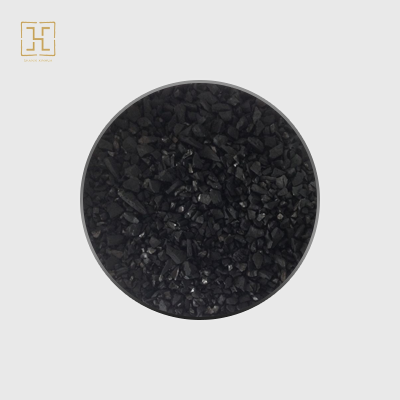
The 20*50 mesh coal quality crushing carbon represents a specialised grade created for fine adsorption uses when you're looking for activated carbon that provides precise filtration in difficult chemical cleaning environments. This material is made from coal and is pulverised, briquetted, and carefully crushed to make pieces that are 0.3 to 0.85 mm in size. The end result is a high-performance adsorbent with a large specific surface area, well-developed micropores, and fast adsorption rates that can remove trace toxins from industrial liquid and gas streams effectively.
Understanding 20×50 Mesh Coal Quality and Particle Size
The name "20×50 mesh" refers to an exact way of classifying particle sizes. The size of the stuff that goes through a 20-mesh screen but stays on a 50-mesh screen is between 0.85 mm and 0.30 mm. This very specific requirement is important because the regularity of the particles affects the porosity of the bed, the drop in pressure, and the effectiveness of contact in filtering vessels.
Why Mesh Size Control Matters in Chemical Operations
Keeping a tight particle size range stops problems with operations. Large particles make channels that let liquids get around absorption zones. Fines that are too small move through support screens and clog up equipment further downstream. They also pollute cleaned wastewater. Particle deviation is limited to less than 3% during our production process. This makes sure that your filter beds work the same way through multiple regeneration rounds.
Quality Indicators That Define Performance
20*50 mesh coal quality crushing carbon has more than just size factors that decide if coal-based carbon meets standards for chemical cleaning. Adsorption ability is based on the amount of carbon in the material being more than 85%. A low ash level (less than 8%) reduces the amount of inorganic leaching that could taint clean goods. When the moisture level is less than 5%, microbes can't grow during storage, and the adsorption behaviour stays the same. In some process environments, the chance of sulphide formation is lower when the sulphur level is less than 0.5%. Each batch goes through laboratory sieve analysis following the rules in ASTM D2862, and the records of analysis show that it meets the standards.
Measurement Techniques for Verification
Understanding how proof works is helpful for procurement teams. Laboratory sieve analysis is still the best way to find out how particles are distributed. It uses standardised screens and mechanical shakers. With portable laser diffraction analysers, testing can now be done on-site, giving real-time particle sizing without having to send samples to other labs. These tools help receiving departments check specifications before taking large shipments, which keeps production plans from being thrown off by material that doesn't meet specifications.
The Coal Crushing Process for 20-50 Mesh: Techniques and Impact on Quality
To make activated carbon in this exact size range, you have to be very careful when choosing the crushing tools and process settings. The goal is to get the desired particle spread while keeping the shape of the pores that were made during activation.
Crushing Technologies for Precision Sizing
This job calls for a versatile tool, and hammer mills are just that. Rotors with variable speeds and swing hammers hit carbon against breaker plates, breaking up the material along natural fault lines. The largest particle size is controlled by the screen holes in the discharge area. Impact crushers are an option when making fewer fines is important. When material goes into a chamber, spinning blow bars push particles faster against fixed anvils. This transfers kinetic energy to the particles, which causes fractures. When starting with bigger activated carbon extrudates, jaw crushers do the first size reduction. However, secondary crushing usually comes next.
Protecting Carbon Properties During Mechanical Processing
If the conditions aren't just right, crushing puts mechanical stress on the pore structures that can damage them. Too fast a hammer tip creates heat through friction, which could cause micropores to close up. Over-processing makes fines that aren't needed, which means material loss and dumping costs. Our way of making things includes reducing the size in several steps and screening in between. This method lets gentle breaking happen at each stage, getting rid of particles of the right size before they go through more effects that would turn them into fines that can't be used.
Monitoring the temperature during the crushing process lets you know right away if there is too much pressure. Thermally sensitive pore structures are kept safe by keeping the material's temperature below 60°C during processing. Changing the feed rates and spinning speeds keeps the temperature safe while increasing the output.
Comparing 20 Mesh vs 50 Mesh Coal: Quality, Performance, and Application Insights
Knowing the real differences between border mesh sizes makes it easier to match the properties of a material to the needs of an application.
Physical and Chemical Distinctions
Twenty-mesh particles, which are about 0.85 mm in size, have a lower pressure drop in packed beds. This makes them good for high-flow situations where reducing backpressure is very important. Fifty-mesh particles, which are about 0.30 mm in size, have more surface area per unit volume, which speeds up the adsorption process in situations where contact times need to be quick. In order to balance pressure drop and adsorption speed, the 20*50 mesh coal quality crushing carbon standard picks up material between these lines.
The mechanical strength goes down as the particle size goes up. Larger particles (20–50 εm) can handle more hydraulic forces during backwashing, which extends the service life in situations where regeneration processes happen often. When cleaning diluted contaminant streams, where every square metre of surface area helps with removal, smaller bits in this range make the most of the surface area.
Application-Specific Selection Guidance
The lower end of the 20–50 range works best for systems that use ultrapure water. Small particles, about 0.30 mm, have the fast kinetics needed to pick up small organics during the short dwell times that are common in polishing uses. In the same way, treating pharmaceutical water needs fast absorption to get rid of pyrogens and organic molecules that make the product less safe.
Equipment Optimization for Consistent Production
To regularly produce material within the 20–50 standard, the crusher needs to be set up in a certain way. The main control point is the screen setting. Putting up 20-mesh retention screens stops particles that are too big from getting into product lines. Putting 50-mesh collection screens below the breaking zone separates the fines that are too small from the product that is big enough. Changing the distance between these screens can change the amount of material that meets the requirements. Tighter gaps can increase yield but may lower speed.
Procurement Strategies for 20×50 Mesh Crushed Coal: Finding Reliable Suppliers
To ensure a steady supply of specification-grade activated carbon, you need to look at possible partners in a number of different ways.
Global Sourcing Landscape
China makes most of the activated carbon in the world, meeting more than 60% of the demand. Manufacturers in Shanxi and Ningxia provinces can easily access large amounts of high-quality coal sources and well-established facilities for making chemicals. North American suppliers often get their raw materials from Asian producers. They add value by processing, testing for quality, and managing transportation. European makers keep their businesses small and focus on making speciality grades.
Verifying output ability is the first step in evaluating possible suppliers. Facilities that make 10,000 tonnes or more a year show that they are big enough to handle large commercial accounts. Having more than one production site protects the supply; if problems happen at one site, deliveries can still happen at other sites. Our company has production bases in Shanxi, Ningxia, Fujian, and Xinjiang. Together, these bases can make more than 45,000 tonnes of goods every year.
Certification and Quality Systems
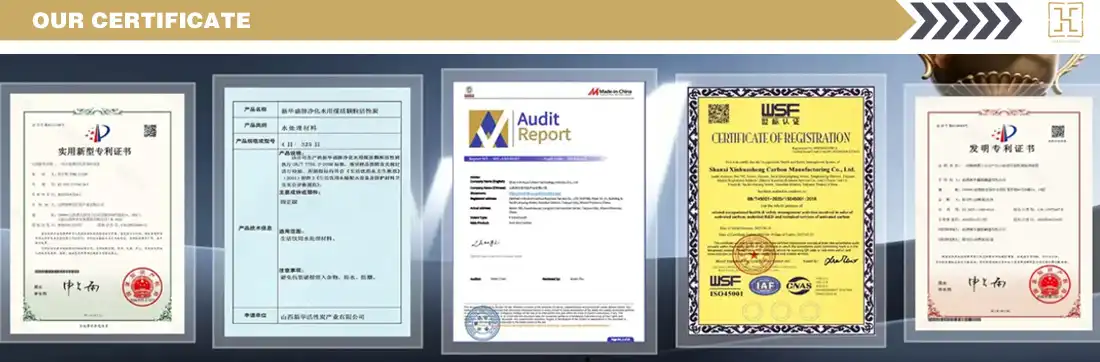
In addition to ISO standards, certificates from specific industries also boost trustworthiness. Products that are approved to NSF/ANSI 61 are often needed to treat drinking water. This makes sure that the materials don't leach dangerous chemicals into the water. For pharmaceutical uses, sellers may need to be listed with regulatory authorities so that their products can be used in systems that have been checked out.
Logistics Capabilities That Protect Your Operations
Lead time dependability tells the difference between providers who can do their job and those who make planning harder. Standard items should be sent out 7–15 days after the order is placed. Custom specs that need different activation or size options may make wait times 15 to 30 days longer, but reputable providers make timelines clear when an order is confirmed.
Being able to respond quickly to emergencies protects against sudden increases in demand or problems with supply. When suppliers keep a lot of stock on hand, they can often meet urgent orders by sending important materials within 72 hours through faster shipping methods. This responsiveness keeps production from having to stop, which would be expensive, when equipment breaks down, or demand spikes suddenly use up all the usable supplies.
Ensuring Consistent Quality: Best Practices in Coal Quality Control and Chemical Purification
The Critical Role of Mesh Consistency
The spread of particle sizes has a direct effect on how well cleaning works. A mix with a lot of fines might at first show strong adsorption because it has a lot of surface area, but those fines will move through retention screens and show up as black particles in the treated effluent. This is known as "carbon carryover," and it means that cleaned goods can't be used and need to be processed again. On the other hand, batches with particles that are too big or too small have less ability to absorb, so target contaminants can get through before the bed is supposed to be empty.
By using inbound screening methods, deviations from specifications can be found before the material goes into production. A nest of 20- and 50-mesh screens, distilled water, and a drying oven are all you need for simple wet sieving tests. By putting 100-gram samples through this process, the number meeting the standard can be measured. Rejecting batches that don't meet acceptable limits (usually 5% departure) keeps processes further down the line safe.
Protecting Carbon Integrity Through Proper Handling
Cross-contamination needs to be avoided when facilities deal with different types of carbon. Because each grade has its own handling tools, there is no chance of mixing goods with different specs. If you have to use shared equipment, make sure it's really clean between batches of products so that there is no leftover stuff that could hurt the next batch.
Quality Control Protocols for B2B Procurement Teams
Setting up scorecards for suppliers makes them accountable. Performance trends can be found by keeping an eye on measures like the percentage of on-time deliveries, the percentage of specifications that are met, and the accuracy of the paperwork. Sharing these scorecards with providers during quarterly business reviews helps them understand what is expected of them and recognises good work.
In buying deals, it should be clear what kind of certificate of analysis (COA) is needed. It's clear what tests are needed when you list them: particle size distribution, iodine number, ash level, wetness, and pH. Making sure that a COA is delivered with every package instead of just when asked for helps with tracking and tracing lots through your production processes.
Case Study: Improved Outcomes Through Advanced Production Control
There were repeated problems at a pharmaceutical water treatment plant with carbon fines getting into the loops of clean water. An investigation showed that their former provider used old crushing equipment that didn't have any precise screens. When we switched to a company that used 20*50 mesh coal quality crushing carbon with multi-stage crushing and intermediate size processing, the fines content dropped from 12% to less than 2%. This change got rid of contamination events, cut the number of times filters had to be changed by 40%, and made the carbon bed last 25% longer. In the first year, the facility estimated a return on investment (ROI) of 3.2:1 by not having to pay for reprocessing, doing less upkeep, and making the media last longer. These results show that the way things are made has a direct effect on practical economics.
Conclusion
Understanding how particle size, production techniques, and quality controls work together to provide dependable chemical cleaning performance is important when choosing the best 20*50 mesh coal quality crushing carbon. The precise sizing in the 0.3-0.85 mm range gives complicated purification applications the right mix between adsorption rates and hydraulic properties. To do good procurement, you need to look at providers' production ability, safety certifications, technical skills, and how quickly they can handle transportation. Putting in place strong guidelines for getting inspections and storage will protect your investment and keep the process consistent. As rules about the environment get stricter and standards for product purity rise, working with makers who can show they have scientific knowledge and a commitment to quality becomes a competitive advantage instead of just a vendor relationship.
FAQ
What iodine number should I specify for chemical purification applications?
The iodine number shows the growth of micropores. Values between 800 and 1100 mg/g are good for most chemical cleaning jobs. Higher values (1000 mg/g or more) are better for applications that want to target small organic molecules, while 800-900 mg/g material may work well for a wider range of adsorption tasks. Talk to technical support about the toxins you have so they can match the right iodine number for the job.
How does ash content affect performance in sensitive applications?
Ash is the solid matter that is left over after carbon is burnt. Minerals can get into cleaned streams if the content is above 10%, which can be a problem for ultrapure water and medicine uses. Limiting the ash level to less than 8%, or even less than 5% for important uses, lowers the risk of pollution. Although low-ash material is more expensive, it prevents expensive recycling or product rejection from happening.
Can this material be regenerated and reused?
At 800-900°C, thermal regeneration gets rid of contaminants that have stuck to the surface and restores 70–85% of the original capacity. You can expect to lose 10 to 15 percent of the material each time it regenerates because of rust and wear and tear. The cost of new carbon, the cost of regeneration, and the cost of removal all affect the economic sustainability. Many processes can renew carbon three to five times before it becomes cheaper to replace it than to keep recycling it.
Partner with Shanxi Xinhua Carbon Technology Industry Co., Ltd. for Reliable 20*50 Mesh Coal Quality Crushing Carbon Supply
Shanxi Xinhua Carbon Technology Industry Co., Ltd. has been researching activated carbon for more than 60 years and has been making big amounts of it for more than 20 years. They can help you clean up your chemicals. With 100% inventory coverage of key specs and delivery within 7–15 days for standard orders, our 20*50 mesh coal quality crushing carbon manufacturer operations spread across various production bases ensure continuous supply. We prioritise emergency purchases through our sped-up logistics routes, which can bring important goods in as little as three days.
Leading study institutions like Tsinghua University and the Chinese Academy of Sciences work with our technical team to bring advanced material science to real-world commercial uses. We keep our ISO 9001, ISO 14001, and ISO 45001 certifications, which show that we care about quality, the environment, and the safety of our operations. Email our technical sales team at greta@carbonxinhua.com to talk about your unique purification needs, get product samples, or get detailed technical information to help you make a purchase choice.
References
1. Chen, W., & Zhang, L. (2021). Activated Carbon: Fundamentals, Classification and Properties. Chemical Industry Press.
2. International Organization for Standardization. (2019). ASTM D2862-19: Standard Test Method for Particle Size Distribution of Granular Activated Carbon. ASTM International.
3. Marsh, H., & Rodríguez-Reinoso, F. (2020). Activated Carbon: Production, Characterization, and Applications. Elsevier Science.
4. National Institute of Standards and Technology. (2022). Sieve Analysis Techniques for Particle Size Determination in Industrial Materials. NIST Special Publication 960-17.
5. Teng, H., & Wang, S. (2020). Coal-Based Activated Carbon Technology and Applications in Chemical Purification. Science Press, Beijing.
6. U.S. Environmental Protection Agency. (2021). Granular Activated Carbon Treatment: Technical Guidance Manual for Water Utilities. EPA Document 815-R-21-002.

Send Inquiry
You may like
_1781662034490.webp)