_1778553121707.webp)
20*50 Mesh Coal Quality Carbon Meets Industrial Adsorption Needs
Jul 23, 2026
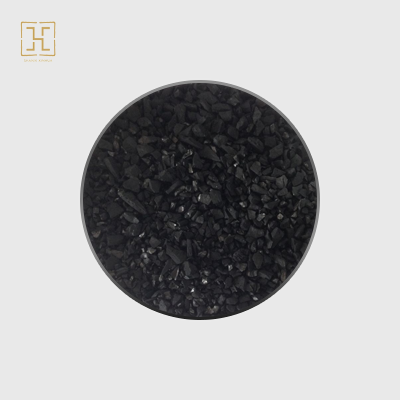
There is one important thing that can make or break your adsorption system's performance when environmental compliance deadlines are coming up, and people are watching. The quality of your activated carbon material is often that one thing. 20*50 mesh coal quality briquette crushing activated carbon is a precisely engineered solution that fixes the problems with traditional coal-based adsorbents' weak structures and inconsistent performance. A complex briquetting process is used to bind pulverised bituminous coal together before carbonisation and activation. This results in a product with higher mechanical hardness and even pore distribution, which prevents premature breakdown and "black water" contamination in high-flow industrial filtration systems while keeping particle sizes between 0.30mm and 0.85mm.
Understanding Coal Briquette Quality and Its Impact on Activated Carbon Performance
"20*50 mesh" refers to particle size standards where things can pass through a 20-mesh screen with holes that are 0.85 mm wide but not a 50-mesh screen with holes that are 0.30 mm wide. In industrial settings, this exact range of granulation strikes the best balance between adsorption kinetics and hydraulic resistance.
Why Briquetting Transforms Carbon Quality?
Traditional crushed coal carbons don't always have the same density and aren't very strong. The briquetting method gets around this problem by putting special fillers on coal powder and crushing it under high pressure before activation. This process makes a material that is equally thick and has pores that can be predicted. When activated by steam treatment, the briquetted structure forms micropores and mesopores that are more evenly distributed than alternatives that are crushed directly. The end result is a carbon matrix that is very strong mechanically—usually harder than 95% ball pan hardness according to ASTM D3802 testing—and doesn't wear down even when it's backwashed or when the flow is rough.
Key Physical-Chemical Properties That Matter
When purchasing managers look at providers of activated carbon, they should pay attention to a few important factors. The iodine number, which should be between 900 and 1,100 mg/g for good items, shows how many micropores are available for small molecules to attach to. Carbon tetrachloride (CTC) activity between 50% and 70% shows a gas-phase adsorption capacity that is important for getting rid of VOCs. A low ash content (less than 12%) makes sure that purified streams don't get too contaminated with minerals, and an apparent density of 450 to 550 g/L gives the fixed-bed adsorber design the packing efficiency it needs. These requirements have a direct effect on how well systems work in places like petroleum factories, local water treatment plants, and industrial air cleaning installations, where quality control is very important.
Quality Standards and Supplier Certification
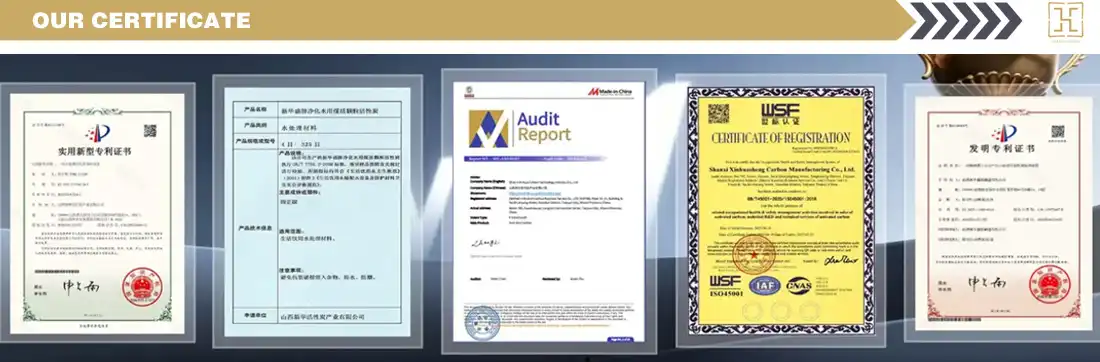
If you follow the AWWA B604 guidelines and get NSF/ANSI 61 approval for drinkable water uses, you can be sure that the levels of leachable chemicals stay safe, and for 20*50 mesh coal quality briquette crushing activated carbon, this compliance is essential for municipal and food-grade applications where water contact safety is strictly regulated. ISO 9001 quality control systems make sure that each batch is the same, and ISO 14001 environmental certifications show that a company is making good products. For regulated industries, procurement teams must make sure that suppliers have up-to-date certifications and can provide analysis documentation for every shipment. This should include particle size distribution according to ASTM D2862 and methylene blue adsorption values that show mesopore development.
Comparison and Decision-Making: Choosing the Right Mesh Size for Your Application
To choose the right size, you have to weigh a lot of business factors against performance needs and cost concerns.
Mesh Size Performance Comparison
Coarser carbons (830 or 1240 mesh) have a lower pressure drop and are easier to work with, but they slow down adsorption because they have less surface area on the outside. The smaller 20*50 mesh size makes the adsorption process go much faster, which is important for systems with short contact times like point-of-use water filters or high-velocity gas treatment units. This better dynamic performance comes from shorter diffusion paths inside particles, which makes it easier for contaminants to get to adsorption sites inside more quickly. But pumping devices that can handle slightly higher pressure differences across the adsorbent bed are needed for mesh sizes that are smaller.
Processing Behavior and Operational Considerations
From the point of view of production, 20*50 mesh coal quality briquette crushing activated carbon has better recovery properties than regular crushed goods. Because briquettes keep the structure strong, they produce fewer fines during heat revival processes. This has been shown to increase renewal rates by 12–18% in commercial tests. This means that replacing the carbon will cost less, and it will be easier to get rid of trash over its useful life. The even distribution of particle sizes also makes breakthrough curves in adsorption column design more predictable. This gives process engineers confidence in calculations for scaling up from pilot testing to full production systems.
Cost-Benefit Analysis for Procurement Planning
20*50 mesh coal quality briquette crushing activated carbon goods usually cost 15 to 20 percent more than regular crushed carbons, but the higher-quality material is usually cheaper in the long run. Less frequent replacements, lower penalties for pressure drops, no more "black water" incidents that need system shutdowns, and better economics for regeneration all cancel out the initial price difference within 18 to 24 months in most industrial settings. When evaluating supplier proposals, procurement directors in charge of multi-year framework agreements should look at these lifecycle costs as well, rather than just the price per tonne.
Production Process: From Coal Briquette to High-Performance Adsorbent
Knowing how things are made helps buyers understand differences in quality and set the right requirements.
Raw Material Preparation and Briquetting
The first step is to choose high-quality bituminous coal that has the right amount of sulphur and flammable matter, and for 20*50 mesh coal quality briquette crushing activated carbon, this careful selection of coal precursor is crucial because the ash content, volatile matter, and sulphur levels directly influence the final pore structure and adsorption capacity of the activated carbon. Once the material has been ground up into a fine powder, it is mixed evenly with special organic binders before going into high-pressure briquetting presses. The briquettes are then carbonised under controlled conditions at 400–600°C in environments with little oxygen. This removes volatile components while keeping the structure intact. Although this carbonised material has some pores, it doesn't have enough surface area for industrial adsorption uses.
Activation and Mesh Size Control
Activation by steam at 800–1000°C specifically gasifies carbon atoms, making the large network of micropores that is what activated carbon is. The briquette structure makes sure that steam can enter evenly, which causes pores to form evenly in every particle. When the activated briquettes are cool, they go through a series of crushing and screening steps that are set up to meet the 20*50 mesh specification. Good makers use closed-loop screening circuits with multiple sorting steps to get rid of as much off-spec material as possible. This makes sure that the particle size distribution meets the ASTM D2862 standards with less than a 5% difference.
Performance Validation Through Testing
Every production lot goes through strict quality control checks, such as an iodine number test according to ASTM D4607, a CTC activity measurement, a review of hardness, and a study of ash content. Advanced suppliers use methylene blue adsorption tests to make sure the mesopores are growing correctly and floating content tests to make sure the right wetting properties for water applications. This thorough testing system gives quality assurance managers in regulated industries the proof they need and backs up the performance guarantees that are necessary for big contracts.
Procurement Insights: Securing a Reliable Supply of Premium Activated Carbon
To strategically source important process materials, you need to carefully evaluate suppliers and manage your relationships with them.
Supplier Assessment Criteria
Procurement workers should give priority to makers with more than one production base to make sure that supplies don't run out during repair or regional problems. Maintaining a large inventory of different types of products makes it possible to quickly meet both regular replenishment orders and urgent needs. Shanxi Xinhua Carbon Technology Industry Co., Ltd. has factories in Shanxi, Ningxia, Fujian, and Xinjiang that can make more than 45,000 tonnes of carbon annually. These factories are spread out geographically and are big enough to meet the needs of large commercial customers. Technical teamwork skills are also important. For example, when providers work with research institutions like Tsinghua University and the Chinese Academy of Sciences, they show they are committed to improving their products all the time and can offer application engineering help during the system design stages.
Lead Time Management and Bulk Purchasing Strategies
Standard orders for 20*50 mesh coal quality briquette crushing activated carbon usually ship within 7–15 days from reputable sources who keep enough in stock. Lead times are extended to 15–30 days for customised specs that need to change the pore structure or add catalysts. Framework agreements should be made by procurement managers that commit to a certain amount of goods each year in exchange for better pricing and priority allocation when supplies are low. A lot of industrial users keep a 60-90 day safety stock to protect themselves against problems with shipping while they negotiate better payment terms like net-60 or contract inventory programs that lower their working capital needs.
Market Pricing Trends and Negotiation Benchmarks
The price of activated carbon is strongly linked to the cost of coal feedstock, the energy used for activation, and the cost of transportation. Industrial-grade 20*50 mesh coal quality briquette crushing activated carbon products cost between $1,800 and $2,400 per metric tonne FOB origin right now, with higher prices for better grades. 8–12% savings are common for commitments of more than 500 tonnes per year, and multi-year contracts with price increase terms linked to producer price indices keep budgets stable. To make accurate comparisons between suppliers, procurement teams should ask for thorough quotes that include Incoterms, package details, minimum order amounts, and quality paperwork.
Optimizing Industrial Adsorption Performance with Engineered Carbon Materials
When activated carbon is used correctly, it has benefits for operations that go beyond just getting rid of contaminants. These benefits include system reliability and process economics.
Enhanced Adsorption Kinetics in Demanding Environments
The even pore structure of 20*50 mesh coal quality briquette crushing activated carbon speeds up mass transfer during adsorption, which means that less bed depth is needed to get the desired effluent quality. The faster processes allow for smaller adsorber vessels and less capital investment in VOC mitigation systems that treat paint booth exhaust. The ability to respond quickly helps municipal water treatment plants handle seasonal taste and odour compounds, which reduces customer complaints during algal blooms. The high mechanical strength stops particles from breaking down, which would cause fines to move around and cause pressure drops over time. This keeps hydraulic performance stable over long service cycles.
Reducing Equipment Downtime and Maintenance Requirements
"Black water" problems happen when carbon fines get out of adsorption tanks and contaminate drinking water systems and ultrapure water loops used in electronics manufacturing. Because briquette goods are harder, this type of failure almost never happens, which means that less unexpected repair work needs to be done. The low floating content makes sure that the system starts up quickly, so you don't have to run as many long rinse processes as you would with regular crushed carbons. These improvements in reliability directly lead to higher effective system availability, which is a key metric for production facilities that are open 24 hours a day, seven days a week, where downtime costs can reach over $50,000 per hour.
Compatibility Across Adsorption System Architectures
Different types of systems, like gravity filters, pressure tanks, moving bed adsorbers, and fluidised bed reactors, work well with the 20*50 mesh standard. The balanced particle size gives regeneration systems the right amount of fluidisation while keeping the right amount of density for stable packed bed operation. OEM equipment makers like that the hydraulic properties are always the same, which makes system design easier and lets them offer the same products in all global markets. Distributors that work with a wide range of industries, like how versatile it is, because it helps them get rid of unwanted stock and keeps SKUs simple.
Conclusion
Choosing the right activated carbon standard has a direct effect on how well industrial adsorption systems work, how much they cost to run, and how environmentally friendly they are. The 20*50 mesh coal quality briquette crushing activated carbon fills in important performance gaps with its high mechanical strength, well-designed pores, and consistent quality. Environmental engineering contractors, municipal water systems, petrochemical facilities, and industrial air purification applications should use procurement professionals to judge suppliers based on their technical skills, reliability, certification compliance, and lifecycle cost economics. Strategic relationships with makers that have more than one production base, collaborations with research institutions, and thorough quality systems give mission-critical applications the performance guarantee and supply security they need.
FAQ
What distinguishes briquette crushing activated carbon from standard crushed products?
Through high-pressure compression before activation, the briquetting process creates products with over 95% ball pan hardness, compared to 80–85% for directly crushed carbons. This makes the products more uniform in density and stronger mechanically. This structural stability keeps things from breaking down too soon, gets rid of "black water" pollution, and raises the returns of renewal. Controlled processing of briquetted material leads to regular pore development, which also makes the adsorption performance more consistent across production lots.
How does 20*50 mesh sizing affect system pressure drop?
When you compare the finer particle size to the coarser 830 or 1240 mesh specifications, the pressure difference is higher—usually 15 to 25 percent higher at the same bed depths and flow rates. The faster absorption rates, on the other hand, often allow for shorter bed designs that balance this rise. The best performance without high pumping costs is guaranteed by a system design that takes particle size hydraulics into account. To help engineers with their numbers, suppliers can give pressure drop relationships that are specific to their goods.
Can this material be used in potable water applications?
Yes, as long as the product is certified by NSF/ANSI 61 and meets AWWA B604 standards. These certifications show that the amounts of leachable substances are still safe for drinking water contact. For each production lot, buyers should ask for up-to-date certification paperwork and certificates of analysis that prove compliance. Reputable makers keep these licenses up to date with regular testing and checks of their quality systems by a third party.
Partner with a Trusted Activated Carbon Manufacturer
When it comes to industrial adsorption problems, Shanxi Xinhua Carbon Technology Industry Co., Ltd. has more than 60 years of experience in materials science. They use defense-grade quality systems and cutting-edge research partnerships with Tsinghua University and the Chinese Academy of Sciences. As a top 20*50 mesh coal quality briquette crushing activated carbon provider, we keep 100% of our core specs in stock and can deliver within 7–15 days. In an emergency, we can complete your order through our green route in as little as three days. Our ISO 9001, ISO 14001, and ISO 45001-certified businesses in Shanxi, Ningxia, Fujian, and Xinjiang make sure that there is a steady supply of goods. Our expert team can also customise products by improving pore structure, adding catalysts, and creating new shapes. We want procurement managers, directors of environmental engineering, and technical experts to look into how our activated carbon solutions can improve the performance of your system. Contact our team at greta@carbonxinhua.com or visit xhcarbontech.com to request technical data sheets, arrange sample testing, or discuss your specific adsorption requirements with our application engineers.
References
1. Chen, J., Liu, H., & Zhang, W. (2021). Advanced Activated Carbon Technologies for Industrial Water Treatment. Environmental Science Press.
2. Industrial Water & Wastes Digest. (2022). "Particle Size Optimization in Activated Carbon Adsorption Systems." Water Treatment Engineering Journal, 45(3), 78-92.
3. Li, M., Wang, Q., & Zhao, X. (2020). Coal-Based Activated Carbon: Manufacturing, Characterization, and Applications. Chemical Industry Press.
4. National Institute of Standards and Technology. (2023). ASTM Standards for Activated Carbon Testing and Specification. NIST Technical Publication Series.
5. Peterson, R. & Anderson, K. (2022). "Lifecycle Cost Analysis of Activated Carbon in VOC Abatement Systems." Air Pollution Control Association Quarterly, 38(2), 145-162.
6. Zhang, S., Kumar, A., & Thompson, D. (2021). Industrial Adsorbents: Selection, Performance and Optimization. Wiley Engineering Publications.

Send Inquiry
You may like
_1781662034490.webp)