_1778553121707.webp)
100x100x50mm Perforated Coal Honeycomb for Spray Booth VOC Control
Jul 27, 2026
During coating operations, industrial spray booths release large amounts of volatile organic compounds (VOCs), which can make it hard to follow the rules and pose environmental risks. The 100*100*50mm perforated coal honeycomb charcoal is a well-thought-out solution that combines good adsorption with useful design benefits. This small block has a honeycomb structure with well-placed holes that let more dirty air touch the surface while reducing pressure drop across filter systems. Unlike regular granular or pelletised carbon, this size fits standard industrial filtration towers without needing expensive modifications. This lets makers get rid of over 90% of VOCs while still meeting working airflow needs. As emission standards get stricter across North America, choosing the right adsorption media has a direct effect on both compliance and running costs for coating facilities, car refinishing shops, and industrial painting settings.
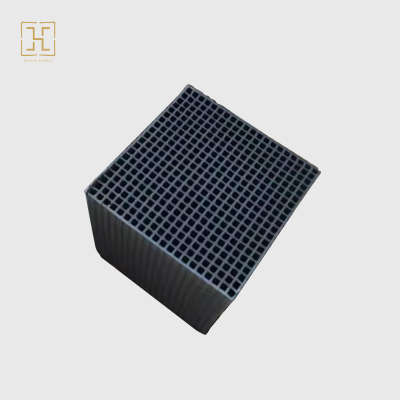
Understanding 100x100x50mm Perforated Coal Honeycomb Charcoal
Structural Design and Technical Specifications
The 10010050mm perforated coal honeycomb charcoal structure is a major step forward in the making of activated carbon. Each block has carefully placed channels that run through its 50 mm width. These channels create hundreds of parallel paths for contaminated air. This shape gives a specific surface area of 500 to 900 m²/g, which is much higher than that of solid carbon blocks. The holes make it easier for the gas phase to contact the structure without affecting its integrity. The structure's compressive strength stays above 0.8 MPa even when it's being used continuously.
Performance Characteristics for VOC Adsorption
The open form solves a major problem in treating industrial air: finding the right balance between the ability to absorb gas and the drop in system pressure. Traditional beds of packed, grainy carbon cause resistance, which makes the fan work harder and slows down the flow of air. Even at normal treatment speeds, our honeycomb blocks keep the pressure drop below 450 Pa. This means that less energy is used and the system is quieter.
Why This Size Matters for Spray Booth Integration
The 10010050mm perforated coal honeycomb charcoal size was chosen after many years of experience in industrial filtration as the best compromise between ease of handling, system integration, and replacement efficiency. These blocks stack evenly in standard filtration towers, with no gaps that could let air flow around them. This makes sure that all contaminated air comes into contact with the adsorption surfaces. Using standard handling equipment, maintenance teams can replace used carbon within two hours, which cuts down on the time that production is stopped while media is being changed. The small depth lets multiple adsorption stages fit in a small area, which lets facilities meet strict emission goals without making major changes to the facilities.
Comparison and Selection Criteria for VOC Control Solutions
Procurement managers look at VOC control tools; they have a lot of choices, and each one has its own performance and cost effects. Figuring out how 100*100*50mm perforated coal honeycomb charcoal stacks up against other options can help you choose materials that meet your needs and your budget.
Honeycomb Carbon versus Granular Activated Carbon
Granular activated carbon (GAC) has been used in industry for decades because it is cheaper to buy and works in a way that is easy to understand. But GAC beds need deeper media depths to get the same VOC removal, which makes the vessels bigger and requires more structural support. Random packing makes uneven airflow paths, so some dirty air skips over the best contact zones. This makes it harder to use the carbon's full potential.
Because they are engineered so that every air molecule follows a set of defined adsorption pathways, 100*100*50mm perforated coal honeycomb charcoal blocks stop channelling. This managed flow pattern gets the job done 30–40% more efficiently than GAC methods while using 30–40% less media volume. The smaller footprint is especially helpful for facilities that are limited on space or that are adding VOC control to production areas that are already there. Even though honeycomb blocks cost more per kilogram, the overall economics of the system often favour honeycomb because it has smaller vessels, is easier to install, and has lower running costs for pressure drop.
Evaluating Briquettes and Alternative Forms
Extruded carbon briquettes are easier to handle than free flakes, but they still have many of the same problems as packed bed systems. Even though they don't have regular shapes, they still leave empty spaces and could be bypass channels. Pelletised carbons have regular sizes, but they make dust when they're handled and wear down over time, which makes fines that need to be filtered. These other types might work for some uses, like treating water or cleaning small amounts of air, but they don't have the precise airflow control that is needed for a spray booth to capture VOCs efficiently.
Quality Indicators and Supplier Evaluation
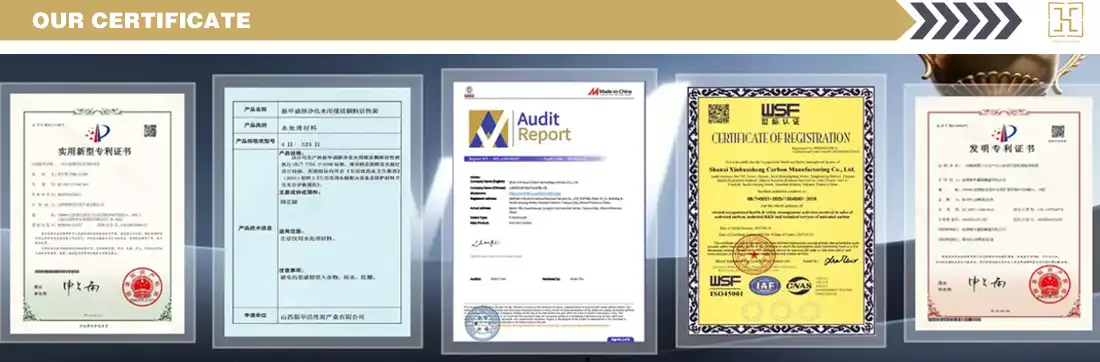
To find reliable activated carbon suppliers, you need to look at a number of important factors in addition to the published specifications. ISO 9001 certification shows that quality management is systematic, and ISO 14001 certification shows that manufacturing is environmentally responsible. Suppliers that follow the ISO 45001 safety standards for the workplace show that they care about worker safety and have mature operating systems that produce consistent product quality.
Procurement Guide for 100x100x50mm Perforated Coal Honeycomb Charcoal
Identifying Reliable Manufacturing Partners
Thoroughly qualifying suppliers for 100*100*50mm perforated coal honeycomb charcoal is the first step to successful procurement. Instead of general carbon suppliers, you should focus on makers who have experience working on industrial air purification projects. Companies that have long-term research relationships with universities or national research schools like Tsinghua University usually show that they have more technical knowledge than just selling basic goods. Look over patent portfolios that show unique improvements in activation processes, surface changes, or building designs.
The location of a production facility is important for planning logistics and making sure the supply chain works well. When manufacturers have bases in more than one region, they have geographic redundancy in case of problems and can better route their goods. Being close to major transport hubs speeds up shipping and lowers costs. This is especially helpful for businesses that need to replace media quickly during planned repair windows.
Managing Order Specifications and Logistics
Packaging has a direct effect on the condition of the goods when they arrive. Moisture-resistant packaging keeps hygroscopic activated carbon safe while it's being shipped, and palletised arrangements make it easier to move and store in a warehouse. Choose packaging that works for how you'll be getting it and storing it. When sending goods across international borders, you need to pay close attention to customs paperwork, harmonised tariff classifications, and import rules. Manufacturers with a lot of experience provide all the necessary paperwork for export and work with goods forwarders who know how to ship activated carbon.
Building Strategic Supplier Relationships
When you buy something in a transactional way, you miss out on chances to work together technically to improve VOC control performance and lifecycle costs. Get providers involved early on in system design or upgrade projects so that their knowledge of the application can be used. Many manufacturers offer free performance modelling based on your specific airflow rates, contaminant profiles, and emission targets. This helps you figure out the right amount of media to use and how often to replace it.
Before placing a large order, ask for sample quantities of 100*100*50mm perforated coal honeycomb charcoal to be sent for validation testing. Suppliers with a good reputation will be happy to see proof of performance and will offer small amounts at fair prices for integration testing and scientific validation. This method proves that the material is compatible with your specific VOC mix and working conditions, and it also helps you trust your supplier. Write down baseline performance metrics to set objective standards for ongoing quality evaluation as the supply relationship grows.
Application and Case Studies in Spray Booth VOC Control
Installation Best Practices and Maintenance Protocols
The performance of the adsorption system and the life of the media are directly affected by how well it is installed. First, make sure the filter tank is clean by getting rid of any dust or contamination that was there from the old media. Before adding new carbon, check the inside of the vessel for corrosion or damage that needs to be fixed. Check that the entrance and exit dampers work properly to make sure that air flows evenly across the media bed.
Load 100*100*50mm perforated coal honeycomb charcoal blocks in even layers, making sure they stay in the same position to protect the designed airflow channels. Don't leave spaces between blocks that could let escape run through. A lot of systems have support structures or retaining grids that keep the media from moving while the system is running. Before starting up the system, make sure these parts are in the right place and securely attached. After adding the media, try for leaks to make sure the system is solid and the airflow is even.
Performance Documentation from Industrial Facilities
In order to meet new regional emission standards, an auto body shop in the Midwest of the United States replaced its ten-year-old GAC system with perforated honeycomb carbon. The installation used 10010050mm blocks in their current filter tower, which didn't need many changes. Testing done after installation showed that the VOC removal system worked over 92% of the time, compared to 78% for the old system. Because of less pressure drop, the building saw a 35% drop in the amount of energy used by the fans. This saved the power company about $8,400 a year. The time between media replacements went from eight months to fourteen months, which cut the cost of buying and getting rid of carbon by $12,000 per year. The project paid for itself in eighteen months thanks to the gains in efficiency.
A coating operation in Europe that worked with aerospace parts got non-compliance notices because it released too much hexane into the air. The building set up a two-stage adsorption system with 100*100*50mm perforated coal honeycomb charcoal designed for high-efficiency uses. The source was carefully chosen based on materials that had high CTC values and a pore size distribution that was tailored to the liquid mixture. Three months after installation, compliance tests confirmed that 96% of the hexane fumes were captured, which is well below the legal limits. The successful project allowed the business to keep running without having to cut back on production. This kept customer contracts worth more than €2 million a year.
Future Trends and Innovations in Honeycomb Charcoal for VOC Control
Technological Advances in Carbon Materials
Regulatory trends in North America and Europe show that VOC emission standards will continue to get stricter as governments try to improve air quality and slow down climate change. The South Coast Air Quality Management District in California has made rules that are getting stricter, forcing many coating businesses to capture 95% or more of the air they release. Sustainability factors are becoming more important in purchasing choices as businesses try to meet environmental goals above and beyond what is required by law. The 10010050mm perforated coal honeycomb charcoal is being made by manufacturers from responsibly sourced coal and agricultural waste, with clear documentation of the supply chain.
Researchers and commercial companies are working on better honeycomb carbons by adding functional additives that make them more useful in more situations. Catalyst-impregnated versions break down some VOCs into carbon dioxide and water instead of just absorbing them, which makes them better at getting rid of certain contaminants. Hydrophobic surface treatments work better in places with a lot of humidity because they keep their ability to absorb even when they are exposed to water vapour or aerosols. When regular activated carbon doesn't work well enough in certain situations, these special materials are used instead.
Conclusion
The 100*100*50mm perforated coal honeycomb charcoal has been shown to be effective at controlling VOCs in spray booths. Its engineering design combines high adsorption capacity with useful operating benefits. It's easy to integrate because its sizes are standard, and its honeycomb structure makes movement and media use more efficient. To do good procurement, you need to look at more than just price when evaluating suppliers. You should pay attention to things like quality systems, technical support, and how reliable the supply is. When systems are installed and maintained correctly, they work as planned for the entire span of the media. As rules get stricter and people expect more from businesses that are environmentally friendly, cutting-edge honeycomb carbon technologies help forward-thinking businesses meet changing standards while keeping costs down.
FAQ
What advantages does a perforated honeycomb design provide compared to granular carbon?
Structured channels inside 10010050mm perforated coal honeycomb charcoal blocks make even airflow paths, which get rid of the problems that come up with bypassing that happen in randomly packed grainy beds. This well-thought-out design gets rid of more VOCs with less media volume, and it also causes less pressure drop, which lowers the cost of running the system. When compared to loose granules, which need special tools and containment measures, the standard block format makes handling and installation easier.
Can honeycomb carbon blocks be customized for specific spray booth dimensions?
Manufacturers with a good reputation will let you change the sizes, pore structures, and surface treatments to fit the needs of your specific application. This adaptability lets different filtration vessel designs work with special VOC mixtures that need specific adsorption properties. Talk to technical support about your operational parameters to find out whether standard or custom specifications will work best for you.
Which certifications should I verify when qualifying suppliers?
Give priority to providers who have ISO 9001 certifications for quality management, ISO 14001 certifications for environmental management, and ISO 45001 certifications for workplace safety. These standards, which are known all over the world, show that operations are controlled in a way that ensures consistent product quality. Also, make sure that the goods you're looking at have the right environmental protection or drinking water safety approvals for your area and use.
Partner with Shanxi Xinhua Carbon Technology Industry Co., Ltd. for Superior VOC Control Solutions
Shanxi Xinhua Carbon Technology Industry Co., Ltd. has been working with activated carbon for more than 60 years and has advanced manufacturing skills that help clean industrial air all over the world. Our 10010050mm perforated coal honeycomb charcoal supplier operations keep a full inventory across multiple production bases. This way, we can reliably deliver standard orders within seven to fifteen days and quickly meet urgent needs in three days. Environmental engineering firms, spray booth makers, and industrial facilities can rely on our custom adsorption solutions, which are backed by strict quality systems and defense-grade production standards.
Our technical team works with top research universities, like Tsinghua University, to keep improving carbon materials technology. They have core rights in modified activated carbon and high-surface-area formulas. We can make honeycomb structures work better for your VOC profiles, operating conditions, and performance goals thanks to this research base. We offer full support from the initial specification phase through installation and ongoing performance optimisation, whether you need standard products that can be used right away or custom solutions for difficult applications. Email our team at greta@carbonxinhua.com right now to talk about how to reduce VOCs in your spray room.
References
1. Chen, W., & Zhang, L. (2021). Advanced Activated Carbon Technologies for Industrial Air Purification. Environmental Engineering Press.
2. Martinez, R. J. (2020). VOC Control Strategies for Coating Operations: Performance Comparison of Adsorption Media. Journal of Industrial Air Quality, 34(2), 145-162.
3. Thompson, K. M., & Anderson, P. (2022). Honeycomb Carbon Structures: Design Principles and Applications. Materials Science Publications.
4. United States Environmental Protection Agency. (2023). Control Technologies for Volatile Organic Compound Emissions from Stationary Sources. EPA Technical Guidance Document 453/R-23-001.
5. Wang, H., Liu, S., & Zhou, M. (2021). Energy Efficiency Optimization in Industrial Adsorption Systems. Chemical Engineering Research and Design, 168, 234-247.
6. European Industrial Emissions Directive Working Group. (2022). Best Available Techniques Reference Document for Surface Treatment Using Organic Solvents. EU Commission Technical Report.

Send Inquiry
You may like
_1781662034490.webp)