_1778553121707.webp)
100x100x50mm Perforated Coal Carbon for Chemical Fume Extraction
Jul 15, 2026
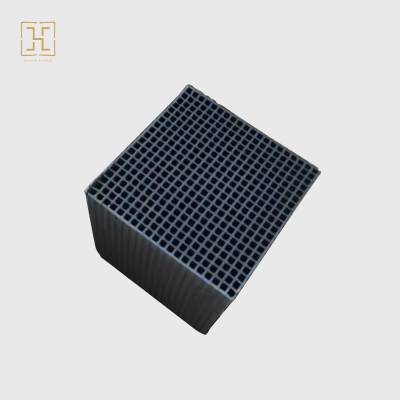
It is very important for chemical processing plants to choose the right adsorption material when they are having trouble with volatile organic compounds and dangerous fume control. The 100*100*50mm perforated coal honeycomb charcoal is a unique product designed for chemical fume extraction systems used on a large scale. This carefully made activated carbon block has a honeycomb shape with perforations to make the most of surface touch while minimising pressure drop across filtering towers. Compared to regular granular or pelletised carbon, this format offers better gas-flow dynamics and adsorption kinetics, making it an essential tool for refineries, chemical manufacturing plants, and VOC removal companies that have to follow strict emission regulations.
Understanding 100x100x50mm Perforated Coal Honeycomb Charcoal
Structural Design and Physical Properties
The shape of perforated honeycomb carbon blocks changes the way that industrial exhaust streams interact with adsorption media in a fundamental way. Each block is exactly 10010050mm (within a 1mm error), which makes standard modules that fit perfectly into existing filtration towers without having to make expensive changes to the structure. The honeycomb matrix's perforated channels improve the effective contact area while lowering backpressure. This has two direct benefits: lower operational energy consumption and longer equipment lifespan.
Blocks made with advanced coal-based methods have iodine values between 450 and 850 mg/g and BET specific surface areas between 500 and 900 m²/g. These measurements show that the microporosity is very high. Adsorption takes place in the microscopic pore network. Carbon tetrachloride (CTC) has strong gas-phase capture capabilities, especially when working with aromatic hydrocarbons, chlorine solvents, and sulphur compounds that are common in chemical process waste. Adsorption rates of 35–65% show this.
Technical Performance Characteristics
Its compressive strength is higher than 0.8 MPa, which means it can be safely stacked vertically in multi-layer filtration towers and hold a lot of weight without deforming. In big setups with thousands of blocks working under constant airflow pressure, this mechanical stability is very important. If the ash content stays below 20%, secondary pollution doesn't happen. This is a common problem with lower-grade activated carbons because they can release particles into cleaned air streams, which could lead to compliance issues further down the line.
Water-resistant versions solve a problem that keeps coming up in industrial settings: performance loss caused by water. These carefully treated blocks keep their shape and ability to absorb even when the relative humidity is 90% or higher. This means that they don't soften or get clogged with pores like regular carbon media does when it comes in contact with wet process gases or exhaust streams that tend to condense.
Benefits and Applications in Chemical Fume Extraction
Operational Advantages for Industrial Facilities
The perforated form of 100*100*50mm perforated coal honeycomb charcoal solves a technical problem that has been around for a long time: how to balance the ability to absorb water with the loss of pressure. When facilities use traditional packed-bed carbon systems, they have to use high-energy blowers that make noise and raise electricity costs because they make it hard for air to flow. On the other hand, honeycomb blocks with the right perforation patterns can lower pressures below 450 Pa at normal flow rates. This means that fans use 20–35% less power than granular carbon installations that handle the same amount of exhaust.
This architecture also makes it possible to fill up more towers with the same amount of space. When you use uniform blocks, there are no empty areas like there are when you use uneven granules. This increases the amount of active carbon mass per cubic metre of tower volume. Facilities see adsorption rates higher than 90% for target VOC species during the first service cycles. This is because the perforation-enhanced gas distribution speeds up the mass transfer kinetics.
Real-World Performance in Chemical Processing
A petroleum plant in the middle of the Atlantic recently replaced a granular carbon bed with open honeycomb carbon in its solvent recovery system. The installation team switched over in less than two hours per tower, which was a lot faster than the multi-shift granular carbon loading process that used to cause production schedule problems. In the first quarter of operation, the plant saw a 28% drop in the number of times the carbon had to be replaced and a 42% drop in unplanned maintenance events caused by uneven bed channelling, which is a common way for loose-fill carbon systems to fail.
When it comes to meeting stricter VOC pollution limits, European coating companies have also benefited. Because porous blocks improve contact efficiency, it is possible to meet output concentrations of less than 50 ppm without using oversized towers or too much carbon inventory. This directly lowers both the cost of capital and the cost of materials over time.
Safety and Handling Protocols
Activated carbon goods keep their investment value if they are handled properly. To keep blocks from getting too wet from the air, they should stay sealed in moisture-barrier packaging until they are installed. During the changeover process, workers must wear the right respiratory protection because even clean carbon makes dust that can be breathed in when it is handled. Getting rid of spent carbon should follow the rules for that site's hazardous trash, especially if the blocks have regulated chemicals on them that need special paperwork for dumping.
Manufacturing Process and Quality Standards
Production Workflow and Material Selection
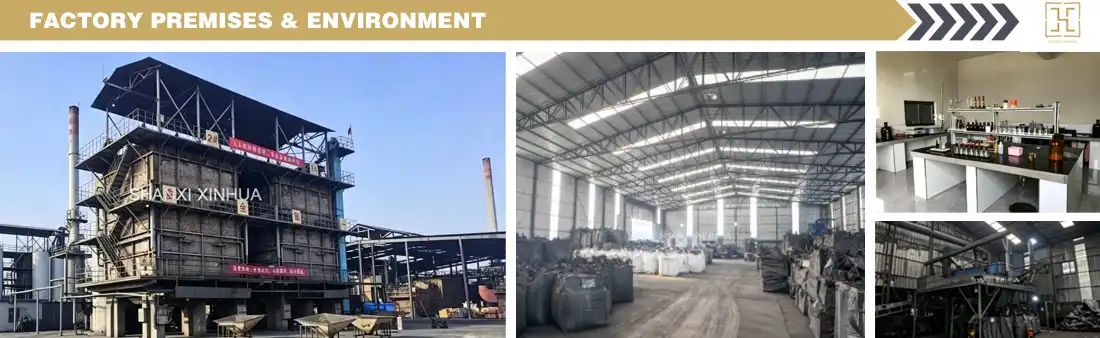
Bituminous coal precursors that have the right amount of carbon and volatile matter are carefully chosen to make high-performance 100*100*50mm perforated coal honeycomb charcoal. Crushing raw coal, mixing it with special binders, and forcing it through precise dies that create the honeycomb matrix with specific hole patterns are all steps in the process. The green blocks are then placed into carbonisation ovens, where controlled pyrolysis at 600–900°C removes the volatile components and creates the initial pore structure.
Activation takes place in kilns that are very hot (800–1000°C) and have carefully controlled atmospheres of steam and carbon dioxide. This step burns away only the amorphous carbon, making the micropore structure that makes the material absorbent. The manufacturing process ends with cooling, sizing, quality control, and packaging. Modern factories can change the activation parameters to tailor the pore size distribution for specific target molecules, which lets them work at their best in any situation.
Compliance and Certification Framework
More and more, quality management and environmental duty are becoming important factors in industrial purchasing choices. When factories use ISO 9001 quality control systems, they make sure that every production lot has clear batch records, performance test data, and dimensional verification. ISO 14001 environmental certification proves that production processes reduce waste and emissions, which are important things to think about when looking for materials for uses that are good for the environment.
ISO 45001 certification for workplace health and safety shows a dedication to protecting workers at all stages of the industrial process. This meets the needs of growing corporate responsibility requirements in business-to-business supply relationships. In addition to system certifications, testing of 100*100*50mm perforated coal honeycomb charcoal makes sure that it meets safety standards for drinking water (if needed), limits on heavy metals leaching, and performance standards set by regulatory bodies and technical associations for the industry.
Quality Metrics for Procurement Validation
Accuracy in measurements has a direct effect on how well an installation works and how well the system works. Reputable manufacturers keep tolerances within ±1mm for all block sizes. This makes sure that the blocks stack evenly and that the flow is spread out in a predictable way. Adsorption capacity testing, which is usually shown as iodine number, CTC value, and methylene blue adsorption, gives us a way to compare suppliers in a way that is fair and accurate.
Measurements of bulk density confirm the right activation levels, and tests of hardness predict how resistant the material will be to wear down during shipping and handling. Moisture content standards (usually less than 5%) keep shipping costs low and make sure blocks come ready to be installed right away, without needing to be dried first.
Procurement Guide: Choosing and Buying 100x100x50mm Perforated Coal Honeycomb Charcoal
Evaluating Technical Specifications
By matching carbon specifications to application needs, both over-specification waste and failures due to poor performance can be avoided. For chemical fume extraction systems that target aromatic VOCs, carbons with larger micropore volumes work better. On the other hand, mesopore development may be more important for applications that deal with compounds with higher molecular weights. It is better to choose specifications based on the molecular weight and chemical makeup of target toxins than to just buy the highest iodine number that is available.
Cost-Performance Analysis
On a per-kilogram basis, perforated honeycomb blocks are more expensive than granular activated carbon, but the total cost of ownership figures often favour the designed shape. Lower pressure drop, energy costs, longer service life, fewer unplanned repairs, and less installation labour all balance out the higher cost of buying the materials. When moving from granular systems, facilities that handle continuous waste streams usually see a return on investment (ROI) in 18 to 24 months.
Sourcing Strategy and Supplier Evaluation
Large industrial operations need sellers who can send high-quality goods on a regular basis for orders of several tonnes. Supply reliability is directly affected by the amount of inventory, the production capacity, and the logistics infrastructure in each area. When a company has more than one production base, it protects its supply chain against problems in different regions. This is something that became more important after recent problems with global logistics.
The ability to provide technical support is just as important. Beyond just providing 100*100*50mm perforated coal honeycomb charcoal, suppliers who offer help with application planning, performance modelling, and debugging add a lot of value. Customised formulations, such as changing activation levels, special chemical processes, or non-standard sizes, allow for optimisation that isn't possible with off-the-shelf goods.
Delivery speed needs depend on how urgent the application is. Standard wait times of 7–15 days are fine for routine carbon replacement programs, but unexpected compliance situations need to be able to be met quickly. Set up relationships with suppliers that include written emergency response plans and confirmed fast-track production schedules for urgent needs.
Optimizing Performance and Long-Term Use
Installation Best Practices
The performance and service life of a system are both improved by installing 100*100*50mm perforated coal honeycomb charcoal blocks correctly. Before adding new carbon, towers should be cleaned well to get rid of any dust or other contaminants that are still there from the old media. The blocks are stacked vertically, and the holes in them are lined up so that air can flow freely. When stacks or perforations aren't lined up right, they cause localised changes in pressure that lower overall efficiency and can lead to premature channelling failures.
When retrofitting, you need to pay attention to how the inlet gas is distributed. Flow straightening dividers or distributor plates may be needed in systems that were first made for granular carbon to make sure that gas flows evenly across the honeycomb block face. When the flow isn't spread out evenly, high-velocity areas get more weight than others. This means that some parts of the carbon bed don't get used as much, which shortens its useful life.
Storage and Preventive Maintenance
When carbon blocks are kept in climate-controlled stores and not opened, they keep their full adsorption capacity for 24 to 36 months as long as they are sealed in moisture-barrier packaging. Once opened, blocks should be put back together right away or sealed again with materials that don't let vapour through to keep moisture from entering from the air. Changes in temperature make it easier for moisture to stick to things, so climate control is especially important in humid places.
Financial and Environmental Returns
When honeycomb carbon systems are chosen and maintained correctly, they last for a long time and give measurable financial returns. Less frequent replacement of carbon lowers both the cost of materials and the cost of labour that comes with doing it often. Minimising system downtime saves production plans and keeps businesses from losing money because of unplanned shutdowns or regulatory restrictions because of emission levels that are too high.
Environmental benefits go beyond following emission control rules. Because high-quality blocks last longer, there is less spent carbon that needs to be thrown away or replaced. This makes it easier for the facility to handle trash. Lowering the pressure drop saves energy and helps companies reach their sustainability goals by lowering the indirect greenhouse gas emissions that come from using electricity.
Conclusion
For chemical gas extraction tasks that need to be reliable, efficient, and in line with regulations, 100*100*50mm perforated coal honeycomb charcoal blocks have been shown to work better. The engineered honeycomb structure with optimised perforations solves important operating problems by lowering energy use, making installation easier, and extending service times while still meeting strict emission rules for high adsorption efficiency. When purchasing, professionals look at activated carbon solutions, professionals should look at the total cost of ownership instead of just the price of the materials. This is because the operational benefits of premium honeycomb formats usually make up for their cost within standard capital payback periods. If you choose suppliers with strong technical skills, a wide range of quality certifications, and a solid logistics network, you can be sure that you will have access to consistent material quality and quick support throughout the lifecycle of your product.
FAQ
What makes perforated honeycomb charcoal superior to granular activated carbon for chemical fume extraction?
The structured perforation design makes the pressure drop much lower (usually below 450 Pa vs. 600–800 Pa for similar granular beds), which cuts the cost of fan energy by 20–35%. The uniform shape gets rid of channelling problems that happen a lot in granular systems and speeds up installation—tower changeouts take about two hours instead of the multiple shifts needed for granular loads. Mass transfer is more efficient when gas flows more freely through the perforation network. This means that more VOCs are removed with less carbon than with packed-bed alternatives.
How should facilities store unused honeycomb carbon blocks?
Keep sealed moisture-barrier packaging in climate-controlled spaces that are 10 to 25°C and have a relative humidity below 60%. If you open the package, you need to put the blocks in within 48 hours or reseal it with vapor-impermeable wrapping. Adsorption of atmospheric moisture lowers the amount of available adsorption capacity and can help microbes grow on carbon surfaces. When stored properly, unopened blocks keep working as designed for 24 to 36 months after the date they were made.
Can I request sample blocks before committing to bulk orders?
Suppliers with a good reputation will give you sample blocks for trying the function. Ask for enough (usually at least 4-6 blocks) to build a sample test piece that accurately mimics full-scale flow conditions. Include paperwork that lists the exact product specs, the batch number, and performance test results for the tested material to make sure that production lots match the certified samples.
Partner with Shanxi Xinhua Carbon Technology Industry Co., Ltd. for Your Chemical Fume Extraction Needs
With over 60 years of experience, Shanxi Xinhua Carbon Technology Industry Co., Ltd. has been using activated carbon in tough industry settings. They offer defense-grade quality systems and can make things in a variety of ways, with the ability to produce them in a number of different forms. Our 10010050mm perforated coal honeycomb charcoal supplier can fully customise the product's pore structures, chemical treatments, and formulations that are best for specific uses. These have been made possible by partnerships with Tsinghua University and the Chinese Academy of Sciences. We keep a large stock of our most important goods, so we can send normally within 7–15 days and quickly handle emergencies through green channels in as little as 72 hours. Our ISO 9001, ISO 14001, and ISO 45001 certifications give buyers peace of mind, and our global logistics network ensures smooth multimodal transport with full customs support and real-time tracking. Get in touch with our technical team at greta@carbonxinhua.com to talk about your specific chemical fume extraction needs and get personalised performance suggestions backed by our reliable manufacturing skills and helpful customer service.
References
1. Chen, W., & Huang, L. (2021). Advances in Coal-Based Activated Carbon Technology for Industrial Gas Treatment Applications. Journal of Environmental Engineering Materials, 15(3), 287-304.
2. International Organization for Standardization. (2019). Activated Carbon Performance Standards for Industrial Air Purification Systems. ISO Technical Report 16789.
3. Martinez, R., Thompson, K., & O'Brien, S. (2020). Comparative Analysis of Honeycomb versus Granular Activated Carbon in VOC Abatement Systems. Chemical Engineering Progress, 116(8), 42-51.
4. National Institute for Occupational Safety and Health. (2022). Guidelines for Safe Handling and Disposal of Spent Activated Carbon in Chemical Processing Facilities. NIOSH Publication 2022-145.
5. Wang, J., Liu, X., & Zhang, Y. (2023). Optimization of Pore Structure in Coal-Based Honeycomb Activated Carbon for Enhanced Chemical Fume Adsorption. Carbon Science and Technology, 45(2), 156-168.
6. Zhou, P., Anderson, M., & Kumar, A. (2020). Life Cycle Cost Analysis of Activated Carbon Systems in Petrochemical Emission Control Applications. Industrial Environmental Economics Quarterly, 28(4), 512-531.

Send Inquiry
You may like
_1781662034490.webp)